According to news reports, such as this one in the LA Times, the Bush administration may offer concessions to Iran in hopes that they will abandon their nuclear program. Apparently, European diplomats really want the US to try carrots this time, instead of sticks: Among the specific incentives that were discussed during President Bush's trip to France and Germany this month were allowing Iran to join the World Trade Organization and have access to spare aircraft parts, or possible aircraft sales, to replace Iran's aging commercial fleet, a European diplomat said.I'm skeptical that the administration will go for this, but President Bush apparently told France's Jacques Chirac and Germany's Gerhard Schroeder that he would think about it.
The story discusses the alternative: Bush keeps playing tough, the issue is recommended to the Security Council, the US eventually pushes for the use of force...and attacks without UN authorization (to the dismay of most of the rest of the world).
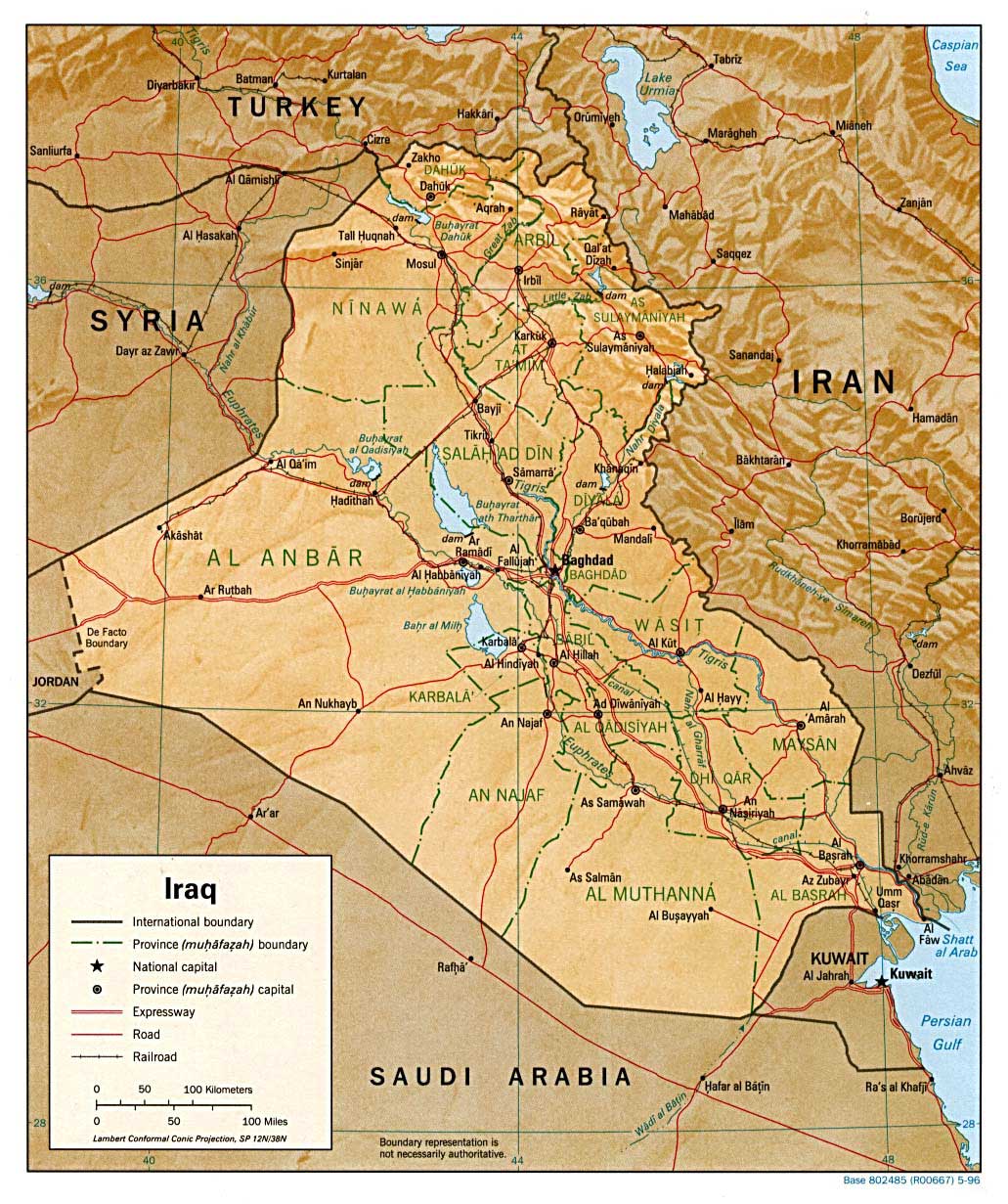
We know that story, eh? Today, another bad chapter was written as a suicide car bomber killed over 120 people and wounded even more. There have been other bad days in Iraq, but this was the bloodiest since the fall of Saddam Hussein.

I'm interested in international relations, American foreign policy, climate change, US presidential elections, public debate, Kansas Jayhawks basketball, film, and major league baseball.
Monday, February 28, 2005


Sunday, February 27, 2005
Egyptian Democracy?
This headline looks like good news: "Mubarak calls for Egypt's 1st open vote." From the Chicago Tribune's Evan Osnos:
Under pressure to democratize, Egyptian President Hosni Mubarak unexpectedly announced Saturday that he will seek to permit the first direct, multiparty presidential race in Egypt's history.Mubarak announced the news in a speech apparently carried live on Egyptian TV:
Depending on how it unfolds, an open election could mark a dramatic break from decades of one-party rule in the Arab world's most populous nation.
"The election of a president will be through direct, secret balloting, giving the chance for political parties to run for the presidential elections [with] more than one candidate for the people to choose among them with their own will..."The blogosphere embraced the good news, but even experts cannot be sure what will happen next. Abu Aardvark wrote:
Mubarak said he reached his decision "out of my full conviction of the need to consolidate efforts for more freedom and democracy."
It's great news, and a welcome positive development in Egypt.Since Mubarak has been in power since 1981, this potentially signals a major shift in Egypt's governance. Who knows for sure? There are lots of questions. Back to the Trib:
It doesn't in and of itself amount to much, though. Whether it is a cosmetic reform aimed at deflecting American and popular pressure or a first step towards genuine reform depends on what happens next.
"Egypt has never had a head of state popularly elected in its 5,200 years of written history, so this something new," said Abdul Monem Said, director of the Al Ahram Center for Political and Strategic Studies. "This is the beginning of the process. Are there personalities who can really run in this situation? . . . How will the media adapt to it? Will there will be presidential debates or not?"Condi Rice cancelled a trip to Egypt last week after the country arrested a major opposition leader, Ayman Nour. The White House expressed some hope after the announcement, but wants to wait and see if anything actually emerges from this. Human Rights groups agree:
"People will welcome this step, but they are afraid that it will be only one step," said Hafez Abu Saada, director of the Egyptian Organization for Human Rights. "We still need to open the society, we need constitutional reform, checks and balances in our government and to build the rule of law."Previously, a lot of experts have worried that the Bush administration would take a heavy-handed approach, threaten Egypt's foreign aid, and create more harm than good. Obviously, this is something to watch.
Saturday, February 26, 2005
Sports Central
As everyone knows, Boston is currently the center of the sports universe. Fans of the football Patriots are talking about dynasty and Red Sox enthusiasts are still teary-eyed about their first World Series championship since 1918.
Though we moved here less than two months ago, I have personally already attended a couple of off-season SABR events in Boston (and missed one). Some years, the Louisville chapter is lucky to have a single meeting during the baseball season. At the last event I attended, I sat next to a founder of sonsofsamhorn.com, which is a fairly fanatical Red Sox fan website. The guy was very excited because this off-season he was personally contacted by Red Sox owner John Henry and is now a part-time employee of the team, crunching numbers in hopes of extended future glory.
The Boston Bruins, like the rest of the NHL, are on hiatus, but there's still plenty of hockey in the area.
In fact, today I attended my first hockey game and first Harvard sporting event. Since my family includes two young girls, we decided to go to the women's hockey game versus Vermont.
We like to take the kids to high level women's sports events to show them what is possible. A few years back, we attended a game featuring Team USA soccer, with Mia Hamm and the rest of the famed bunch, when the team played a game versus Brazil in Louisville.
Unfortunately, the hockey game was not much of a contest, as the final score was 7-1 Harvard. The first period was superficially close (the score was only 1-0), but the Crimson had 24 shots-on-goal to 4 for the Catamounts.
Nonetheless, it was entertaining and my youngest especially seemed to enjoy it. She said she'd pay next time if we came back, but this was the final home game of the year (though Harvard will be in the ECAC tournament next weekend on home ice).
Harvard entered the weekend ranked 5th in the country, but they knocked off number 3 Dartmouth Friday night and will likely move up. Go Crimson.
Other sports news: Last night, my wife and I watched "Friday Night Lights," which earns a recommendation because of its realistic intensity. At times, it seems almost like a documentary about Texas high school football. I liked it and I don't even watch football.
Finally, hours ago, I received my copy of Baseball Prospectus 2005. It arrived in perfect time, because I'm about to depart on a long trip west. More on that later.
Though we moved here less than two months ago, I have personally already attended a couple of off-season SABR events in Boston (and missed one). Some years, the Louisville chapter is lucky to have a single meeting during the baseball season. At the last event I attended, I sat next to a founder of sonsofsamhorn.com, which is a fairly fanatical Red Sox fan website. The guy was very excited because this off-season he was personally contacted by Red Sox owner John Henry and is now a part-time employee of the team, crunching numbers in hopes of extended future glory.
The Boston Bruins, like the rest of the NHL, are on hiatus, but there's still plenty of hockey in the area.
In fact, today I attended my first hockey game and first Harvard sporting event. Since my family includes two young girls, we decided to go to the women's hockey game versus Vermont.
We like to take the kids to high level women's sports events to show them what is possible. A few years back, we attended a game featuring Team USA soccer, with Mia Hamm and the rest of the famed bunch, when the team played a game versus Brazil in Louisville.
Unfortunately, the hockey game was not much of a contest, as the final score was 7-1 Harvard. The first period was superficially close (the score was only 1-0), but the Crimson had 24 shots-on-goal to 4 for the Catamounts.
Nonetheless, it was entertaining and my youngest especially seemed to enjoy it. She said she'd pay next time if we came back, but this was the final home game of the year (though Harvard will be in the ECAC tournament next weekend on home ice).
Harvard entered the weekend ranked 5th in the country, but they knocked off number 3 Dartmouth Friday night and will likely move up. Go Crimson.
Other sports news: Last night, my wife and I watched "Friday Night Lights," which earns a recommendation because of its realistic intensity. At times, it seems almost like a documentary about Texas high school football. I liked it and I don't even watch football.
Finally, hours ago, I received my copy of Baseball Prospectus 2005. It arrived in perfect time, because I'm about to depart on a long trip west. More on that later.
Friday, February 25, 2005
Condi's Matrix
Do you suppose that any other Secretary of State has worn an outfit like this?

For a bigger version of this Washington Post photo, click here. Apparently, that was the outfit she was wearing Wednesday when she arrived at Wiesbaden Army Airfield in Germany.
The photo on the front page is even more startling. Check out the reactions on those soldiers' faces.
The Style section had an article analyzing the ensemble:
Do you think she has an eye mask...and maybe a little riding crop to go with it?
Update: I fixed the link. For some reason, it was directing people here. I admit that it was funny...but 100% unintended.
For a bigger version of this Washington Post photo, click here. Apparently, that was the outfit she was wearing Wednesday when she arrived at Wiesbaden Army Airfield in Germany.
The photo on the front page is even more startling. Check out the reactions on those soldiers' faces.
The Style section had an article analyzing the ensemble:
Rice boldly eschewed the typical fare chosen by powerful American women on the world stage...The story pointed out what she didn't wear: a predictable conservative suit.
Rice looked as though she was prepared to talk tough, knock heads and do a freeze-frame "Matrix" jump kick if necessary.
Rice's coat and boots speak of sex and power -- such a volatile combination, and one that in political circles rarely leads to anything but scandal....
Rice's appearance at Wiesbaden -- a military base with all of its attendant images of machismo, strength and power -- was striking because she walked out draped in a banner of authority, power and toughness. She was not hiding behind matronliness, androgyny or the stereotype of the steel magnolia. Rice brought her full self to the world stage -- and that included her sexuality.
Do you think she has an eye mask...and maybe a little riding crop to go with it?
Update: I fixed the link. For some reason, it was directing people here. I admit that it was funny...but 100% unintended.
Thursday, February 24, 2005
Bird flu
Once per week, the international security crowd here gathers together to talk over coffee and pastry. This is a fairly serious group, often discussing the latest news from Iraq, counterinsurgency strategy, dirty bombs, etc.
This week, most of the conversation focused on avian flu from Asia. The World Health Organization certainly makes it sound like a threat to global security. This is from the AP story:
This guy is certainly worried:
So far, 70% of all humans who contract this flu die.
Thankfully, that's only 45 people so far...and the AP story talks about a vaccine that the US and other countries are developing. Antiviral drugs may help too.
Next week, of course, I'm flying about 5000 miles towards Asia...
This week, most of the conversation focused on avian flu from Asia. The World Health Organization certainly makes it sound like a threat to global security. This is from the AP story:
United Nations officials warned on Wednesday that the Asian bird flu outbreak poses the "gravest possible danger" of becoming a global pandemic...Dr. Julie Gerberding is director of the federal Centers for Disease Control and Prevention.
What health authorities most fear is that the virus will mutate into a form that can pass easily from one human to another. That's when a global threat would be most likely.
The deadly flu of 1918, which killed from 20 million to 50 million people worldwide, didn't appear suddenly but mutated gradually into the deadlier form, Gerberding explained.
This guy is certainly worried:
"We . . . believe that the world is now in the gravest possible danger of a pandemic," said Dr. Shigeru Omi, the World Health Organization's Western Pacific regional director.So far, not that many humans have been infected, but there's evidence of bird-to-human and then human-to-human spread. Infected birds have been found in Cambodia, China, Indonesia, Japan, Laos, South Korea, Thailand and Vietnam
He told the conference it is critical that the international community better coordinate the fight against the virus.
"If the virus becomes highly contagious among humans, the health impact in terms of deaths and sickness will be enormous, and certainly much greater than SARS," Omi said, referring to severe acute respiratory syndrome, which killed nearly 800 people in 2003.
So far, 70% of all humans who contract this flu die.
Thankfully, that's only 45 people so far...and the AP story talks about a vaccine that the US and other countries are developing. Antiviral drugs may help too.
Next week, of course, I'm flying about 5000 miles towards Asia...
Wednesday, February 23, 2005
The laugh test
Yesterday, in Belgium, President Bush said this during a joint press conference with EU leaders:
The White House webpage also inserts (applause) during presidential speeches.
In any case, this reaction to the President's words reflects a measure of public accountability. The US position on Iran couldn't even pass the laugh test.
Today, after meeting with Germany's Gerhard Schröder, Bush issued a public correction to yesterday's remark:
Oh, let me note one other recent "laugh test." A young man from Virginia, who was valedictorian of his Alexandria, VA, high school class, has reportedly been charged with plotting to assassinate President Bush. Apparently, the guy was held in Saudi Arabia for 20 months and claims he was tortured -- with the cooperation of US officials:
However, the apparent US method in this case are quite troubling. Why was the guy held for 20 months in an allied -- but undemocratic -- country, where he had apparently committed no crime? His alleged activities had already been investigated by a US grand jury too. Is this an example of the US outsourcing torture?
And finally, this notion that the United States is getting ready to attack Iran is simply ridiculous. And having said that, all options are on the table. (Laughter.)Note the parenthetical laughter?
The White House webpage also inserts (applause) during presidential speeches.
In any case, this reaction to the President's words reflects a measure of public accountability. The US position on Iran couldn't even pass the laugh test.
Today, after meeting with Germany's Gerhard Schröder, Bush issued a public correction to yesterday's remark:
We spent time talking about Iran, and I want to thank Gerhard for taking the lead, along with Britain and France, on this important issue. It's vital that the Iranians hear the world speak with one voice that they shouldn't have a nuclear weapon. You know, yesterday I was asked about the U.S. position, and I said all options are on the table. That's part of our position. But I also reminded people that diplomacy is just beginning. Iran is not Iraq. We've just started the diplomatic efforts, and I want to thank our friends for taking the lead and I will -- we will work with them to convince the mullahs that they need to give up their nuclear ambitions.How long will this take? Former weapons inspector Scott Ritter says bombing is slated for June, 2005.
Oh, let me note one other recent "laugh test." A young man from Virginia, who was valedictorian of his Alexandria, VA, high school class, has reportedly been charged with plotting to assassinate President Bush. Apparently, the guy was held in Saudi Arabia for 20 months and claims he was tortured -- with the cooperation of US officials:
Abu Ali did not enter a plea at his brief court hearing, but 100 or more of his supporters let out an audible laugh when a summary of the assassination plot was read aloud.Abu Ali was arrested in Saudi Arabia while taking his final exam, then his home in Falls Church, VA, was raided one week later. Here are some of the more disturbing logistical details from the story:
According to court records and other documents related to the case, a grand jury initially investigated links between Abu Ali and a group of men in Virginia who allegedly used paintball games as a method of training for terrorist attacks. The grand jury completed its deliberations in early 2004 and declined to indict Abu Ali.Certainly, if true, the charges are disturbing.
Since then relatives and supporters have lobbied Washington for Abu Ali's release, and been told that American officials were powerless because he was in Saudi custody. Abu Ali's father, who works as a systems analyst at the Saudi Embassy in Washington, claimed that unnamed Saudi officials told him his son had not broken any Saudi laws, and that his detention was the result of an "American case."
A federal judge in Washington ruled in December that Abu Ali's supporters could pursue his release through the American courts. The ruling, noting evidence that Abu Ali had been tortured while in prison, suggested that he had been kept in Saudi Arabia to "avoid constitutional scrutiny by American courts."
However, the apparent US method in this case are quite troubling. Why was the guy held for 20 months in an allied -- but undemocratic -- country, where he had apparently committed no crime? His alleged activities had already been investigated by a US grand jury too. Is this an example of the US outsourcing torture?
Tuesday, February 22, 2005
Remembering Anniversaries
Last weekend marked the two-year anniversary of the Iraq war protests. Surely you remember the millions of people who came out all over the world to protest a war that hadn't yet started?
The New York Times called these people the "second superpower" and many people opposed to the coming war (like me) hoped they could balance the uncontested military power of the US.
They couldn't.
This week also marks anothers Iraq-related anniversary. It is the 14th year since the US pushed the Iraq military out of Kuwait.
But the military did so much more in that short ground war.
This troubling story originally appeared in Newsday, in a piece reported by Patrick J. Sloyan:
The New York Times called these people the "second superpower" and many people opposed to the coming war (like me) hoped they could balance the uncontested military power of the US.
They couldn't.
This week also marks anothers Iraq-related anniversary. It is the 14th year since the US pushed the Iraq military out of Kuwait.
But the military did so much more in that short ground war.
This troubling story originally appeared in Newsday, in a piece reported by Patrick J. Sloyan:
Leon Daniel, like others who reported from Vietnam during the 1960s, knew about war and death. So he was puzzled by the lack of corpses at the tip of the Neutral Zone between Saudi Arabia and Iraq on Feb. 25, 1991. Clearly there had been plenty of killing. The 1st Infantry Division (Mechanized) had smashed through the defensive front line of Saddam Hussein's army the day before, Feb. 24, the opening of the Desert Storm ground war to retake Kuwait. Daniel, representing United Press International, was part of a press pool held back from witnessing the assault on 8,000 Iraqi defenders. "They wouldn't let us see anything," said Daniel, who had seen about everything as a combat correspondent....Sometimes, I wonder if any of these trenches are among the mass graves found in Iraq...and attributed to the dirty work of Saddam Hussein.
It wasn't until late in the afternoon of Feb. 25 that the press pool was permitted to see where the attack occurred. There were groups of Iraqi prisoners. About 2,000 had surrendered. But there were no bodies, no stench of feces, no blood stains, no bits of human beings....
Finally, Daniel found the division public affairs officer, an Army major. "Where the hell are all the bodies?" Daniel said. "What bodies?" the officer replied. Daniel and the rest of the world would not find out until months later why the dead had vanished. Thousands of Iraqi soldiers, some of them alive and firing their weapons from World War I-style trenches, were buried by plows mounted on Abrams battle tanks. The Abrams flanked the trench lines so that tons of sand from the plows funneled into the trenches. Just behind the tanks, actually straddling the trench line, came Bradleys pumping 7.62mm machine gun bullets into the Iraqi troops....
I came through right after the lead company," said Army Col. Anthony Moreno, who commanded the lead brigade during the 1st Mech's assault. "What you saw was a bunch of buried trenches with people's arms and land things sticking out of them. For all I know, we could have killed thousands."
...Col. Moreno estimated more than 70 miles of trenches and earthen bunkers were attacked, filled in and smoothed over on Feb. 24-25.
Monday, February 21, 2005
Defense budget
Robert Higgs, a Senior Fellow in Political Economy at The Independent Institute, Johns Hopkins Economics PhD, and former fellow at the conservative Hoover Institution at Stanford says the Bush administration is lying about the size of the Defense budget.
Actually, Higgs says they are telling a whopper. This does not begin to tell the story:
Good question. First, note that the FY 2006 budget request is $419 billion, but that does not include a lot of military-related spending:
Using evidence he gathered for a study a couple of years ago (because current data is not available), Higgs adds up all the hidden spending and concludes that the actual defense budget is about twice the declared budget:
That means defense spending is 8.4% of a $10 Trillion economy.
Don't forget President Eisenhower's farewell warning in 1961:
Actually, Higgs says they are telling a whopper. This does not begin to tell the story:
the amount of money provided to the Department of Defense falls far short of constituting the total amount appropriated for military purposes.How far short, you might ask?
Good question. First, note that the FY 2006 budget request is $419 billion, but that does not include a lot of military-related spending:
The Pentagon’s own budget—for fiscal year 2006, the widely reported amount of $419 billion in discretionary budget authority—does not include the costs of nuclear warheads, which the Department of Energy produces; the defense-related activities of the Department of State, including “foreign military financing”; the past military services being compensated currently by benefits provided through the Department of Veterans Affairs; the defense-related activities of the Homeland Security Department, such as the Coast Guard’s defense activities; various defense-related activities of several other federal departments; or the current interest costs of previous, debt-financed military activities.And of course, the requested sum does not include the $82 billion "supplemental" amount sought for financing war in Iraq and Afghanistan, despite the fact that $75 billion of that figures goes to the Pentagon.
Using evidence he gathered for a study a couple of years ago (because current data is not available), Higgs adds up all the hidden spending and concludes that the actual defense budget is about twice the declared budget:
I estimate that the government’s total military-related outlays in fiscal year 2006 will be in the neighborhood of $840 billion—or, approximately a third of the total budget, as opposed to the 16 percent that one calculates by comparing the Pentagon’s $419 billion request to the administration’s total request, $2.57 trillion.Read that again: $840 billion defense budget, which is about 1/3 of US government spending.
That means defense spending is 8.4% of a $10 Trillion economy.
Don't forget President Eisenhower's farewell warning in 1961:
This conjunction of an immense military establishment and a large arms industry is new in the American experience. The total influence -- economic, political, even spiritual -- is felt in every city, every State house, every office of the Federal government. We recognize the imperative need for this development. Yet we must not fail to comprehend its grave implications. Our toil, resources and livelihood are all involved; so is the very structure of our society.I wish there was a similarly credible 5 star general around these days to point all this out.
In the councils of government, we must guard against the acquisition of unwarranted influence, whether sought or unsought, by the militaryindustrial complex. The potential for the disastrous rise of misplaced power exists and will persist.
We must never let the weight of this combination endanger our liberties or democratic processes. We should take nothing for granted. Only an alert and knowledgeable citizenry can compel the proper meshing of the huge industrial and military machinery of defense with our peaceful methods and goals, so that security and liberty may prosper together.
Sunday, February 20, 2005
Witch hunts
Today, the family went to Salem for a day trip. We walked the streets a bit, saw some old buildings, and ate candy made by the oldest retailer in America, but skipped the various Witch museums and dungeons. After all, the events in Salem in 1692 really didn't have anything to do with witches or magic. Thus, it seemed to make sense to avoid the places that have tried to sell Halloween 365 days a year.
We did make one logical tourist visit -- to the Salem Wax Museum, which uses wax figures to tell the story of what the proprietors call the "Hysteria of 1692."
The kids looked at the exhibits and read the text, and they were interested in the details of that era, but my wife and I eventually directed conversation to the "big picture."
So, I told them a little about Senator Joseph McCarthy and his anti-communist witch hunts of the 1950s.
And we talked for awhile about the post-9/11 arrest and detention of at least hundreds of Arab-Americans and other Arabs in the US, and even about Abu Ghraib (somewhat sanitized version).
We discussed the problem of government, or even a community, arresting or otherwise mistreating members of that community based on mere suspicion -- or identity. We also talked a little bit about the danger of linking church and state very tightly.
Late in the day, my oldest daughter asked about Japanese internment.
Outcome: at least one future potential card-carrying member of the ACLU.
We did make one logical tourist visit -- to the Salem Wax Museum, which uses wax figures to tell the story of what the proprietors call the "Hysteria of 1692."
The kids looked at the exhibits and read the text, and they were interested in the details of that era, but my wife and I eventually directed conversation to the "big picture."
So, I told them a little about Senator Joseph McCarthy and his anti-communist witch hunts of the 1950s.
And we talked for awhile about the post-9/11 arrest and detention of at least hundreds of Arab-Americans and other Arabs in the US, and even about Abu Ghraib (somewhat sanitized version).
We discussed the problem of government, or even a community, arresting or otherwise mistreating members of that community based on mere suspicion -- or identity. We also talked a little bit about the danger of linking church and state very tightly.
Late in the day, my oldest daughter asked about Japanese internment.
Outcome: at least one future potential card-carrying member of the ACLU.
Saturday, February 19, 2005
World's Worst Dictators
Last Sunday, Parade magazine released its latest annual list of the world's 10 worst dictators.
Don't laugh, as reported in the Times of India, it was "compiled by writer David Wallechinsky in consultation with Human Rights Watch, Freedom House, Amnesty International and Reporters Without Borders - human rights groups that 'have not hesitated to expose the policies of dictatorships of both the left and the right.'"
How do these dictators figure into American foreign policy?
In a recent op-ed from The Australian, Texas A&M Professor Michael Desch pointed out that China is America's top trading partner and "the countries that have been among the US's closest allies in the global war on terrorism have been authoritarian regimes such as Egypt, Saudi Arabia, Uzbekistan and Pakistan."
The President mentioned a couple of those states in the State of the Union address a few weeks ago:
Bush said nothing about Pakistan, other than to praise them for helping to win the war on terror. China wasn't mentioned, save indirectly as a source of assistance in the ongoing effort to convince North Korea to abandon its nuclear program.
Don't laugh, as reported in the Times of India, it was "compiled by writer David Wallechinsky in consultation with Human Rights Watch, Freedom House, Amnesty International and Reporters Without Borders - human rights groups that 'have not hesitated to expose the policies of dictatorships of both the left and the right.'"
1. Kim Jong Il of North KoreaAs pointed out by AlterNet, this is an interesting list because it brings these issues into the mainstream. After all, Parade has a "huge circulation of 35 million weekly with 77 million readers." Note: not everyone on the left is excited by this annual list.
2. Omar al-Bashmir of Sudan
3. Than Shwe of Burma
4. Hu Jintao of China
5. Crown Prince Abdullah of Saudi Arabia
6. Col. Muammar al-Qaddafi of Libya
7. Pervez Musharraf of Pakistan
8. Saparmurat Niyazov of Turkmenistan
9. Robert Mugabe of Zimbabwe
10. Teodoro Obiang Nguema of Equatorial Guinea
How do these dictators figure into American foreign policy?
In a recent op-ed from The Australian, Texas A&M Professor Michael Desch pointed out that China is America's top trading partner and "the countries that have been among the US's closest allies in the global war on terrorism have been authoritarian regimes such as Egypt, Saudi Arabia, Uzbekistan and Pakistan."
The President mentioned a couple of those states in the State of the Union address a few weeks ago:
The government of Saudi Arabia can demonstrate its leadership in the region by expanding the role of its people in determining their future. And the great and proud nation of Egypt, which showed the way toward peace in the Middle East, can now show the way toward democracy in the Middle East.He sure told them, eh? I'll bet the dictators in those allied states can barely sleep at night.
Bush said nothing about Pakistan, other than to praise them for helping to win the war on terror. China wasn't mentioned, save indirectly as a source of assistance in the ongoing effort to convince North Korea to abandon its nuclear program.
Friday, February 18, 2005
Baseball fever
Here's my favorite Globe headline of the week: "Pitchers and catchers report." That link, by the way, takes you to a photo slide show of Red Sox pitchers (and maybe some catchers). Curt Schilling is featured in many, as is new acquisition David Wells.
One outfielder also showed up: 1988 MVP runner-up Mike Greenwell. He finished behind Jose Canseco in that year's award voting, and now thinks that he was cheated. So he's giving some interviews and gaining some publicity.
Given the revelations of this off-season, a lot of baseball fans are having some doubts about their favorite players. In 1987, my first year of rotissiere baseball, I drafted Oakland rookie 1B/3B Mark McGwire in the 24th round. I think we had 10 teams, which would have made him at best the 217th player picked. McGwire went on to hit 49 HRs that season -- and I had a championship team and favorite player (though he didn't completely supplant boyhood hero George Brett and he has been replaced by Jim Thome, who remains active).
Anyway, Canseco fingered Mark McGwire as a steroid user.
Press reports are starting to address this claim. These quotes are from the same article, though I've left out a few paragraphs:
One outfielder also showed up: 1988 MVP runner-up Mike Greenwell. He finished behind Jose Canseco in that year's award voting, and now thinks that he was cheated. So he's giving some interviews and gaining some publicity.
Given the revelations of this off-season, a lot of baseball fans are having some doubts about their favorite players. In 1987, my first year of rotissiere baseball, I drafted Oakland rookie 1B/3B Mark McGwire in the 24th round. I think we had 10 teams, which would have made him at best the 217th player picked. McGwire went on to hit 49 HRs that season -- and I had a championship team and favorite player (though he didn't completely supplant boyhood hero George Brett and he has been replaced by Jim Thome, who remains active).
Anyway, Canseco fingered Mark McGwire as a steroid user.
Press reports are starting to address this claim. These quotes are from the same article, though I've left out a few paragraphs:
Cardinals pitching coach Dave Duncan is one of many who have defended McGwire. Duncan, who was on the Oakland A's staff when McGwire broke into the majors and in St. Louis with McGwire retired, knows McGwire as a man who was relentless in his workout habits.I hope this is the truth.
"You look at Mark and he is a specimen of a man and I personally don't think it came from building substances,'' Duncan said. "I think it came from hard work and I think it came from a guy who really nutritionally and physically took care of his body and improved his body.''
On Sunday, McGwire released his strongest statement denying the accusations.
"Once and for all, I did not use steroids or an other illegal substance,'' he wrote. "I feel sorry to see someone turn to such drastic measures to accomplish a personal agenda at the expense of so many.''
Tony La Russa, who managed both players in Oakland for nearly a decade and McGwire in St. Louis, called the allegations a "fabrication'' while interviewed for the "60 Minutes'' segment, a claim he repeated in an article he wrote that appeared in Sunday's San Francisco Chronicle.
"Mark McGwire's historic career did not involve the use of illegal or unethical performance-enhancing substances,'' La Russa wrote. "Canseco's credibility has steadily declined to the point of zero.''
Thursday, February 17, 2005
IAEA: Office Politics
IAEA head Mohamed ElBaradei recently gave Iran a clean bill of health in an interview with four US newspapers, including the Washington Post:
ElBaradei, in the interview, says he worries most about North Korea, not Iran.
The Telegraph (UK), February 13, reported that the US is trying to topple the IAEA chief:
Does anyone remember what the IAEA said about Iraq's nuclear program...versus, say, what the Bush people said?
Bush stays, Condi stays, Rumsfeld stays, Cheney stays...but ElBaradei, who was right, must go?
Up is down.
"If I look at the big picture," he said, "there is no enrichment in Iran, and this is quite satisfactory, and I hope it keeps this way until we reach an agreement" for a permanent stop.Obviously, the US disagrees with this assessment and places Iran at the "top of the list" of states it worries about.
...ElBaradei's last report on the status of the investigation in November said that Iran's cooperation had improved steadily and that most outstanding issues had been resolved.
ElBaradei, in the interview, says he worries most about North Korea, not Iran.
The Telegraph (UK), February 13, reported that the US is trying to topple the IAEA chief:
America is stepping up its efforts to remove Mohammed El Baradei, the Egyptian head of the United Nations atomic energy agency, as Washington prepares for a showdown over Iran's secret nuclear programme, a senior Bush adminstration official has revealed.So far, apparently, the US cannot find anyone willing to replace ElBaradei.
"It cannot be good for an organisation when the biggest contributor and its director general are at odds with each other," said the official, who is at the heart of policy-making in Washington.
...US officials are trying to gain support for a no-confidence vote, possibly at the next IAEA meeting on February 28.
Does anyone remember what the IAEA said about Iraq's nuclear program...versus, say, what the Bush people said?
Bush stays, Condi stays, Rumsfeld stays, Cheney stays...but ElBaradei, who was right, must go?
Up is down.
Wednesday, February 16, 2005
Rogue state roundup
Reuters had a lot of news today about so-called "rogue" states.
First, Russia plans to sell "advanced missiles" to Syria:
North Korea, of course, withdrew from the Nonproliferation Treaty, which is completely legal. Indeed, it was kind of like the US decision to withdraw from the ABM Treaty -- announce it, wait the requisite months, and presto...no more obligation.
Of course, nobody accuses Syria of violating the NPT. That's the US worry about Iran. But there's a link....
Syria and Iran have formed a "common front":
Israel?
Well, Israel says Iran will be nuclear capable in 6 months:
First, Russia plans to sell "advanced missiles" to Syria:
Russia said on Wednesday it wanted to supply Syria with advanced missile systems, a move certain to anger the United States which accuses Syria of having links to terrorism.Predictably, the US isn't happy, though these missiles are perhaps not as terror-friendly as shoulder-fired anti-aircraft missiles:
Earlier this week, a senior U.S. diplomat in Moscow said the United States remained concerned over any arms trading with Syria that could lead to missile technology falling into the hands of terrorists.US officials continue to call vaguely for states like Syria and Iran to live up to their international obligations.
"Our bottom line is that they (the Russians) should not be providing any military assistance to Syria since they are a sponsor of terrorism," said the diplomat, speaking on condition of anonymity.
North Korea, of course, withdrew from the Nonproliferation Treaty, which is completely legal. Indeed, it was kind of like the US decision to withdraw from the ABM Treaty -- announce it, wait the requisite months, and presto...no more obligation.
Of course, nobody accuses Syria of violating the NPT. That's the US worry about Iran. But there's a link....
Syria and Iran have formed a "common front":
"We are ready to help Syria on all grounds to confront threats," Iranian Vice-President Mohammad Reza Aref said in Tehran after meeting Syrian Prime Minister Naji al-Otari.They say it's not an anti-American alliance, but it sure looks like a duck:
Otari told reporters: "This meeting, which takes place at this sensitive time, is important, especially because Syria and Iran face several challenges and it is necessary to build a common front."
Syria's ambassador to the United States, asked by CNN what the common front with Iran entailed, stressed that it was not an anti-American alliance and said Syria was trying to improve its relations with Washington.If their common challenge isn't the US, then what is it? Iraq?
"Today we do not want to form a front against anybody, particularly not against the United States," Imad Moustapha said.
"Syria is trying to engage constructively with the United States ... We are not the enemies of the United States, and we do not want to be drawn into such an enmity," he added.
Israel?
Well, Israel says Iran will be nuclear capable in 6 months:
Israeli Foreign Minister Silvan Shalom, whose country regards Iran as one of its most dangerous enemies, said Tehran was "trying very hard to develop the nuclear bomb."Just to bring this full circle, Iran's latest nuclear power plant was supplied by Russia.
"The question is not if the Iranians will have a nuclear bomb in 2009, 10 or 11, the main question is when are they going to have the knowledge to do it," he told reporters during a visit to London.
"We believe in six months from today they will end all the tests and experiments they are doing to have that knowledge."
Monday, February 14, 2005
Lying in International Politics
At the 2004 American Political Science Assocation Annual Meeting, University of Chicago Professor John J. Mearsheimer delivered a paper on "Lying in International Politics."
It's a short but interesting read, and I'd also recommend checking out this interview with the scholar at American Amnesia (note: it's a two part post).
Mearsheimer was an outspoken critic of the plan to attack Iraq -- in fall 2002, right up to the attack in March 2003. He is matter-of-fact about his losing effort:
As for the future of Iraq, Mearsheimer isn't particularly optimistic about the prospects for democracy. This remark reminded me of my viewing "The Battle of Algiers" Friday night:
Don't forget to read the paper too. Maybe I'll blog about it soon too.
It's a short but interesting read, and I'd also recommend checking out this interview with the scholar at American Amnesia (note: it's a two part post).
Mearsheimer was an outspoken critic of the plan to attack Iraq -- in fall 2002, right up to the attack in March 2003. He is matter-of-fact about his losing effort:
...any President who really wants to go to war can use the bully pulpit to arouse the American people and strike fear in their hearts. And the Bush Administration, which is very good at manipulating public opinion, did a brilliant job in the case of Iraq.The interview features Mearsheimer explaining in some detail how he thinks the administration deceived Americans.
For those reasons, the Bush Administration had little difficulty steamrolling the opposition. I was one of the people who spoke out most vociferously against an attack on Iraq, and I felt at the time like I was a mere speed bump on the road to war. The Bush Administration just rolled over people like me without much effort.
As for the future of Iraq, Mearsheimer isn't particularly optimistic about the prospects for democracy. This remark reminded me of my viewing "The Battle of Algiers" Friday night:
Wolfowitz failed to understand that nationalism, not democracy, is the most powerful political ideology in the world. Nationalism means that when the United States invades a country in the Middle East like Iraq and stays there for any appreciable period of time, it quickly goes from being a liberator to being an occupier. Once you become seen as an occupier by the local population, you invariably generate an insurgency, because that is how the occupied rebel against the occupier. We have seen this situation countless times in the 20th century. The insurgents invariably turn to terrorism because it is the weapon of the weak. Of course, that is exactly what has happened in Iraq. But Wolfowitz did not see this problem coming because of his emphasis on the power of democratic ideals and his failure to appreciate the strength of nationalism.Want something optimistic to take from the exchange? Mearsheimer thinks public opinion can force the US out of Iraq in the foreseeable future:
I think that the public is likely to say at some point in the next few years that enough is enough and force the Administration to exit Iraq.Generally, however, Mearsheimer is quite the pessimist:
aA: I have to admit, your book depressed me a little bit.The Chicago professor concludes that the attack on Iraq has probably motivated some states to hurry their nuclear programs along. So, it has worsened proliferation.
jM: Yes, it's a depressing book, as the title makes clear.
aA: I see where you are coming from, that people have this impression that you are condoning the sort of bad alternative when really you are suggesting that the bad alternative is better than the worse. Right?
jM: I often say to students that international politics is all about choosing among lousy alternatives. The key question is: which is the least bad alternative?
Don't forget to read the paper too. Maybe I'll blog about it soon too.
Sunday, February 13, 2005
The Europe-Iran Divide
In response to one of my recent post on the "Iran Solution," Amir at Nuclear Iran responded with some detailed comments here and on his own blog.
Last week, I wondered what the US would do if Europe borrows a line from Henry Kissinger and declares that "peace is at hand" -- that Iran has agreed to a comprehensive disarmament and inspection process.
Amir said
Amir did note something important that I forgot to mention in my original post:
Last week, I wondered what the US would do if Europe borrows a line from Henry Kissinger and declares that "peace is at hand" -- that Iran has agreed to a comprehensive disarmament and inspection process.
Amir said
This idea has already...materialized....Iran has already gone for transparency (as it has been mentioned in UN’s November 2004 resolution) about its legal nuclear activities. Iran claims that it does not have any nuclear weapons program, and it has not yet been proven wrong.However, the latest news from the AP (The Guardian has it) suggests that Europe and Iran have not yet reached a final agreement on Iran's nuclear programs.
Iran rejected a European demand to stop building a heavy water nuclear reactor in return for a light-water reactor Sunday, hardening Iran's position on a key part of its nuclear facilities that critics claim is part of a weapons program.Iran claims to be interested in being able to export nuclear fuel one day. When I put that theory to a former intelligence analyst some months ago, he scoffed. This was someone who thought the administration was full of crap on Iraq's WMD.
Iran has given indications in the past that it will insist on keeping its heavy water nuclear reactor, but Sunday's announcement is its clearest statement yet of its nuclear plans. It underscored the unresolved differences between Iranian and European negotiators, who are continuing their talks over Iran's nuclear program even as the United States escalates its criticism of Iran.
Amir did note something important that I forgot to mention in my original post:
I think there is only one thing that US can do to persuade Iran to stop its nuclear activities and that is to release the frozen assets of Iran (estimated to be $8 billion).Given that the Iraq war costs roughly $1 billion per week, this would be a tremendous bargain if it succeeded.
Saturday, February 12, 2005
Viva le Resistance?
A couple of weeks ago, Sundance channel ran "The Battle of Algiers." I taped it because it was up against Bush's "State of the Union."
Last night, I watched this powerful 1965 film (released originally in 1967), which is about the Algerian resistance to more than a century of French colonization (or occupation?)
Roger Ebert reviewed it in May 1968 -- and again in October 2004. During Vietnam, Ebert wrote this:
During the 2004 presidential eleciton, Ebert wrote this:
In 2003, news organizations reported that the Pentagon was screening it.
The film ends with the counterinsurgency French military leader killing or capturing all the rebel leaders and declaring the uprising over. Victory had been achieved:
It didn't work.
Last night, I watched this powerful 1965 film (released originally in 1967), which is about the Algerian resistance to more than a century of French colonization (or occupation?)
Roger Ebert reviewed it in May 1968 -- and again in October 2004. During Vietnam, Ebert wrote this:
It may be a deeper film experience than many audiences can withstand: too cynical, too true, too cruel and too heartbreaking. It is about the Algerian war, but those not interested in Algeria may substitute another war; "The Battle of Algiers" has a universal frame of reference.This is all still true.
During the 2004 presidential eleciton, Ebert wrote this:
It involves the proving-ground of the emerging tactics in Algeria from 1954 to 1962, as France tried and failed to contain a nationalist uprising. Methods that were successful in Algeria would be adapted by Castro and Guevara in Cuba, by the Viet Cong, the Palestinians, the IRA and South African militants, and are currently being employed in Iraq.Even though the film looks like an old documentary, every shot was apparently filmed live for this movie.
In 2003, news organizations reported that the Pentagon was screening it.
The strength of "The Battle of Algiers," the reason it is being viewed in the Pentagon 35 years after its making, is that it is lucid and dispassionate in its examination of the tactics of both sides.If you don't want me to spoil the movie, don't read further.
The film ends with the counterinsurgency French military leader killing or capturing all the rebel leaders and declaring the uprising over. Victory had been achieved:
The FLN has been eliminated. Two years later, the film notes, "for no particular reason that anyone could explain," the uprising began again as mobs poured out of the Casbah and overwhelmed the police. In 1962, the French granted Algeria its freedom.Along the way, French forces used various kinds of nasty interrogation techniques, including torture.
It didn't work.
Thursday, February 10, 2005
It's back
Deterrence is back.
Today, Secretary of State Condoleezza Rice said this while visiting Luxembourg:
Except...this is the administration that conflates them, remember? As reported by NewsMax (Fox) in October:
In a few years, will Rice be explaining why deterrence can work against Iran?
Or, one year from now, will Cheney be explaining why it won't?
Today, Secretary of State Condoleezza Rice said this while visiting Luxembourg:
We are confident that the United States, with our alliance with the Republic of Korea, with the South Koreans, with our deterrent capability on the Korean Peninsula, that, of course, the United States and its allies can deal with any potential threat from North Korea, and North Korea I think understands that.By contrast, last September, Vice President Dick Cheney was quoted by the LA Times:
The deterrence that kept the superpowers at peace for four decades — the threat of mutual destruction by nuclear weapons — will not work against terrorists, Cheney said.I know, I know, you think I'm conflating apples and oranges. Rice is talking about a state, Cheney is talking about non-state terrorists.
"Deterrence doesn't make a whole lot of sense. There isn't anything they value" that can be used to bring the conflict to a standoff, he said.
Except...this is the administration that conflates them, remember? As reported by NewsMax (Fox) in October:
Secretary of State Colin Powell pressed North Korea on Sunday to return to nuclear disarmament talks even as he branded the communist country a "terrorist state" that has "no respect for human rights."OK, this is even stronger. Cheney to the LA World Affairs Council, January 14, 2004:
neither containment nor deterrence offers protection against rogue regimes that develop weapons of mass destruction and are willing to pass along those weapons secretly to a terrorist on a suicide mission.And, of course, we mustn't forget President Bush's 2002 State of the Union address:
Our second goal is to prevent regimes that sponsor terror from threatening America or our friends and allies with weapons of mass destruction. Some of these regimes have been pretty quiet since September the 11th. But we know their true nature. North Korea is a regime arming with missiles and weapons of mass destruction, while starving its citizens.Hmmmm.
...[Iran and Iraq material deleted]...
States like these, and their terrorist allies, constitute an axis of evil, arming to threaten the peace of the world. By seeking weapons of mass destruction, these regimes pose a grave and growing danger. They could provide these arms to terrorists, giving them the means to match their hatred.
In a few years, will Rice be explaining why deterrence can work against Iran?
Or, one year from now, will Cheney be explaining why it won't?
Wednesday, February 09, 2005
Iran solution?
What would the Bush administration do if, in the next few months, Europe announces that Iran has agreed to a comprehensive nonproliferation accord, with intrusive IAEA inspections?
Imagine Tony Blair, communicating this message on American television: peace is at hand.
Is this scenario farfetched?
Maybe.
But the Europeans have leverage that the US doesn't have, the threat to withdraw longstanding trade and diplomatic recognition, and they obviously prefer diplomacy to war.
I don't think Iran will agree to the deal without something like North Korea got from Clinton or Cuba got from JFK: a promise not to attack (at least not with nuclear weapons).
Since the US isn't participating directly in the diplomacy, the Europeans cannot make this offer to Iran. Indeed, one could argue that US refusal to join in those talks virtually assures their failure. After all, it is the US that claims to fear Iran one day giving its nukes to terrorists.
If Iran and Europe came to a deal even without the US, I doubt the Bush administration will accept it. After all, recall the White House document from January 2003: What Does Disarmament Look Like? The document reviews disarmament in South Africa, Ukraine and Kazakhstan, which were truly remarkable cases.
Then-National Security Advisor Condi Rice wrote an op-ed for the NY Times, January 23, 2003, explaining the intrusive measures these states accepted:
Anyone believe the Bush administration will settle for less?
Imagine Tony Blair, communicating this message on American television: peace is at hand.
Is this scenario farfetched?
Maybe.
But the Europeans have leverage that the US doesn't have, the threat to withdraw longstanding trade and diplomatic recognition, and they obviously prefer diplomacy to war.
I don't think Iran will agree to the deal without something like North Korea got from Clinton or Cuba got from JFK: a promise not to attack (at least not with nuclear weapons).
Since the US isn't participating directly in the diplomacy, the Europeans cannot make this offer to Iran. Indeed, one could argue that US refusal to join in those talks virtually assures their failure. After all, it is the US that claims to fear Iran one day giving its nukes to terrorists.
If Iran and Europe came to a deal even without the US, I doubt the Bush administration will accept it. After all, recall the White House document from January 2003: What Does Disarmament Look Like? The document reviews disarmament in South Africa, Ukraine and Kazakhstan, which were truly remarkable cases.
Then-National Security Advisor Condi Rice wrote an op-ed for the NY Times, January 23, 2003, explaining the intrusive measures these states accepted:
There is no mystery to voluntary disarmament. Countries that decide to disarm lead inspectors to weapons and production sites, answer questions before they are asked, state publicly and often the intention to disarm and urge their citizens to cooperate. The world knows from examples set by South Africa, Ukraine and Kazakhstan what it looks like when a government decides that it will cooperatively give up its weapons of mass destruction. The critical common elements of these efforts include a high-level political commitment to disarm, national initiatives to dismantle weapons programs, and full cooperation and transparency.Anyone believe Iran will go for that?
Anyone believe the Bush administration will settle for less?
Subscribe to:
Posts (Atom)