Search This Blog

Showing posts with label diplomacy. Show all posts

Thursday, November 30, 2023

Kissinger, Finally Dead

Over the years, I've collected a number of unusual images that I occasionally hang on my office walls. I am a student of political satire and ridicule and images sometimes convey complicated satirical ideas in a single frame. After all, a picture is worth a 1000 words, right?

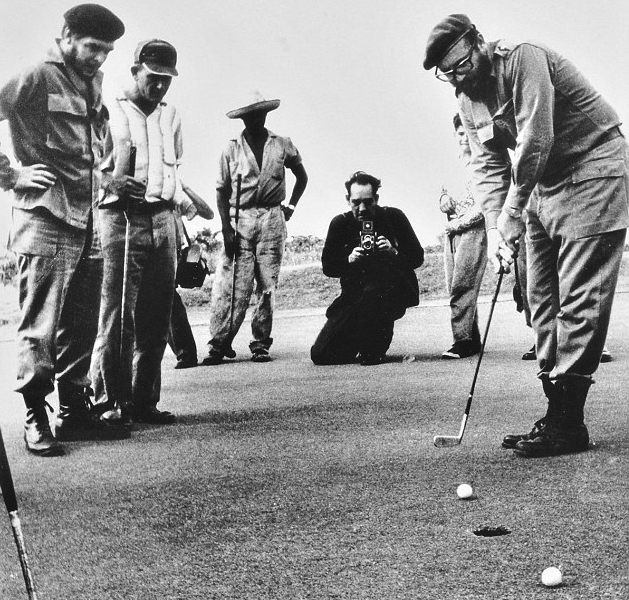
As an example, I long posted a fun picture of Cuban socialist leader Fidel Castro playing golf, the country club sport. I'm not sure this is the exact one, but it's similar:

In the mid-to-late 1980s, I found a discarded paperback about Henry Kissinger that included many images of the Nobel Prize winner with numerous celebrities, including many beautiful women of the 1960s and 1970s. He dated many of these women prior to his marriage to Nancy Maginnes in March 1974. 

Sometime in the late 1980s and early 1990s, I put some of those photos on my bulletin board. Here he is with Elizabeth Taylor. 


Why did I post those images? Where is the satire or ridicule? 

That question is particularly difficult in this instance for obvious reasons. After all, musician Tom Lehrer once said that "satire died" when Henry Kissinger won the Nobel peace prize. 

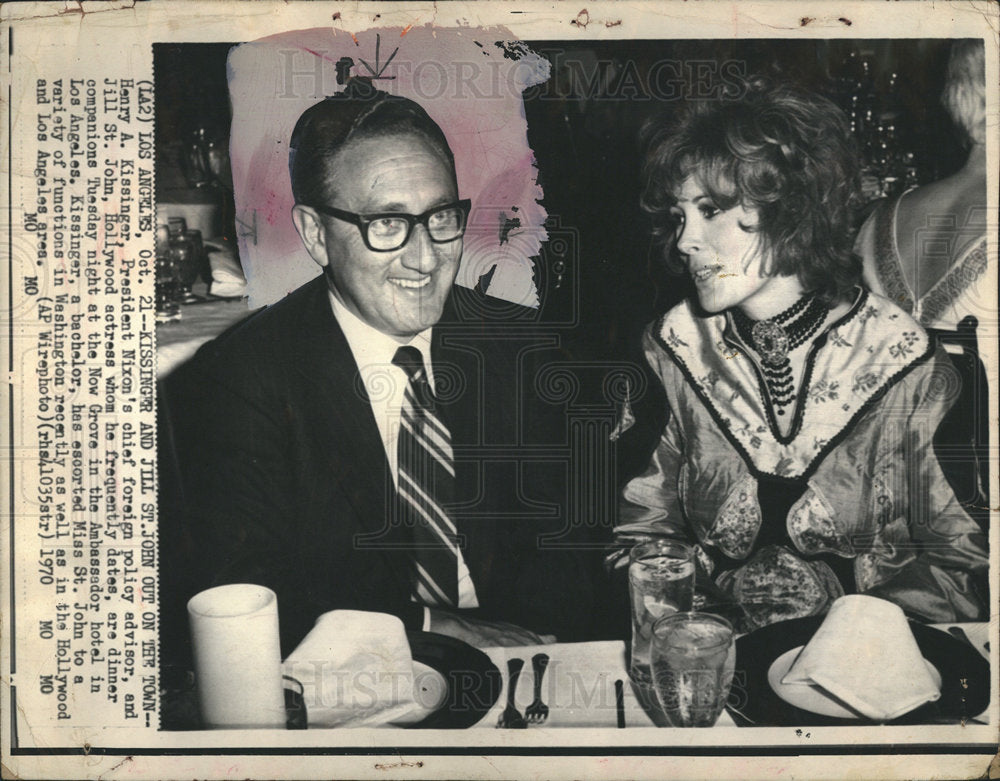
I'm not so sure. To my thinking, the images that used to hang on my office walls helped demonstrate Kissinger's faults. I meant to ridicule Kissinger by posting images like this one, featuring Jill St. John


These photos reminded me of movies featuring mobsters with beautiful young mistresses -- or perhaps even better in this case, of global villains like 007 James Bond's Auric Goldfinger surrounding himself with attractive young female employees. Stereotypically, the women in these situations are shown to be with the men because the relationships were transactional, rather than built on romantic love. They were built on jewelry, cash, and jet-setting.

Over the years, much has already been made of the novelty of Kissinger's dating life and there are strong hints that even Kissinger recognized the material exchange implicit in his situation. This note from his AP obituary attempts to explain the phenomenon: 
Kissinger, who divorced his first wife in 1964, called women “a diversion, a hobby.” Hollywood executives were eager to set him up with starlets, whom Kissinger squired to premieres and showy restaurants, according to Isaacson. Jill St. John was a frequent companion. Others he dated included Shirley MacLaine, Marlo Thomas, Candice Bergen and Liv Ullmann.

In a poll of Playboy Club Bunnies in 1972, the man whom Newsweek dubbed “Super-K” finished first as “the man I would most like to go out on a date with.”

Kissinger’s explanation: “Power is the ultimate aphrodisiac.”
These images could be interpreted as living proof of that explanation. Why would beautiful women be attracted to Henry Kissinger if not for his political power? 

On the other hand, a feminist reading of that quip might be that Kissinger had a greatly distorted view of both gender and power relations. HE was attracted to power (and women) for the same reason(s). 

This image of Kissinger with musician (and far superior human being) Dolly Parton readily conveys his desires -- and they are just as awful and problematic as his policies towards Cambodia, Chile, or Indonesia:


Visit this blog's homepage.

For 280 character IR and foreign policy talk, follow me on twitter.

Or for basketball, baseball, movies or other stuff, follow this personal twitter account.

Friday, February 20, 2015

The French Minister (Quai d’Orsay)


The University of Louisville is currently in the midst of its annual French Film Festival. Unfortunately, two screenings of the film I've been most wanting to see, The French Minister (Quai d’Orsay), were canceled last night because of bad weather. The entire University was closed for extreme cold. Yesterday's 5 pm screening was supposed to be followed by a discussion with French professor Matthieu Dalle, and I'm hoping that will occur today at the 2 pm screening.

Here's the film's synopsis from IMDB:
Alexandre Taillard de Vorms is tall and impressive, a man with style, attractive to women. He also happens to be the Minister of Foreign Affairs for the land of enlightenment: France. With his silver mane and tanned, athletic body, he stalks the world stage, from the floor of the United Nations in New York to the powder keg of Oubanga. There, he calls on the powerful and invokes the mighty to bring peace, to calm the trigger-happy, and to cement his aura of Nobel Peace Prize winner-in-waiting. Alexandre Taillard de Vorms is a force to be reckoned with, waging his own war backed up by the holy trinity of diplomatic concepts: legitimacy, lucidity and efficacy. He takes on American neo-cons, corrupt Russians and money-grabbing Chinese. Perhaps the world doesn't deserve France's magnanimousness, but his art would be wasted if just restricted to home turf. Enter the young Arthur Vlaminck, graduate of the elite National School of Administration, who is hired as head of "language" at the foreign ministry. In other words, he is to write the minister's speeches. But he also has to learn to deal with the sensibilities of the boss and his entourage, and find his way between the private secretary and the special advisers who stalk the corridors of the Quai d'Orsay - the ministry's home - where stress, ambition and dirty dealing are the daily currency. But just as he thinks he can influence the fate of the world, everything seems threatened by the inertia of the technocrats.
Update February 22: The film reminded me in structure of Charlie Chaplin’s The Great Dictator. Basically, the film devoted about half of the narrative to the farcical politics of the French Foreign Ministry and half to the speechwriter’s domestic situation (where important political issues were also revealed in a personal manner). Both films generally ended happily for the ordinary people featured in the stories. No actor in the film played two roles, but the speechwriter literally provided the words for the Foreign Minister's closing address (and in previous speeches).

The parallel to Chaplin's classic film are not perfect. The Foreign Minister character was played for laughs throughout the film, but he was not a power-mad dictator. He was imagined as a slightly foolish political bureaucrat with intellectual interests. Indeed, the Minister's basic three talking points from the first meeting with the speechwriter were reflected in the final speech. I think the filmmaker could be suggesting that these key principles were so obvious and basic that even a fool could identify them right away -- the need for responsibility, unity, and efficacy. Somehow, the neocons and Bush managed to miss these elemental truths as they planned the Iraq war.


Visit this blog's homepage.

For 140 character IR and foreign policy talk, follow me on twitter.

Or for basketball, baseball, movies or other stuff, follow this personal twitter account.

Wednesday, January 14, 2015

Samantha Power in Louisville

I attended this talk by Samantha Power on Monday at the University of Louisville:


I'm not sure UN Ambassador Power said anything really new about American foreign policy, but news reports tended to emphasize two points -- her call for bipartisan foreign policy and her argument against new Congressionally-imposed sanctions on Iran.

If you were not paying close attention, her arguments about the value of economic sanctions seemed to be inconsistent. She criticized the economic embargo against Cuba, claiming that after more than 50 years of failure, the Obama administrations simply wants the U.S. to try a new approach. Yet, at the same time, she praised the success of economic sanctions against Burma (a pet issue of host Senator Mitch McConnell) and other recent sanctions against Iran.

Power argued that unilateral sanctions on Cuba had failed, while collective sanctions on Iran had succeeded. She didn't really talk about this distinction vis-a-vis Burma, but I know the EU also sanctioned Myanmar (Burma). On Cuba:
Even though the Castro regime has been repressing the Cuban people for decades, it is America that has been seen as Goliath picking a fight with David. I’ve seen this first-hand at the United Nations. Last October, for the 23rd year in a row, the UN General Assembly voted overwhelmingly to condemn the U.S. embargo on Cuba. Out of the UN’s 193 member-states, we were only one of two that voted to defend the embargo.
As for Iran, Power argued that the international sanctions regime is largely responsible for bringing Iran to the bargaining table, where it seems willing to limit its ability to produce nuclear weapons. However, new sanctions would backfire, undermining the collective sanctions that she claimed are "exponentially more effective than bilateral sanctions alone."
If we pull the trigger on new nuclear-related sanctions now, we will go from isolating Iran to potentially isolating ourselves. We go from a position of collective strength to a position of individual weakness.
All of these points were framed around a theme of bipartisanship. Power repeatedly emphasized that Republicans and Democrats in Washington fundamentally agreed about the goals of American foreign policy, even as they disagreed about the means to achieve them:
But what is often lost in the coverage of these debates is the fact that they’re disputes about means, not ends; about tactics, not objectives; about how America can tackle complex global challenges, and not whether we ought to try. As Thomas Jefferson once put it, “Every difference of opinion is not a difference of principle.”
In the introductory remarks, University of Louisville President James Ramsey introduced a visiting Army War College Fellow who is auditing my graduate IR seminar this spring.


Visit this blog's homepage.

For 140 character IR and foreign policy talk, follow me on twitter.

Or for basketball, baseball, movies or other stuff, follow this personal twitter account.

Thursday, December 09, 2010

Climate change diplomacy

This past week, I've posted twice to the e-ir blog, Climate Politics: IR and the Environment.

Sunday, December 5, I posted "Hot times?" about the latest temperature news (2010 still has a chance to be the warmest year on record, though it will most likely finish behind 1998 and 2005) and my brief (pessimistic) assessment of the ongoing international climate conference in Cancun.

Today, December 9, I posted "Wikileaks and climate diplomacy," which looks at some of the latest leaked cables pertaining to climate change. For any IR scholar, the documents reflect fairly predictable practices. A powerful state like the US pursues its interests by using the resources at its disposal to influence other states. Not really shocking, but revealed for all to see.


Visit this blog's homepage.