
I'm interested in international relations, American foreign policy, climate change, US presidential elections, public debate, Kansas Jayhawks basketball, film, and major league baseball.
Showing posts with label nuclear weapons. Show all posts
Showing posts with label nuclear weapons. Show all posts
Tuesday, February 11, 2020
Research update
In the last year, I've had several publications appear online and/or in-print.
1. Rodger A. Payne (2020) Canada, the America First agenda, and the western security community, Canadian Foreign Policy Journal, DOI: 10.1080/11926422.2020.1712219.
If you want access, the journal publisher provided an eprint link I can share with 50 people. Send me a note.
2. Rodger A. Payne (2020) Stigmatization by Ridicule: From Dr. Strangelove to Donald Trump, in Non-Nuclear Peace; Beyond the Nuclear Ban Treaty, ed by Tom Sauer, Jorg Kustermans, and Barbara Segaert (Palgrave Macmillan), pp 87-113. DOI: 10.1007/978-3-030-26688-2_5.
I have a pdf if you are interested. This was tied to the conference I attended in Antwerp, Belgium, in May 2019.
3. Rodger A Payne (2019), Grappling with Dr. Strangelove’s “Wargasm” Fantasy, International Studies Review, , viz018, https://doi.org/10.1093/isr/viz018
This one is a bit older (online March 2019), but it remains forthcoming in print afaik. Any members of ISA can download this.
4. Rodger A. Payne (2019), “America First” and U.S.–Canadian Relations, in Canada–US Relations
Sovereignty or Shared Institutions? ed. by David Carment and Christopher Sands (Palgrave Macmillan), pp. 61-83. DOI: 10.1007/978-3-030-05036-8_4
This was related to my fall 2018 Fulbright in Canada, but I actually delivered the paper at a workshop at Johns Hopkins SAIS in June 2018. It's already been downloaded over 200 times, so I presume it was used in some courses over the last year. That's one primary purpose of the Canada Among Nations annual volume. I think I have a pdf of this too.
Visit this blog's homepage.
For 280 character IR and foreign policy talk, follow me on twitter.
Or for basketball, baseball, movies or other stuff, follow this personal twitter account.


Wednesday, March 07, 2018
Trump on War: Korea edition
I'm compiling some statements and tweets from President Donald Trump concerning various alleged threats to US (or international) security.
This post focuses on North Korea. I may add to it as I find additional material. Note: I'm not currently compiling all the stories based on leaked reports, which claim the administration has seriously considered war with North Korea. The administration withdrew its choice for ambassador to South Korea, reportedly, because he was opposed to so-called "bloody nose" strikes against North Korea.
This is from Trump's remarks prior to a briefing on the Opioid crisis, August 8, 2017:
Visit this blog's homepage.
For 140 character IR and foreign policy talk, follow me on twitter.
Or for basketball, baseball, movies or other stuff, follow this personal twitter account.
This post focuses on North Korea. I may add to it as I find additional material. Note: I'm not currently compiling all the stories based on leaked reports, which claim the administration has seriously considered war with North Korea. The administration withdrew its choice for ambassador to South Korea, reportedly, because he was opposed to so-called "bloody nose" strikes against North Korea.
This is from Trump's remarks prior to a briefing on the Opioid crisis, August 8, 2017:
Q Any comment on the reports about North Korea’s nuclear capabilities?
THE PRESIDENT: North Korea best not make any more threats to the United States. They will be met with fire and fury like the world has never seen. He has been very threatening beyond a normal state. And as I said, they will be met with fire, fury, and, frankly, power, the likes of which this world has never seen before.More from Trump's speech to the UN on September 19, 2017:
North Korea’s reckless pursuit of nuclear weapons and ballistic missiles threatens the entire world with unthinkable loss of human life.
It is an outrage that some nations would not only trade with such a regime, but would arm, supply, and financially support a country that imperils the world with nuclear conflict. No nation on earth has an interest in seeing this band of criminals arm itself with nuclear weapons and missiles.
The United States has great strength and patience, but if it is forced to defend itself or its allies, we will have no choice but to totally destroy North Korea. Rocket Man is on a suicide mission for himself and for his regime. The United States is ready, willing and able, but hopefully this will not be necessary. That’s what the United Nations is all about; that’s what the United Nations is for. Let’s see how they do
It is time for North Korea to realize that the denuclearization is its only acceptable future. The United Nations Security Council recently held two unanimous 15-0 votes adopting hard-hitting resolutions against North Korea, and I want to thank China and Russia for joining the vote to impose sanctions, along with all of the other members of the Security Council. Thank you to all involved.
But we must do much more. It is time for all nations to work together to isolate the Kim regime until it ceases its hostile behavior.The President spoke in Seoul, South Korea on November 7, 2017. The speech sounded much like the ones George W. Bush used to give about Iraq back in 2002. This is a long excerpt, but it is telling:
The North Korean regime has pursued its nuclear and ballistic missile programs in defiance of every assurance, agreement, and commitment it has made to the United States and its allies. It’s broken all of those commitments. After promising to freeze its plutonium program in 1994, it repeated [reaped] the benefits of the deal and then — and then immediately continued its illicit nuclear activities.
In 2005, after years of diplomacy, the dictatorship agreed to ultimately abandon its nuclear programs and return to the Treaty on Non-Proliferation. But it never did. And worse, it tested the very weapons it said it was going to give up. In 2009, the United States gave negotiations yet another chance, and offered North Korea the open hand of engagement. The regime responded by sinking a South Korean Navy ship, killing 46 Korean sailors. To this day, it continues to launch missiles over the sovereign territory of Japan and all other neighbors, test nuclear devices, and develop ICBMs to threaten the United States itself. The regime has interpreted America’s past restraint as weakness. This would be a fatal miscalculation. This is a very different administration than the United States has had in the past.
Today, I hope I speak not only for our countries, but for all civilized nations, when I say to the North: Do not underestimate us, and do not try us. We will defend our common security, our shared prosperity, and our sacred liberty.
We did not choose to draw here, on this peninsula — (applause) — this magnificent peninsula — the thin line of civilization that runs around the world and down through time. But here it was drawn, and here it remains to this day. It is the line between peace and war, between decency and depravity, between law and tyranny, between hope and total despair. It is a line that has been drawn many times, in many places, throughout history. To hold that line is a choice free nations have always had to make. We have learned together the high cost of weakness and the high stakes of its defense.
America’s men and women in uniform have given their lives in the fight against Nazism, imperialism, Communism and terrorism.
America does not seek conflict or confrontation, but we will never run from it. History is filled with discarded regimes that have foolishly tested America’s resolve.
Anyone who doubts the strength or determination of the United States should look to our past, and you will doubt it no longer. We will not permit America or our allies to be blackmailed or attacked. We will not allow American cities to be threatened with destruction. We will not be intimidated. And we will not let the worst atrocities in history be repeated here, on this ground, we fought and died so hard to secure. (Applause.)
That is why I have come here, to the heart of a free and flourishing Korea, with a message for the peace-loving nations of the world: The time for excuses is over. Now is the time for strength. If you want peace, you must stand strong at all times. (Applause.) The world cannot tolerate the menace of a rogue regime that threatens with nuclear devastation.
All responsible nations must join forces to isolate the brutal regime of North Korea — to deny it and any form — any form of it. You cannot support, you cannot supply, you cannot accept. We call on every nation, including China and Russia, to fully implement U.N. Security Council resolutions, downgrade diplomatic relations with the regime, and sever all ties of trade and technology.
It is our responsibility and our duty to confront this danger together — because the longer we wait, the greater the danger grows, and the fewer the options become. (Applause.) And to those nations that choose to ignore this threat, or, worse still, to enable it, the weight of this crisis is on your conscience.
I also have come here to this peninsula to deliver a message directly to the leader of the North Korean dictatorship: The weapons you are acquiring are not making you safer. They are putting your regime in grave danger. Every step you take down this dark path increases the peril you face.And Trump's State of the Union address on January 30, 2018:
North Korea’s reckless pursuit of nuclear missiles could very soon threaten our homeland.
We are waging a campaign of maximum pressure to prevent that from happening.
Past experience has taught us that complacency and concessions only invite aggression and provocation. I will not repeat the mistakes of past administrations that got us into this dangerous position.
We need only look at the depraved character of the North Korean regime to understand the nature of the nuclear threat it could pose to America and our allies.
Otto Warmbier was a hardworking student at the University of Virginia. On his way to study abroad in Asia, Otto joined a tour to North Korea. At its conclusion, this wonderful young man was arrested and charged with crimes against the state. After a shameful trial, the dictatorship sentenced Otto to 15 years of hard labor, before returning him to America last June — horribly injured and on the verge of death. He passed away just days after his return.
Otto’s Parents, Fred and Cindy Warmbier, are with us tonight — along with Otto’s brother and sister, Austin and Greta. You are powerful witnesses to a menace that threatens our world, and your strength inspires us all. Tonight, we pledge to honor Otto’s memory with American resolve.Some key tweets, arranged chronologically:
The U.S. has been talking to North Korea, and paying them extortion money, for 25 years. Talking is not the answer!— Donald J. Trump (@realDonaldTrump) August 30, 2017
Military solutions are now fully in place,locked and loaded,should North Korea act unwisely. Hopefully Kim Jong Un will find another path!— Donald J. Trump (@realDonaldTrump) August 11, 2017
Just heard Foreign Minister of North Korea speak at U.N. If he echoes thoughts of Little Rocket Man, they won't be around much longer!— Donald J. Trump (@realDonaldTrump) September 24, 2017
North Korean Leader Kim Jong Un just stated that the “Nuclear Button is on his desk at all times.” Will someone from his depleted and food starved regime please inform him that I too have a Nuclear Button, but it is a much bigger & more powerful one than his, and my Button works!— Donald J. Trump (@realDonaldTrump) January 3, 2018
Visit this blog's homepage.
For 140 character IR and foreign policy talk, follow me on twitter.
Or for basketball, baseball, movies or other stuff, follow this personal twitter account.
Thursday, August 24, 2017
Nuclear weapons radio interview
I was recently interviewed by Philosophy Professor Avery Kolers for his "Ethics Forward" local radio program (on WFMP-LP 106.5 FM). The show's topic "Fire and Fury" was about nuclear weapons, deterrence, and tensions between the U.S. and North Korea.
Now that it has been broadcast over the airwaves, you can listen to the broadcast online at Soundcloud:
Visit this blog's homepage.
For 140 character IR and foreign policy talk, follow me on twitter.
Or for basketball, baseball, movies or other stuff, follow this personal twitter account.
Now that it has been broadcast over the airwaves, you can listen to the broadcast online at Soundcloud:
Visit this blog's homepage.
For 140 character IR and foreign policy talk, follow me on twitter.
Or for basketball, baseball, movies or other stuff, follow this personal twitter account.
Sunday, December 04, 2016
Dr. Strangelove's "Wargasm"
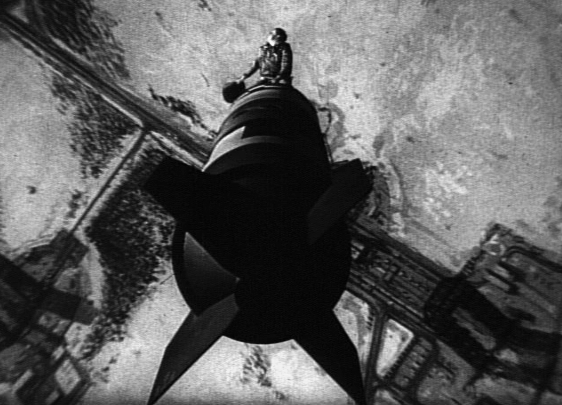
Here's the abstract:
Dr. Strangelove continues to be one of the most acclaimed comedic films of all-time, often appearing on critics’ lists enumerating great films. Likewise, international relations experts commonly view the film as a “no brainer” choice among the most essential IR-themed movies. Dan Lindley’s 2001 Teaching Guide to Dr. Strangelove offers the standard rationale for studying this film. It can be “a springboard to discuss deterrence, mutually assured destruction, preemption, the security dilemma, arms races, relative versus absolute gains concerns, Cold War misperceptions and paranoia, and civil–military relations.” This paper considers critical theoretical concerns raised in the film that Lindley and others overlook. First, the film’s narrative is scripted as a satire or black comedy rather than as a tragedy or romance. This is a meaningful choice that strongly influences the way the film should be understood. Second, as film critic Tony Macklin argued decades ago (1964), the film can be viewed as a sex allegory, a dominant theme that has typically been ignored. Even director Stanley Kubrick acknowledged the film’s “sexual framework.” What does the film’s “Wargasm” imply about international relations and nuclear strategy?
Visit this blog's homepage.
For 140 character IR and foreign policy talk, follow me on twitter.
Or for basketball, baseball, movies or other stuff, follow this personal twitter account.
Friday, September 09, 2016
Presidential politics goes nuclear
This "daisy ad" from 1964 is infamous, though it aired only once (but see also this ad for more context from that campaign cycle). I've showed this ad many times in my classes:
A super-PAC supporting Hillary Clinton is going to run the following ad in a number of swing states this election cycle -- Florida, Iowa, Nevada, North Carolina, and Ohio.
I'm not 100% sure that ad is all that effective. Read this piece and watch the accompanying videos to understand the context for this ad. People who have paying attention to the campaign for months (high information voters) already know this material, but those not paying attention (low information voters) won't get enough content from the new ad.
Will it resonate emotionally?
I'll close by quoting a (former?) Republican hero:
“A nuclear war cannot be won and must never be fought. The only value in our two nations possessing nuclear weapons is to make sure they will never be used. But then would it not be better to do away with them entirely?”
Ronald Reagan, 1984 State of the Union
H/T to Patrick Caldwell.
Visit this blog's homepage.
For 140 character IR and foreign policy talk, follow me on twitter.
Or for basketball, baseball, movies or other stuff, follow this personal twitter account.
A super-PAC supporting Hillary Clinton is going to run the following ad in a number of swing states this election cycle -- Florida, Iowa, Nevada, North Carolina, and Ohio.
I'm not 100% sure that ad is all that effective. Read this piece and watch the accompanying videos to understand the context for this ad. People who have paying attention to the campaign for months (high information voters) already know this material, but those not paying attention (low information voters) won't get enough content from the new ad.
Will it resonate emotionally?
I'll close by quoting a (former?) Republican hero:
“A nuclear war cannot be won and must never be fought. The only value in our two nations possessing nuclear weapons is to make sure they will never be used. But then would it not be better to do away with them entirely?”
Ronald Reagan, 1984 State of the Union
H/T to Patrick Caldwell.
Visit this blog's homepage.
For 140 character IR and foreign policy talk, follow me on twitter.
Or for basketball, baseball, movies or other stuff, follow this personal twitter account.
Sunday, October 25, 2015
Benghazi: Time to Think the Unthinkable?
Three weeks ago, I gave a paper on "Thinking the Unthinkable About National Security Narratives." It was inspired by the brief uproar over Seymour Hersch's claims about the Obama administration's tale about the killing of Osama bin Laden. Indeed, much of the paper tracks a long series of likely political deceptions and fabrications fomented by various U.S. national security elites over the years. I focus on threat inflation, misapplied analogies to justify war, stories to support the conduct of American wars, etc.
Ultimately, the paper will need to expand on the evidence, but it briefly considers the bomber gap, missile gap, and window of vulnerability. These cases largely led to unnecessary and costly increases in US military spending. It also considers inflated threats that helped lead to war -- the Gulf of Tonkin incident and the first Persian Gulf War, for example. I barely discussed the numerous deceptions allegedly employed to sell the most recent Iraq war, which was the subject of so much of my blogging and academic writing for a decade. Instead, I quote some scholars who argue that we won't know for certain about alleged Bush administration deceptions until additional critical materials are declassified.
There are plenty of other likely deceptions with more modest political goals and some are mentioned in the paper (Jessica Lynch, Pat Tillman). Remember, Secretary of Defense Robert McNamara didn't even think the deployment of Soviet Missiles in Cuba in October 1962 posed a new military threat to the US. He described it as a domestic political problem. That's not the way JFK framed it to the American public or to the Soviets.
Indeed, my "Unthinkable" paper describes the problem of deception about national security as endemic -- and especially problematic to study academically because of the huge advantages security elites have in the marketplace of ideas. They control information, largely thanks to secrecy, which gives them the ability to provide a particular narrative about threats, war, etc. They have the authority to speak, thanks to their position in power, which is accompanied by access to impressive material resources as well. The stories elites tell may endure for a long time, even as new evidence challenges some of it. My paper points out that historians and political scientists are still arguing about whether FDR tried to deceive Americans about the need for World War II. The relevant documents are ~75 years old.
Last weekend, the NY Times Magazine drew attention to some of the same questions I'm asking and problems I'm exploring, though Jonathan Mahler chose to focus on the Obama administration story about killing bin Laden.
My paper included a number of caveats about the strength of the evidence about various alleged cases of deception because the ideas I'm exploring are ordinarily "unthinkable." Political opponents in the heat of a partisan struggle might accuse their foes of engaging in deception and political fabrication in the area of national security, but the wider reaction is usually much more cautious. And academics are especially cautious.
Critics are often not taken seriously if they argue that elites use national security matters to increase their popularity ("rally 'round the flag"), win elections, create jobs, or divert attention from personal political crisis. This is said to reflect paranoia and conspiracy theorizing.
And, in fact, Mahler's piece was attacked by critics as promoting "conspiracy theory." Colleagues at the NY Times were apparently worried about the effect this story would have on the credibility of their newspaper's journalism. CNN's Peter Bergen called Mahler's story "bizarre."
So what is the story with Benghazi? Did Clinton seek to deceive? Or are conservatives serving up a juicy conspiracy theory based on thin evidence?
Based on my reading of various conservative twitter users, the question about Clinton's alleged deceptions now seem to be their primary concern. The critics argue that Clinton and others blamed an anti-Islamic video for the attack, when she and others in the administration knew it was an intentional act of terror. This is Clinton's entire statement of September 11, 2012, with the most controversial part in red:
Essentially, conservatives claim that the evidence was soon clear that Benghazi was a predesigned terrorist attack and that there had been no anti-video protest at the mission in Libya. Nonetheless, the Obama administration blamed a video repeatedly.
This suggests a partisan deception about policy, right?
What is the evidence for the defense? Obama himself called the event an "act of terror" on September 12. The administration started acknowledging the premeditated terrorism by September 19. That date is important because it turns out the intelligence agencies were apparently telling the administration that the video protest was the likely cause until September 24. In November 2014, the House Permanent Select Committee on Intelligence released a report that seemingly debunked the theory about political fabrication:
This week, conservatives are convinced that Clinton's same-night email to daughter Chelsea and phone call with Egyptian prime minister (September 12) constitute new smoking gun evidence about their original concerns. In a brief email reference, Clinton told Chelsea that the act was perpetrated by an al-Qaeda like group. She also told the Egyptian PM that “We know the attack in Libya had nothing to do with the film. It was a planned attack — not a protest.”
This sounds like fairly damning evidence and it might well be correct to blame Clinton and the Obama administration for playing politics with national security. However, this version of the narrative overlooks certain facts.
First, the Republicans still have not grappled with the intelligence reports. Was it wrong to say something publicly that was consistent with the intelligence? Readers may remember that this was essentially the defense of the Bush administration regarding Iraq, even though members of the administration often said things that seemed well beyond the intelligence findings. This reading doesn't explain the sentences Clinton apparently communicated to her daughter or to the Egyptians, but ask this question: Is it possible that those far more private instances simply reflect her going beyond the intelligence, perhaps based on unconfirmed evidence? I don't know, and neither do the conservative critics.
Second, Clinton's statement used the passive voice. She didn't say the video caused the attacks, she said some had claimed that. It's a classic Fox News tactic, of course. Indeed, Fox News was running with the video story on September 11, just as many other news agencies were. Susan Rice's statements on Sunday TV went further, but she wasn't the one being scrutinized this week. On those shows, Rice also repeatedly said, "we'll wait to see exactly what the investigation finally confirms." President Obama also made similar remarks that week about waiting for additional evidence to confirm what happened.
Third, the right's interpretations focused narrowly on Benghazi and ignores other important events occurring that day. The inflammatory video in question was provoking demonstrations at American embassies around the world. The US mission in Cairo was of special concern, though other attacks elsewhere led to deaths. The Obama administration was arguably trying to signal that the US would not tolerate this behavior. Perhaps they were thinking that there would be no replay of Iran 1979 on their watch.
I'm not creating this tale for them, I'm just providing a charitable reading of the situation. This is the story Clinton told the members of Congress this week:
This post was motivated by several twitter exchanges I had yesterday with people on the right (linked above). I certainly agree that there's reason to be interested in this case, but it seems like a relatively mild instance of a much larger problem. Some people are quite worked up about it, but I didn't notice them screaming for heads to role because of Iraq. Or lies about Jessica Lynch. Or lies about Pat Tillman.
I know that Tom Nichols has a crafty argument about Bill Clinton's role in inflating the chemical weapons threat from Iraq, but Clinton wasn't the President who puffed up a nuclear threat to launch a war on Iraq. As I've written before, referencing David Kay, letting a chemical threat justify preventive war might spark dozens of such wars.
Visit this blog's homepage.
For 140 character IR and foreign policy talk, follow me on twitter.
Or for basketball, baseball, movies or other stuff, follow this personal twitter account.
Ultimately, the paper will need to expand on the evidence, but it briefly considers the bomber gap, missile gap, and window of vulnerability. These cases largely led to unnecessary and costly increases in US military spending. It also considers inflated threats that helped lead to war -- the Gulf of Tonkin incident and the first Persian Gulf War, for example. I barely discussed the numerous deceptions allegedly employed to sell the most recent Iraq war, which was the subject of so much of my blogging and academic writing for a decade. Instead, I quote some scholars who argue that we won't know for certain about alleged Bush administration deceptions until additional critical materials are declassified.
There are plenty of other likely deceptions with more modest political goals and some are mentioned in the paper (Jessica Lynch, Pat Tillman). Remember, Secretary of Defense Robert McNamara didn't even think the deployment of Soviet Missiles in Cuba in October 1962 posed a new military threat to the US. He described it as a domestic political problem. That's not the way JFK framed it to the American public or to the Soviets.
Indeed, my "Unthinkable" paper describes the problem of deception about national security as endemic -- and especially problematic to study academically because of the huge advantages security elites have in the marketplace of ideas. They control information, largely thanks to secrecy, which gives them the ability to provide a particular narrative about threats, war, etc. They have the authority to speak, thanks to their position in power, which is accompanied by access to impressive material resources as well. The stories elites tell may endure for a long time, even as new evidence challenges some of it. My paper points out that historians and political scientists are still arguing about whether FDR tried to deceive Americans about the need for World War II. The relevant documents are ~75 years old.
Last weekend, the NY Times Magazine drew attention to some of the same questions I'm asking and problems I'm exploring, though Jonathan Mahler chose to focus on the Obama administration story about killing bin Laden.
It’s not that the truth about bin Laden’s death is unknowable; it’s that we don’t know it. And we can’t necessarily console ourselves with the hope that we will have more answers any time soon; to this day, the final volume of the C.I.A.’s official history of the Bay of Pigs remains classified. We don’t know what happened more than a half-century ago, much less in 2011.
There are different ways to control a narrative. There’s the old-fashioned way: Classify documents that you don’t want seen and, as [Defense Secretary Robert] Gates said, ‘‘keep mum on the details.’’ But there’s also the more modern, social-media-savvy approach: Tell the story you want them to believe. Silence is one way to keep a secret. Talking is another. And they are not mutually exclusive.In any case, this week, the world watched former Secretary of State Hillary Clinton testify for nearly 11 hours about the September 11, 2012, attack on the American diplomatic mission in Benghazi. The questions that Republicans wanted to ask were much like the ones I'm asking: Did the Obama administration, and especially Secretary Clinton, fabricate a political lie to the American people? Did they do this for reasons unrelated to genuine national security purposes (domestic politics)?
My paper included a number of caveats about the strength of the evidence about various alleged cases of deception because the ideas I'm exploring are ordinarily "unthinkable." Political opponents in the heat of a partisan struggle might accuse their foes of engaging in deception and political fabrication in the area of national security, but the wider reaction is usually much more cautious. And academics are especially cautious.
Critics are often not taken seriously if they argue that elites use national security matters to increase their popularity ("rally 'round the flag"), win elections, create jobs, or divert attention from personal political crisis. This is said to reflect paranoia and conspiracy theorizing.
And, in fact, Mahler's piece was attacked by critics as promoting "conspiracy theory." Colleagues at the NY Times were apparently worried about the effect this story would have on the credibility of their newspaper's journalism. CNN's Peter Bergen called Mahler's story "bizarre."
So what is the story with Benghazi? Did Clinton seek to deceive? Or are conservatives serving up a juicy conspiracy theory based on thin evidence?
Based on my reading of various conservative twitter users, the question about Clinton's alleged deceptions now seem to be their primary concern. The critics argue that Clinton and others blamed an anti-Islamic video for the attack, when she and others in the administration knew it was an intentional act of terror. This is Clinton's entire statement of September 11, 2012, with the most controversial part in red:
"I condemn in the strongest terms the attack on our mission in Benghazi today. As we work to secure our personnel and facilities, we have confirmed that one of our State Department officers was killed. We are heartbroken by this terrible loss. Our thoughts and prayers are with his family and those who have suffered in this attack.The debate over the years has often focused on a memo drafted by then-White House Deputy Strategic Communications Adviser Ben Rhodes a few days after this statement, which formulated the White House talking points to guide then-UN Ambassador Susan Rice on various Sunday TV programs. The administration wanted to sell the attack as “rooted in an Internet video, and not a failure of policy.” The presidential election was about 7 weeks away and the killing of bin Laden was a featured part of their story for reelection.
This evening, I called Libyan President Magariaf to coordinate additional support to protect Americans in Libya. President Magariaf expressed his condemnation and condolences and pledged his government’s full cooperation.
Some have sought to justify this vicious behavior as a response to inflammatory material posted on the Internet. The United States deplores any intentional effort to denigrate the religious beliefs of others. Our commitment to religious tolerance goes back to the very beginning of our nation. But let me be clear: There is never any justification for violent acts of this kind.
In light of the events of today, the United States government is working with partner countries around the world to protect our personnel, our missions, and American citizens worldwide."
Essentially, conservatives claim that the evidence was soon clear that Benghazi was a predesigned terrorist attack and that there had been no anti-video protest at the mission in Libya. Nonetheless, the Obama administration blamed a video repeatedly.
This suggests a partisan deception about policy, right?
What is the evidence for the defense? Obama himself called the event an "act of terror" on September 12. The administration started acknowledging the premeditated terrorism by September 19. That date is important because it turns out the intelligence agencies were apparently telling the administration that the video protest was the likely cause until September 24. In November 2014, the House Permanent Select Committee on Intelligence released a report that seemingly debunked the theory about political fabrication:

This week, conservatives are convinced that Clinton's same-night email to daughter Chelsea and phone call with Egyptian prime minister (September 12) constitute new smoking gun evidence about their original concerns. In a brief email reference, Clinton told Chelsea that the act was perpetrated by an al-Qaeda like group. She also told the Egyptian PM that “We know the attack in Libya had nothing to do with the film. It was a planned attack — not a protest.”
This sounds like fairly damning evidence and it might well be correct to blame Clinton and the Obama administration for playing politics with national security. However, this version of the narrative overlooks certain facts.
First, the Republicans still have not grappled with the intelligence reports. Was it wrong to say something publicly that was consistent with the intelligence? Readers may remember that this was essentially the defense of the Bush administration regarding Iraq, even though members of the administration often said things that seemed well beyond the intelligence findings. This reading doesn't explain the sentences Clinton apparently communicated to her daughter or to the Egyptians, but ask this question: Is it possible that those far more private instances simply reflect her going beyond the intelligence, perhaps based on unconfirmed evidence? I don't know, and neither do the conservative critics.
Second, Clinton's statement used the passive voice. She didn't say the video caused the attacks, she said some had claimed that. It's a classic Fox News tactic, of course. Indeed, Fox News was running with the video story on September 11, just as many other news agencies were. Susan Rice's statements on Sunday TV went further, but she wasn't the one being scrutinized this week. On those shows, Rice also repeatedly said, "we'll wait to see exactly what the investigation finally confirms." President Obama also made similar remarks that week about waiting for additional evidence to confirm what happened.
Third, the right's interpretations focused narrowly on Benghazi and ignores other important events occurring that day. The inflammatory video in question was provoking demonstrations at American embassies around the world. The US mission in Cairo was of special concern, though other attacks elsewhere led to deaths. The Obama administration was arguably trying to signal that the US would not tolerate this behavior. Perhaps they were thinking that there would be no replay of Iran 1979 on their watch.
I'm not creating this tale for them, I'm just providing a charitable reading of the situation. This is the story Clinton told the members of Congress this week:
FMR. SECRETARY OF STATE HILLARY CLINTON: During the day on September 11th, as you did mention, Congressman, there was a very large protest against our embassy in Cairo. Protesters breached the walls. They tore down the American flag. And it was of grave concern to us because the inflammatory video had been shown on Egyptian television, which has a broader reach than just inside Egypt.
And if you look at what I said, I referred to the video that night in a very specific way. I said, some have sought to justify the attack because of the video.
I used those words deliberately, not to ascribe a motive to every attacker but as a warning to those across the region that there was no justification for further attacks.
And, in fact, during the course of that week, we had many attacks that were all about the video. We had people breaching the walls of our embassies in Tunis, in Khartoum; we had people, thankfully not Americans, dying at protests. But that's what was going on, Congressman.I'm not sure of Clinton's motives, but her story fits the words. Sure, the Republican story also seems to fit, but it presumes malfeasance without proving it. I'm willing to think about the unthinkable, but I want the evidence of deception to be as strong as it can be.
This post was motivated by several twitter exchanges I had yesterday with people on the right (linked above). I certainly agree that there's reason to be interested in this case, but it seems like a relatively mild instance of a much larger problem. Some people are quite worked up about it, but I didn't notice them screaming for heads to role because of Iraq. Or lies about Jessica Lynch. Or lies about Pat Tillman.
I know that Tom Nichols has a crafty argument about Bill Clinton's role in inflating the chemical weapons threat from Iraq, but Clinton wasn't the President who puffed up a nuclear threat to launch a war on Iraq. As I've written before, referencing David Kay, letting a chemical threat justify preventive war might spark dozens of such wars.
Visit this blog's homepage.
For 140 character IR and foreign policy talk, follow me on twitter.
Or for basketball, baseball, movies or other stuff, follow this personal twitter account.
Wednesday, January 14, 2015
Samantha Power in Louisville
I attended this talk by Samantha Power on Monday at the University of Louisville:
I'm not sure UN Ambassador Power said anything really new about American foreign policy, but news reports tended to emphasize two points -- her call for bipartisan foreign policy and her argument against new Congressionally-imposed sanctions on Iran.
If you were not paying close attention, her arguments about the value of economic sanctions seemed to be inconsistent. She criticized the economic embargo against Cuba, claiming that after more than 50 years of failure, the Obama administrations simply wants the U.S. to try a new approach. Yet, at the same time, she praised the success of economic sanctions against Burma (a pet issue of host Senator Mitch McConnell) and other recent sanctions against Iran.
Power argued that unilateral sanctions on Cuba had failed, while collective sanctions on Iran had succeeded. She didn't really talk about this distinction vis-a-vis Burma, but I know the EU also sanctioned Myanmar (Burma). On Cuba:
Visit this blog's homepage.
For 140 character IR and foreign policy talk, follow me on twitter.
Or for basketball, baseball, movies or other stuff, follow this personal twitter account.
I'm not sure UN Ambassador Power said anything really new about American foreign policy, but news reports tended to emphasize two points -- her call for bipartisan foreign policy and her argument against new Congressionally-imposed sanctions on Iran.
If you were not paying close attention, her arguments about the value of economic sanctions seemed to be inconsistent. She criticized the economic embargo against Cuba, claiming that after more than 50 years of failure, the Obama administrations simply wants the U.S. to try a new approach. Yet, at the same time, she praised the success of economic sanctions against Burma (a pet issue of host Senator Mitch McConnell) and other recent sanctions against Iran.
Power argued that unilateral sanctions on Cuba had failed, while collective sanctions on Iran had succeeded. She didn't really talk about this distinction vis-a-vis Burma, but I know the EU also sanctioned Myanmar (Burma). On Cuba:
Even though the Castro regime has been repressing the Cuban people for decades, it is America that has been seen as Goliath picking a fight with David. I’ve seen this first-hand at the United Nations. Last October, for the 23rd year in a row, the UN General Assembly voted overwhelmingly to condemn the U.S. embargo on Cuba. Out of the UN’s 193 member-states, we were only one of two that voted to defend the embargo.As for Iran, Power argued that the international sanctions regime is largely responsible for bringing Iran to the bargaining table, where it seems willing to limit its ability to produce nuclear weapons. However, new sanctions would backfire, undermining the collective sanctions that she claimed are "exponentially more effective than bilateral sanctions alone."
If we pull the trigger on new nuclear-related sanctions now, we will go from isolating Iran to potentially isolating ourselves. We go from a position of collective strength to a position of individual weakness.All of these points were framed around a theme of bipartisanship. Power repeatedly emphasized that Republicans and Democrats in Washington fundamentally agreed about the goals of American foreign policy, even as they disagreed about the means to achieve them:
But what is often lost in the coverage of these debates is the fact that they’re disputes about means, not ends; about tactics, not objectives; about how America can tackle complex global challenges, and not whether we ought to try. As Thomas Jefferson once put it, “Every difference of opinion is not a difference of principle.”In the introductory remarks, University of Louisville President James Ramsey introduced a visiting Army War College Fellow who is auditing my graduate IR seminar this spring.
Visit this blog's homepage.
For 140 character IR and foreign policy talk, follow me on twitter.
Or for basketball, baseball, movies or other stuff, follow this personal twitter account.
Tuesday, December 09, 2014
Divine Intervention?
I'm still working my way through the array of article clippings surrounding my desk at home.
This quote is from General Lee Butler, former head of the US Strategic Command:
Visit this blog's homepage.
For 140 character IR and foreign policy talk, follow me on twitter.
Or for basketball, baseball, movies or other stuff, follow this personal twitter account.
This quote is from General Lee Butler, former head of the US Strategic Command:
...we escaped the Cold War without a nuclear holocaust by some combination of skill, luck and divine intervention, and I suspect the latter in greatest proportion.The quote was included in an article I read back in June, but it was originally delivered in a speech by Butler in 1999.
Visit this blog's homepage.
For 140 character IR and foreign policy talk, follow me on twitter.
Or for basketball, baseball, movies or other stuff, follow this personal twitter account.
Wednesday, May 07, 2014
Strangelove, indeed
 |
| Photo credit: NASA Nothing phallic here, right? |
The most important theme of the film is that it makes fun of the sad, perverse, and absurd reality that the U.S. and the Soviet Union could destroy each other within 30 minutes.I use "Dr. Strangelove" in my film class, primarily as a critique of nuclear deterrence strategy. Many former civilian and military leaders around the world now argue for abolition of nuclear weapons and they repeatedly insist that nuclear deterrence strategy is absurd. Ridiculous. I've been working on this theme for a chapter in my comedy book.
The first time I ever showed the film in a class was while I was a term/visiting professor at Northwestern. To fulfill part of my overload teaching assignment, the department chair had allowed me to teach a small seminar on nuclear deterrence. The handful of students and I watched a video of the film very late in the term after everyone had a strong feel for deterrence theory and the class had read many original declassified documents about nuclear planning, threats, etc.. Back in those days -- around 1990 -- the film did not replay regularly on cable television. Streaming media was not ubiquitous and it was a real treat to be able to see Stanley Kubrick's masterpiece.
Did I mention that every student in that small seminar was male? No women had signed up.
In more recent years, I've adapted the film class to a wider audience of political science students. The course still focuses on "Global Politics Through Film," but it is now regularly taught as one of our senior capstone seminars, a "culminating undergraduate experience." To capture a wider range of ideas from the discipline, I have been addressing some of the other prevalent themes of the film:
Indeed, the gender politics in the film are obviously quite provocative, essentially equating male sexual fantasies with war and nuclear planning. The latest Planning Guidance for Response to a Nuclear Detonation suggests that absurd nuclear fantasies continue to influence today’s security policymakers.I was reminded about this today when I happened across a magazine article about the politics of the Pentagon's F-35 aircraft, also known as the most expensive weapon the U.S. has ever attempted to build. Needless to say, it has been a controversial weapon given those costs, plus various setbacks, delays, and uncertainties about the piloted weapon's purpose in an age of drone warfare. Still, one alleged impetus for the new fighter echoes a theme that Stanley Kubrick emphasizes in "Dr. Strangelove":
"There's always this sexual drive for a new airplane on the part of each service," says Tom Christie, the Pentagon's chief weapons tester from 2001 to 2005. "Persistent, urgent and natural."That's a gendered lesson about "Dr. Strangelove" that Lindley does not overtly discuss in his film teaching guide. Perhaps it is what he had in mind when he calls nuclear exchange scenarios "sad, perverse, and absurd."
P.S. Coincidentally, I also recently read a book review by Akemi Johnson that discussed What Soldiers Do; Sex and the American GI in World War II France by Mary Louise Roberts. This paragraph gives you an idea of that book's thesis about gender and IR:
“The history of war,” Roberts writes, “cannot be separated from the history of the body.” Beyond combat, the bodies involved—the ones that physically connect, flesh upon flesh—are usually those of male soldiers, arrived from a foreign land to liberate, destroy or occupy, and those of female civilians, attracted or yanked into the military world. The interactions between them are intimate yet iconic, private yet political. A rape by an American soldier threatens to expose harsh realities about American hegemony; another GI’s part in an international romance suggests an entire country’s willing deference to benevolent US control. Harnessed for propaganda and protest, tangled in injustices like institutional lynching, these sexual relationships are essential to understanding war and its aftermath.
Visit this blog's homepage.
For 140 character IR and foreign policy talk, follow me on twitter.
Or for basketball, baseball, movies or other stuff, follow this personal twitter account.
Wednesday, October 23, 2013
Non-Proliferation in 2013

On Monday, I attended a lunchtime talk by Ambassador Susan Burk, former Special Representative to the President for Nuclear Non-Proliferation. Her talk, sponsored by the Center for Asian Democracy, was entitled “Reducing Nuclear Dangers: Challenges and Opportunities for the International Non-Proliferation Regime.” It was the second in a recent series of talks on nuclear nonproliferation.
Ambassador Burk did a nice job of presenting the conventional wisdom about the Nonproliferation Treaty (NPT) and regime. She reviewed some of the history, talked about her own experiences attending three review conferences, and briefly overviewed some of the concern about potential proliferants.
However, Burk didn't really talk about Article VI of the NPT or U.S. responsibility to reduce its nuclear weapons. I guess the ideals expressed in President Obama's 2009 Prague address have lost some of their power.
One of my former graduate students asked Burk a question about the potential illegality of nuclear weapons, but I had to attend another event before I could hear the response. Apparently, Burk does not believe nuclear weapons are illegal for the original five nuclear weapons states of the NPT.
Visit this blog's homepage.
For 140 character IR and foreign policy talk, follow me on twitter.
Or for basketball, baseball, movies or other stuff, follow this personal twitter account.
Sunday, July 14, 2013
Buy an E-Z Pass
 |
| Source: U.S. Department of Transportation Federal Highway Administration |
Do you drive frequently on tollways? If so, you should buy an E-ZPass.
Why? Well, Lindsay Abrams reported an interesting health benefit involving E-Z Pass in the June 2013 Atlantic.
Exposure to pollution matters, too. One of the more inventive recent studies involves, of all things, E‑ZPass. The toll-collection system eased traffic on New Jersey and Pennsylvania highways, improving air quality, which seems to have in turn affected fetal health. Among pregnant women living within a mile or so of an E-ZPass toll plaza, premature births fell by 8.6 percent, and low birth weight, by 9.3 percent. [Emphasis in original.]Abrams references Currie and Walker, “Traffic Congestion and Infant Health” (American Economic Journal: Applied Economics, Jan. 2011).
The short Abrams piece cites a number of other studies involving maternal and fetal health. It turns out that nuclear fallout is bad for newborns, but you would have guessed that. The piece also references data suggesting that national tragedies (think 9/11) and war are also harmful to fetuses -- but so is famine. Indeed, even voluntary fasting during regular religious holidays seems to have unfortunate health consequences for babies.
Visit this blog's homepage.
For 140 character IR and foreign policy talk, follow me on twitter.
Or for basketball, baseball, movies or other stuff, follow this personal twitter account.
Thursday, March 01, 2012
Atomic Bombers
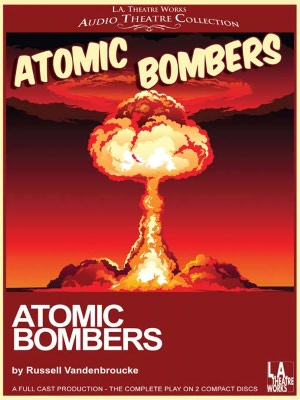
The evening of February 29, I very much enjoyed attending a University of Louisville Theatre Department production of "Atomic Bombers," written and directed by my colleague Russ Vandenbroucke:
The play, dramatizing the lives of the extraordinary team of international physicists racing to make an atomic bomb during World War II, will be performed Feb. 29-March 4 at 8 p.m. nightly plus a matinee at 3 p.m., March 4. All performances are at the Thrust Theatre, 2314 S. Floyd St.Those interested in the material should note that Russ has cooperated in producing a CD.
Directed by Vandenbroucke, a theater professor, the play will be the third stage production of the play originating from an earlier short play by Vandenbroucke that was performed on stage and for public radio.
Before writing and producing the play, Vandenbroucke had to obtain permission from Richard Feynman, the eccentric American scientist and Nobel Prize winner whose essay in a science journal was his inspiration. Vandenbroucke even went as far as to engage the president of the California Institute of Technology, where Feynman taught, to aid his request.
Feynman agreed to Vandenbroucke’s proposal and the first play was based on the atomic bomb tests at Los Alamos, New Mexico. Vandenbroucke later expanded the play to include the initial work at the University of Chicago which was broadcast on public radio during the 50th anniversary of the bombing of Hiroshima, Japan.
“It is a funny play about a very serious subject,” Vandenbroucke said. “This was the greatest gathering of scientific geniuses at one time and place for a single purpose. Only later did they realize the full extent of the horrible devastation that resulted.”
Anyone interested in how comedy can be employed for critique should check out this play.
Visit this blog's homepage.
For 140 character IR and foreign policy talk, follow me on twitter.
Or for basketball, baseball, movies or other stuff, follow this personal twitter account.
Saturday, July 30, 2011
Nuclear savings
As the August 2 debt ceiling deadline approaches, members of Congress have floated all sorts of ideas to cut future spending because (tea party-backed) House Republicans say they won't vote for an increase without the cuts. Thanks to Grover Norquist, new tax revenues are deemed unacceptable because nearly every Republican in Congress has pledged not to increase taxes. They even oppose ending the Bush tax cuts on the wealthy even though Norquist himself apparently said that expiration of the Bush tax cuts (responsible for a significant share of the recent deficit growth) would not amount to a tax increase.
Republicans demand "entitlement reform," which is often their code phrase for long-sought policy changes they favor for ideological reasons -- including privatization and thus a huge reduction in guaranteed benefits paid by government. Democrats do not want that sort of "reform" and are not eager to slash the social safety net any further.
In the past few days, Democrats in the Senate have been working on a package of spending cuts that is actually larger than the $900 Billion in discretionary spending cuts offered in the latest plan pushed by the Speaker of the House, John Boehner. This is because Senator Harry Reid's plan pockets $1.3 Trillion in anticipated security-sector savings from the troop reductions in Afghanistan and Iraq. That is over a decade and includes future debt service related to the spending.
Earlier this week, I read a book review by Joseph Cirincione that outlined a potential additional source of $300 billion in savings. A nuclear freeze, which would only be a baby step toward President Obama's call for "global zero," would create these big savings:
Visit this blog's homepage.
Republicans demand "entitlement reform," which is often their code phrase for long-sought policy changes they favor for ideological reasons -- including privatization and thus a huge reduction in guaranteed benefits paid by government. Democrats do not want that sort of "reform" and are not eager to slash the social safety net any further.
In the past few days, Democrats in the Senate have been working on a package of spending cuts that is actually larger than the $900 Billion in discretionary spending cuts offered in the latest plan pushed by the Speaker of the House, John Boehner. This is because Senator Harry Reid's plan pockets $1.3 Trillion in anticipated security-sector savings from the troop reductions in Afghanistan and Iraq. That is over a decade and includes future debt service related to the spending.
Earlier this week, I read a book review by Joseph Cirincione that outlined a potential additional source of $300 billion in savings. A nuclear freeze, which would only be a baby step toward President Obama's call for "global zero," would create these big savings:
Pentagon programs...will spend $300 billion over the next decade on the very [nuclear] weapons Obama says he wants to make less relevant.I've often blogged about the need to include defense cuts in any deficit-reduction package. In addition to the concrete savings from de-escalation in Iraq and Afghanistan, why not pocket some money by stopping the development of new nuclear weapons?
Visit this blog's homepage.
Saturday, March 19, 2011
Hot Duck
Today, on the Duck of Minerva group IR blog, I posted "Libya: R2P or Regime Change?" R2P means responsibility to protect, a framing of the authorized intervention that is too rarely used by American media.
On Thursday, I posted "Nuclear Disarmament: Looking Back at Reykjavik." Nearly 25 years ago, Ronald Reagan and Mikhail Gorbachev both offered proposals to disarm offensive nuclear arsenals within 10 years. Declassified documents reveal that this aim was prevented by U.S. desire to research and potentially deploy anti-ballistic missile.
Visit this blog's homepage.
On Thursday, I posted "Nuclear Disarmament: Looking Back at Reykjavik." Nearly 25 years ago, Ronald Reagan and Mikhail Gorbachev both offered proposals to disarm offensive nuclear arsenals within 10 years. Declassified documents reveal that this aim was prevented by U.S. desire to research and potentially deploy anti-ballistic missile.
Visit this blog's homepage.
Saturday, February 05, 2011
Duck calls
Over the past month, at the Duck of Minerva group IR blog, I posted these articles:
February 4: "F for the Professor?" about a recently published study concluding that one-third of college students do not "demonstrate any significant improvement" in learning after four years of college. Faculty are partly at fault for failing to make their classes rigorous -- and for inflating grades.
January 31: "Explosive Pakistan" explores the implications of mass uprising in Pakistan. For instance, could the U.S. "drop in and take their nukes," as Islamabad's government apparently fears?
January 22: "The 'drug war'is over?" Though some Obama administration officials are abandoning that framework for anti-drug efforts, I'm somewhat skeptical that the change will mean much in practice.
Visit this blog's homepage.
February 4: "F for the Professor?" about a recently published study concluding that one-third of college students do not "demonstrate any significant improvement" in learning after four years of college. Faculty are partly at fault for failing to make their classes rigorous -- and for inflating grades.
January 31: "Explosive Pakistan" explores the implications of mass uprising in Pakistan. For instance, could the U.S. "drop in and take their nukes," as Islamabad's government apparently fears?
January 22: "The 'drug war'is over?" Though some Obama administration officials are abandoning that framework for anti-drug efforts, I'm somewhat skeptical that the change will mean much in practice.
Visit this blog's homepage.
Friday, January 07, 2011
Other writing
Posting here has been slow this past month, but I have written for other blogs.
At Duck of Minerva, I posted on January 5, 2011, a "Last call: 2012 Grawemeyer Award Nominations." In the article, you can find instructions for applying for the prize -- by next Friday.
On December 28, 2010, I posted "Dr. Strangelove's Mineshafts" in reference to the latest U.S. government report on surviving a nuclear blast.
At my e-IR blog on Climate Politics: IR and the Environment, I added a December 18 post called "American Doubt." As the title suggests, I discuss the declining U.S. public knowledge of climate change science.
Finally, in 2011, CQ Press published the 4th edition of Ralph Carter's Contemporary Cases in U.S. Foreign Policy: From Terrorism to Trade. Former student Sean Payne (no relation) and I have a chapter in that volume called, "The Politics of Climate Change: A Consensus for Copenhagen?"
Visit this blog's homepage.
At Duck of Minerva, I posted on January 5, 2011, a "Last call: 2012 Grawemeyer Award Nominations." In the article, you can find instructions for applying for the prize -- by next Friday.
On December 28, 2010, I posted "Dr. Strangelove's Mineshafts" in reference to the latest U.S. government report on surviving a nuclear blast.
At my e-IR blog on Climate Politics: IR and the Environment, I added a December 18 post called "American Doubt." As the title suggests, I discuss the declining U.S. public knowledge of climate change science.
Finally, in 2011, CQ Press published the 4th edition of Ralph Carter's Contemporary Cases in U.S. Foreign Policy: From Terrorism to Trade. Former student Sean Payne (no relation) and I have a chapter in that volume called, "The Politics of Climate Change: A Consensus for Copenhagen?"
Visit this blog's homepage.
Wednesday, June 16, 2010
China and Kissinger Associates
Awhile ago, I meant to blog about a April 19, 2010, piece in Time about China written by Joshua Cooper Ramo of Kissinger Associates. Specifically, I was struck by these sentences:
Let's start with "the new U.S. posture on the use of nuclear arms." As I noted more than two months ago, the United States simply noted that it "will not use or threaten to use nuclear weapons against non-nuclear weapons states that are party to the NPT and in compliance with their nuclear non-proliferation obligations." It could, however, employ a "devastating conventional military response."
These kinds of "negative security assurances" have been sought by non-nuclear states since the negotiation of the NPT and are employed by other nuclear-armed states. The U.S. exempted non-compliant states like Iran and North Korea and even made explicit counterproliferation threats against them. Thus, the U.S. arguably dialed-up some threats in the new nuclear posture even as it made a limited "no first use" promise.
Next, what about Ramo's sentence in parentheses? "No Chinese leader would dial back the country's option for unlimited nuclear response in self-defense." In point of fact, China's nuclear posture is far "weaker" by Ramo's standard. As Nina Tannenwald points out in her work on the nuclear taboo, China first offered an unconditional "no first use" declaration in 1964. The state has maintained this policy for nearly 50 years -- and frequently renews the pledge.
Contra to Ramo's thesis, China has actually urged the U.S. to sign a sweeping "no first use" pact, which would yield an even "weaker" posture (by Ramo's standard).
I'm not really familiar with Ramo, but his uncle Simon Ramo provided the "R" in TRW. That might make him somewhat sympathetic to the military industrial complex, which worries (presumably) about any weakening of American militarism.
Ramo boss Henry Kissinger is a long-time advocate for China. Reporter Bill Gertz of The Washington Times calls Kissinger the leading former bureaucrat for marshaling China policies that are "undermining America." Then again, Kissinger was a loyal Republican party servant long before he was a China hack. So, I'd read Ramo's conclusion with that caveat in mind.
Visit this blog's homepage.
...many Chinese worry about what they see as the aimlessness of a weakened U.S. The Chinese want to like Obama, but they regard even his most prized initiatives, like the new U.S. posture on the use of nuclear arms, as a sign of weakness. (No Chinese leader would dial back the country's option for unlimited nuclear response in self-defense.) Mao's old line has become a trope in China: It's better to deal with Republicans.Where to begin?
Let's start with "the new U.S. posture on the use of nuclear arms." As I noted more than two months ago, the United States simply noted that it "will not use or threaten to use nuclear weapons against non-nuclear weapons states that are party to the NPT and in compliance with their nuclear non-proliferation obligations." It could, however, employ a "devastating conventional military response."
These kinds of "negative security assurances" have been sought by non-nuclear states since the negotiation of the NPT and are employed by other nuclear-armed states. The U.S. exempted non-compliant states like Iran and North Korea and even made explicit counterproliferation threats against them. Thus, the U.S. arguably dialed-up some threats in the new nuclear posture even as it made a limited "no first use" promise.
Next, what about Ramo's sentence in parentheses? "No Chinese leader would dial back the country's option for unlimited nuclear response in self-defense." In point of fact, China's nuclear posture is far "weaker" by Ramo's standard. As Nina Tannenwald points out in her work on the nuclear taboo, China first offered an unconditional "no first use" declaration in 1964. The state has maintained this policy for nearly 50 years -- and frequently renews the pledge.
Contra to Ramo's thesis, China has actually urged the U.S. to sign a sweeping "no first use" pact, which would yield an even "weaker" posture (by Ramo's standard).
I'm not really familiar with Ramo, but his uncle Simon Ramo provided the "R" in TRW. That might make him somewhat sympathetic to the military industrial complex, which worries (presumably) about any weakening of American militarism.
Ramo boss Henry Kissinger is a long-time advocate for China. Reporter Bill Gertz of The Washington Times calls Kissinger the leading former bureaucrat for marshaling China policies that are "undermining America." Then again, Kissinger was a loyal Republican party servant long before he was a China hack. So, I'd read Ramo's conclusion with that caveat in mind.
Visit this blog's homepage.
Thursday, June 10, 2010
Quick Quacks
Apparently, I've been thinking quite a bit about nuclear threats lately:
Today, at Duck of Minerva I posted "Relieved? Why HEU should still worry." It briefly discusses the remaining threat of highly enriched uranium, a problem that lingers even if the sanctions against Iran prove effective.
June 2, I posted "Belligerence 101: North Korea options," which compares the hawkishness of the Bush and Obama administrations on the question of North Korea.
May 30, you can find "The downsizing of WMD," which concerns the WMD allegations levied against the Michigan militia members who were planning domestic acts of terror.
From May 17, read "Iran's setbacks: Buying time?" It discusses some reasons to worry about Iran's nuclear program given their technical progress to-date.
My "Nuclear transparency" post appeared on May 16. It concerns some recent disclosures the Obama administration made about U.S. nuclear weapons capabilities.
Visit this blog's homepage.
Today, at Duck of Minerva I posted "Relieved? Why HEU should still worry." It briefly discusses the remaining threat of highly enriched uranium, a problem that lingers even if the sanctions against Iran prove effective.
June 2, I posted "Belligerence 101: North Korea options," which compares the hawkishness of the Bush and Obama administrations on the question of North Korea.
May 30, you can find "The downsizing of WMD," which concerns the WMD allegations levied against the Michigan militia members who were planning domestic acts of terror.
From May 17, read "Iran's setbacks: Buying time?" It discusses some reasons to worry about Iran's nuclear program given their technical progress to-date.
My "Nuclear transparency" post appeared on May 16. It concerns some recent disclosures the Obama administration made about U.S. nuclear weapons capabilities.
Visit this blog's homepage.
Friday, February 12, 2010
Is Nuclear Deterrence Dead as the Dodo Bird?
The title of this post is also the title of one of my papers for next week's International Studies Association Annual Meeting in New Orleans. I've been a bad blogger for weeks because in the past 6 to 8 weeks, I've completed a draft chapter on the Iraq war (from a critical theory perspective), a coauthored chapter on the politics of climate change, another ISA paper on "Teaching Global Politics Through Film: The Role of Comedy" and this paper.
Here's the revised abstract:
I'll try to be a better blogger in the near future.
Visit this blog's homepage.
Here's the revised abstract:
Supporters and opponents of nuclear deterrence are clearly engaged in a renewed “contest” about the status of a long-standing normative idea in international relations. While the reality and logic of nuclear deterrence is often taken-for-granted, recurrent debates about the meaning and effectiveness of the norm arguably reflect an ongoing legitimacy crisis. Academic critics of nuclear strategy have for the most part simply revealed and explained the many contradictions in deterrence theorizing and practice. Most of these critics seek to correct, perfect, and reinforce the fundamental logic of deterrence. In contrast, the primary concern here is whether the growing recognition of the contradictions, irrationalities, and even absurdities of nuclear deterrence might usher in the strategy’s demise—and potentially create the conditions for, and/or provide the impetus to, a world free of nuclear weapons. Empirically, much attention is directed at the anti-nuclear activism of numerous prominent former and current public officials and military leaders who have condemned nuclear weapons and called for a world without them. Alternatively, the paper explores whether the death of deterrence might merely assure the long life of preventive war strategies (like the “Bush Doctrine”)? In terms of international relations theory, this paper serves as an immanent critique of nuclear deterrence.Comments welcome.
I'll try to be a better blogger in the near future.
Visit this blog's homepage.
Tuesday, July 15, 2008
Obama's foreign policy address
Barack Obama gave a terrific foreign policy speech today in Washington DC.
I watched most it on TV. My only concern was that he made too many good points. He specifically ticked off 5 goals and talked about each of them in a relatively sophisticated way.
That likely means that news organizations and John McCain will attempt to parse the speech to their own ends. It might not be easy:
Tomorrow, apparently, he's going to talk about his plans to "develop new defenses to protect against the 21st century threat of biological weapons and cyber-terrorism."
Visit this blog's homepage.
I watched most it on TV. My only concern was that he made too many good points. He specifically ticked off 5 goals and talked about each of them in a relatively sophisticated way.
I will focus this strategy on five goals essential to making America safer: ending the war in Iraq responsibly; finishing the fight against al Qaeda and the Taliban; securing all nuclear weapons and materials from terrorists and rogue states; achieving true energy security; and rebuilding our alliances to meet the challenges of the 21st century.It was impressive, but I'm not sure how many people will see or read the entire address.
That likely means that news organizations and John McCain will attempt to parse the speech to their own ends. It might not be easy:
I opposed going to war in Iraq; Senator McCain was one of Washington’s biggest supporters for war. I warned that the invasion of a country posing no imminent threat would fan the flames of extremism, and distract us from the fight against al Qaeda and the Taliban; Senator McCain claimed that we would be greeted as liberators, and that democracy would spread across the Middle East. Those were the judgments we made on the most important strategic question since the end of the Cold War.This framing of Iraq was very strong:
Now, all of us recognize that we must do more than look back – we must make a judgment about how to move forward. What is needed? What can best be done? What must be done? Senator McCain wants to talk of our tactics in Iraq; I want to focus on a new strategy for Iraq and the wider world.
What’s missing in our debate about Iraq – what has been missing since before the war began – is a discussion of the strategic consequences of Iraq and its dominance of our foreign policy. This war distracts us from every threat that we face and so many opportunities we could seize. This war diminishes our security, our standing in the world, our military, our economy, and the resources that we need to confront the challenges of the 21st century. By any measure, our single-minded and open-ended focus on Iraq is not a sound strategy for keeping America safe.This may have been my favorite line: "America seeks a world with no nuclear weapons."
I am running for President of the United States to lead this country in a new direction – to seize this moment’s promise. Instead of being distracted from the most pressing threats that we face, I want to overcome them.
Tomorrow, apparently, he's going to talk about his plans to "develop new defenses to protect against the 21st century threat of biological weapons and cyber-terrorism."
Visit this blog's homepage.
Subscribe to:
Posts (Atom)