Search This Blog

Showing posts with label comedy. Show all posts

Saturday, June 20, 2026

Trophy Husband


This humorous song is by the son of an old friend I've known since college. Carl Christensen looks a lot like his dad Eric did all those years ago. You can find other songs on Carl's YouTube or Spotify pages. 


Longtime readers of this blog might recall that Eric is the lawyer who discovered the Enron tapes.

Visit this blog's homepage.

For 280 character IR and foreign policy talk, follow me on Bluesky.

Friday, May 03, 2019

Satire versus Political Polarization


In late February, I joined two of my Political Science colleagues (Jason Gainous and Jasmine Farrier) to speak at the annual "REDTalks Forum." This year the REDTalks focused on political polarization and I spoke about "U.S. Foreign Policy and Political Partisanship."

I've long been keeping an eye out for interesting stories and poll results about partisanship -- and how to address it. Over the years, I've frequently retweeted or bookmarked some of those findings.

In the current political atmosphere, Americans have partisan opinions about almost everything -- it's not just values-laden questions like gun control or abortion. Opinion about climate change science and policy is highly partisan. The links in the last paragraph point to partisan results from surveys about public opinion on trade and NATO, which reflect an interesting result noted in the literature. People follow cues from elites and take partisan stands, especially AGAINST the views of leaders and people from the other major political party. Democratic party member support for free trade and NATO has increased, in part, because President Donald Trump has attacked free trade and NATO.

This works both ways. David Frum notes a couple of weird Republican changes in the age of Trump:
The share of Republicans with a positive opinion of the FBI tumbled from 65 percent in early 2017 to 49 percent this past July. In the past three years, Vladimir Putin’s approval rating among Republicans has almost tripled, to 32 percent.
When Trump started criticizing the NFL for tolerating kneeling during the national anthem, Republicans started telling pollsters they did not like the NFL. At the time, I asked my students what they thought would happen in the south if a bunch of Southeast Conference (SEC) football players at schools like Alabama, Florida, and Georgia started kneeling during the national anthem -- especially if Trump continued to criticize the behavior.

Speculation aside, I'm writing today about something that ties my "comedy project" to political partisanship. The following paragraphs originally appeared in an Atlantic Monthly article by Pulitizer Prize winning NYT reporter Charles Duhigg. He noted in the January/February issue that some scholars in Israel conducted an interesting experiment:
A group of Israeli social scientists wanted to conduct an experiment disguised as an advertising campaign. The ads would run in a small, conservative Tel Aviv suburb, where many people were religious and supported right-wing politicians. The goal was to persuade the residents to abandon their anger toward Palestinians and agree that Israel should freeze construction of Jewish settlements in Gaza and the West Bank, among other concessions. 
The suburb they were hoping to convert, Giv’at Shmuel, was known for being strenuously opposed to anything associated with peaceniks, liberals, or anyone who said anything good about peaceniks or liberals. 
The scholars rejected standard suggestions to try to promote tolerance in the community. Instead, they decided to use a satirical campaign playing up the community's anger and outrage:
the researchers came up with a clever idea. Don’t tell everyone in Giv’at Shmuel that they’re wrong. Tell them that they’re right: A perpetual war with Israel’s neighbors made a lot of sense. If anything, the people of Giv’at Shmuel ought to be angrier. 
With the help of an advertising agency, the social scientists created online ads celebrating the tension between Israelis and Palestinians, and extolling the virtues of fighting for fighting’s sake. One ad showed iconic photos of Israeli war heroes and proclaimed, “Without [war] we wouldn’t have had heroes. For the heroes, we probably need the conflict.” The ad was scored with Wagner’s “Flight of the Valkyries.” Another ad featured footage of a soldier with a machine gun petting a kitten and an infantryman helping an old man cross the street. “What a Wonderful World” played in the background. Its tagline read, “Without [war] we would never be moral. For morality, we probably need the conflict.” The ads, along with brochures and billboards, began appearing in Giv’at Shmuel in 2015. Over a six-week period, according to polling, nearly all of its 25,000 residents saw them.
The results were impressive:
when the researchers conducted polls in the suburb at the end of the advertising campaign, the residents who had held the most extreme views at the outset of the experiment appeared to have softened. The percentage of right-leaning residents who said that Arabs were solely responsible for Israel’s past wars decreased by 23 percent. The number of conservatives who said Israel should be more aggressive toward Palestinians fell by 17 percent. Incredibly, even though the advertisements never mentioned settlements, 78 percent more people said that Israel should consider freezing construction in the West Bank and Gaza. (Residents in nearby towns who hadn’t seen the ads were surveyed as a control; they showed no such evolution in their views over the same period.) 
A year after the ads had ceased, by which time some residents had trouble recalling the specifics of the campaign, polls still showed greater tolerance. The campaign wasn’t a panacea, but it is among the most successful conflict interventions in contemporary social science.
The researchers believe the results worked because the satirical ads went to "embarrassing, offensive extremes." 
“No one wants to think of themselves as some angry crank,” one of the researchers, Eran Halperin, told me. “No one wants to be lumped in with extremists or the angriest fringe.” Sometimes, however, we don’t realize we’ve become extremists until someone makes it painfully obvious.
Duhigg conjectures that Donald Trump's political rhetoric -- particularly at his partisan rallies -- is "so extreme" that it offers similar "essentially absurdist provocations."

The hope is that Trump rally attendees will be shocked by the President's words.

Call me skeptical. 

My guess is that context matters. Political ads are public, even if targeted at particular geographic areas, and can be ridiculed publicly within the area. Trump's partisan rallies are closed events in front of his greatest admirers. They might be televised, but the broadcast audience is much more diverse -- and Trump's long speeches have so much content that it would be difficult to separate the mundane partisan words from the truly CRAZY. 

Again, Duhigg might be right that audience members would know, but I'm very skeptical. 

Political opponents, however, might achieve a big payoff by running "pro-Trump" ads that selectively feature some of his most outlandish claims. Don't run them on comedy websites and don't criticize the words as an opponent would. Run them as genuine over-the-top ads. 

That might work to deflate Trump. 


Visit this blog's homepage.

For 280 character IR and foreign policy talk, follow me on twitter.

Or for basketball, baseball, movies or other stuff, follow this personal twitter account.

Thursday, February 04, 2016

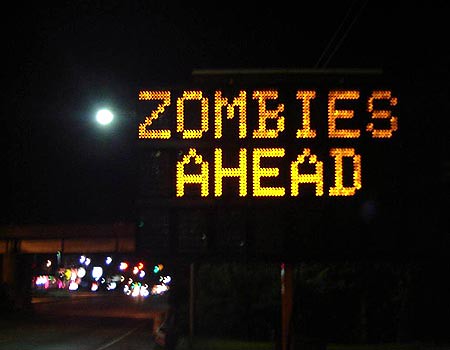
Laughing off a Zombie Apocalypse

Zombies Ahead
Photo credit: *Keith
Ready for some shameless self promotion? A revised version of my 2014 ISA conference paper (which was itself based on a blog post) has now been published as an advanced access 2016 journal article. Here's the full citation, with a working link to the Oxford University press website:


Rodger A. Payne, "Laughing off a Zombie Apocalypse: The Value of Comedic and Satirical Narratives,"  International Studies Perspectives 2016; doi: 10.1093/isp/ekv026. 


Kudos to Dan Drezner for making me think about this.


These are parts of Oxford's permission note:
Sending a free-access URL
There are several advantages to providing you with a free-access link to your article instead of a PDF file, including:
• Access to both the HTML and PDF versions of an article (where available).
• You (and your co-authors) plus any users of your own personal/institutional web sites will get free access to the finally published and authoritative version of the article that is available from our site whether or not they are a subscriber to the journal;
• We guarantee that you (and your co-authors) will have continued access to your article without the responsibility of maintaining and updating these files;
• All the linking and other functionality for the article remains in place;
• We can continue to gather accurate usage statistics for the journal to help us ensure that we continue to provide a good service for authors and readers.
Distribution of the link 
You may wish to include these links in your list of publications. As with an offprint, following these links allows interested readers free access to the full text of your paper whether or not they are a subscriber to the journal. However, in distributing the link, we request that you consider the following points:
• The article should only be viewed from the Oxford Journals site, and not hosted by your own personal/institutional web site or that of other third parties, though you or your co-authors may post the URLs on your own sites or those of your institutions/organizations;
• Single copies of the article can be printed and distributed to interested colleagues who wish to use the article for personal research/study purposes only. For those wishing to make commercial use of the article, please direct them to journals.permissions@oup.com for permissions information or see the website


Visit this blog's homepage.

For 140 character IR and foreign policy talk, follow me on twitter.

Or for basketball, baseball, movies or other stuff, follow this personal twitter account.

Friday, February 20, 2015

The French Minister (Quai d’Orsay)


The University of Louisville is currently in the midst of its annual French Film Festival. Unfortunately, two screenings of the film I've been most wanting to see, The French Minister (Quai d’Orsay), were canceled last night because of bad weather. The entire University was closed for extreme cold. Yesterday's 5 pm screening was supposed to be followed by a discussion with French professor Matthieu Dalle, and I'm hoping that will occur today at the 2 pm screening.

Here's the film's synopsis from IMDB:
Alexandre Taillard de Vorms is tall and impressive, a man with style, attractive to women. He also happens to be the Minister of Foreign Affairs for the land of enlightenment: France. With his silver mane and tanned, athletic body, he stalks the world stage, from the floor of the United Nations in New York to the powder keg of Oubanga. There, he calls on the powerful and invokes the mighty to bring peace, to calm the trigger-happy, and to cement his aura of Nobel Peace Prize winner-in-waiting. Alexandre Taillard de Vorms is a force to be reckoned with, waging his own war backed up by the holy trinity of diplomatic concepts: legitimacy, lucidity and efficacy. He takes on American neo-cons, corrupt Russians and money-grabbing Chinese. Perhaps the world doesn't deserve France's magnanimousness, but his art would be wasted if just restricted to home turf. Enter the young Arthur Vlaminck, graduate of the elite National School of Administration, who is hired as head of "language" at the foreign ministry. In other words, he is to write the minister's speeches. But he also has to learn to deal with the sensibilities of the boss and his entourage, and find his way between the private secretary and the special advisers who stalk the corridors of the Quai d'Orsay - the ministry's home - where stress, ambition and dirty dealing are the daily currency. But just as he thinks he can influence the fate of the world, everything seems threatened by the inertia of the technocrats.
Update February 22: The film reminded me in structure of Charlie Chaplin’s The Great Dictator. Basically, the film devoted about half of the narrative to the farcical politics of the French Foreign Ministry and half to the speechwriter’s domestic situation (where important political issues were also revealed in a personal manner). Both films generally ended happily for the ordinary people featured in the stories. No actor in the film played two roles, but the speechwriter literally provided the words for the Foreign Minister's closing address (and in previous speeches).

The parallel to Chaplin's classic film are not perfect. The Foreign Minister character was played for laughs throughout the film, but he was not a power-mad dictator. He was imagined as a slightly foolish political bureaucrat with intellectual interests. Indeed, the Minister's basic three talking points from the first meeting with the speechwriter were reflected in the final speech. I think the filmmaker could be suggesting that these key principles were so obvious and basic that even a fool could identify them right away -- the need for responsibility, unity, and efficacy. Somehow, the neocons and Bush managed to miss these elemental truths as they planned the Iraq war.


Visit this blog's homepage.

For 140 character IR and foreign policy talk, follow me on twitter.

Or for basketball, baseball, movies or other stuff, follow this personal twitter account.

Sunday, February 08, 2015

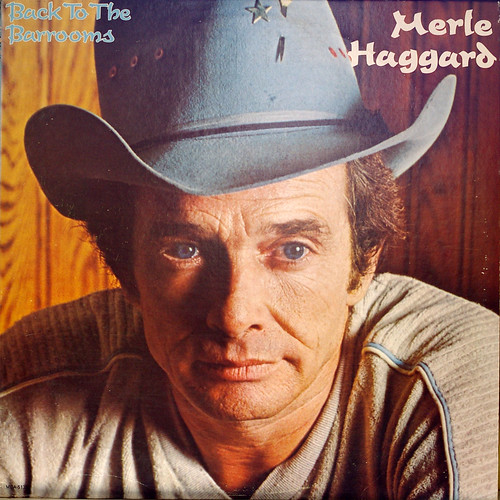
Dylan v. Haggard


Bob DylanMerle Haggard 6478


Friday night, Bob Dylan delivered a half hour speech at the MusiCares Person of the Year event. He used much of his time to thank some other artists and performers, though he made news with some criticism of others:
"Merle Haggard didn't even think much of my songs. I know he didn't. He didn't say that to me, but I know way back when he didn't. Buck Owens did, and he recorded some of my early songs. 
"Together Again, that's Buck Owens. And that trumps anything else out of Bakersfield. Buck Owens or Merle Haggard? If you had to have somebody's blessing, you can figure it out."
Merle Haggard responded to this apparent slight with grace (see this tweet):
"I've admired your songs since 1964," the 77-year-old singer of country classics like Branded Man and I'm a Lonesome Fugitive said on his Facebook page Saturday. Haggard added that he and Willie Nelson have cut Dylan's Don't Think Twice, It's All Right for an upcoming album.
Moreover, in October 2013, Haggard told an interviewer that he was doing a tribute album to Dylan. He was asked "Q: What draws you to Bob Dylan's music?"
Haggard: I've always been drawn to his music, since when he first came out in 1964. I was just beginning my career as well at that time. But I've come to find out that he's a been a Merle Haggard fan and he was watching what I was doing while I was watching what he was doing. I've always thought he was one of the better writers that I've been fortunate enough to be alive at the same time with.
My friend and neighbor Michael Young, the host of WFPK's "Roots n' Boots" radio show, is one of the world's biggest Haggard fans and his reaction was stronger than Haggard's. After all, as his bio says, Mike "firmly believes Merle Haggard is the greatest songwriter of our generation, and he’ll stand on Bob Dylan’s coffee table and shout it." Tonight, Mike played a number of Haggard songs on his program for "no special reason," though he laughed after saying that. His Facebook feed offers an explanation: "Tempted to play nothing but Merle Haggard today in light of Dylan's dis of the Hag, but I don't think I could get away with that. How about 5 Haggard songs that are better than anything Dylan ever wrote?"

I'm thinking this entire dust-up is just Dylan's sense of humor on display.

In 1986, in Interview magazine, Dylan was asked to list "Clubs I belong to." One of his 6 answers was "Merle Haggard Fan Club."

And this is from Haggard's bio on the Rolling Stone website: "Merle Haggard has always been as deep as it gets," said Bob Dylan. "Totally himself. Herculean. He definitely transcends the country genre."


Actually, that quote is taken from a long 2009 piece by Jason Fine quoted in full in this tweet:
"Merle Haggard has always been as deep as deep gets," says Bob Dylan. "Totally himself. Herculean. Even too big for Mount Rushmore. No superficiality about him whatsoever. He definitely transcends the country genre. If Merle had been around Sun Studio in Memphis in the Fifties, Sam Phillips would have turned him into a rock & roll star, one of the best. I'm sorta glad he didn't do it, though, because then he'd be on the oldies circuit singing his rock  roll hits instead of becoming the Merle Haggard we all know and love."
In 2005, Dylan asked Haggard to tour with him. Incidentally, this is what Haggard told  Billboard in an interview about that tour:
Q: How did this tour with Bob Dylan come about? 
A: I had my itinerary set to do some light touring in the spring and ease my way through the year, and Bob Dylan calls and wants me to tour America with him. And he's not just talking about once and awhile, it's 40 out of the next 60 days. But it's Bob Dylan, and Bob Dylan's the Einstein of music. He calls and wants you to be on his show and your name is Merle Haggard, you're honored. 
Q: I've heard that most people who tour with Dylan don't get a chance to talk to him, but I imagine he'll talk to you at some point. 
A: I don't know. I've rubbed shoulders with him before and he just sorta grunts.
Maybe Dylan was just making some news and selling some records for both geezers?

Flickr photo credits: Nesster (Haggard) and F. Antolín Hernández (Dylan)

Visit this blog's homepage.

For 140 character IR and foreign policy talk, follow me on twitter.

Or for basketball, baseball, movies or other stuff, follow this personal twitter account.

Friday, January 16, 2015

New Look

Readers probably noticed the new banner and other minor blog updates -- the former made fairly easily thanks to Picmonkey. Once again, the photos are courtesy of government websites, so should not involve any copyright issues:


The last update occurred in 2010. 


Visit this blog's homepage.

For 140 character IR and foreign policy talk, follow me on twitter.

Or for basketball, baseball, movies or other stuff, follow this personal twitter account.
Thursday, March 27, 2014

Zombie Comedy at ISA 2014


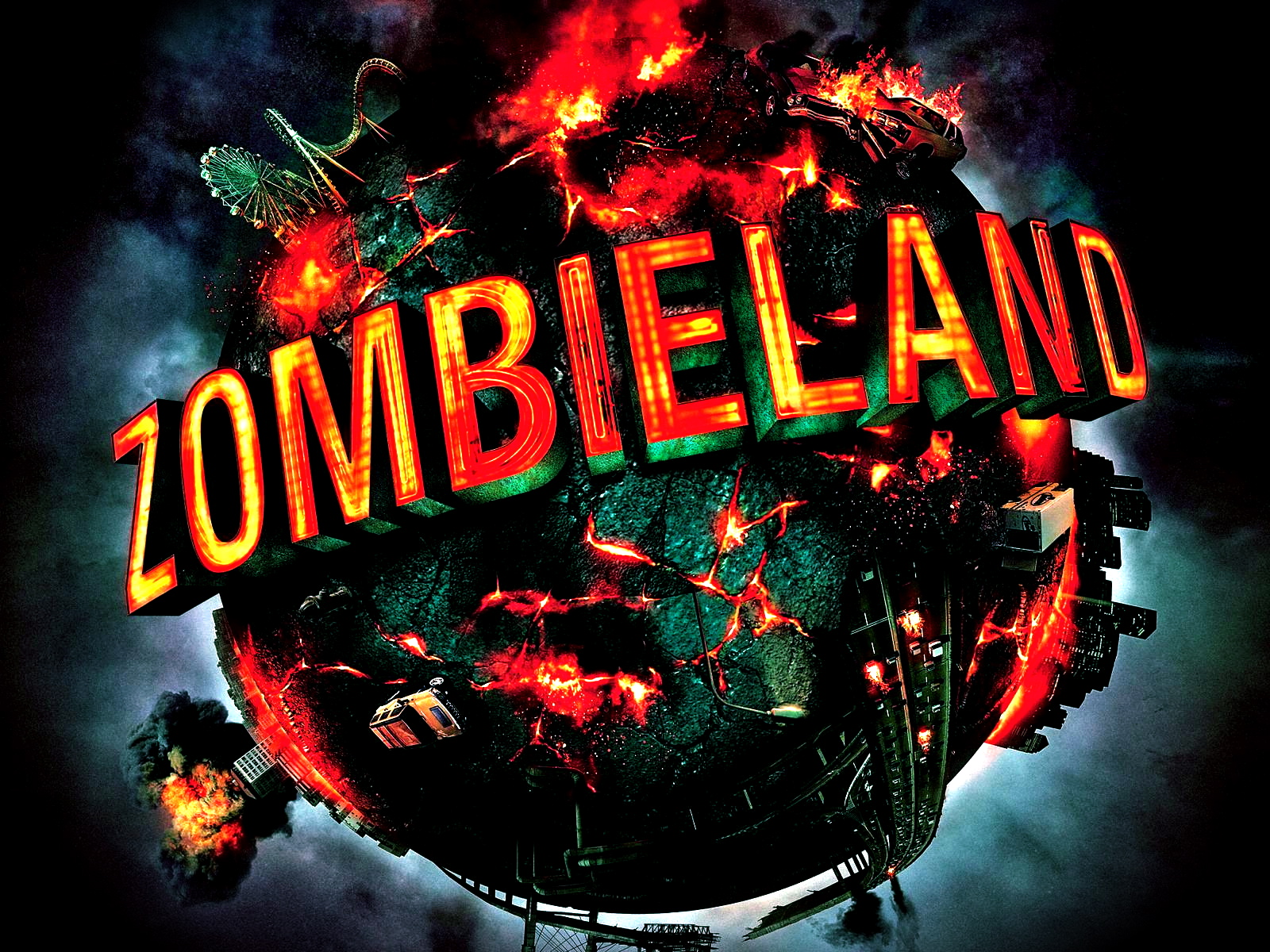
This morning at 8:15, I participated in an Active Learning panel at the 2014 International Studies Association  Annual Meeting. Specifically, I presented a paper on "Using Zombie Comedies to Teach Critical International Relations Theory." That link takes you to my academia.edu page, where you can also find previous papers from my "Comedy of Global Politics" project, including a couple on teaching.

Feedback welcome. Basically, I argue that zombie comedies undermine the standard narrative employed in the genre. The stories are not dominated by survival under anarchy. Rather, the characters in Zombieland, Shaun of the Dead, and Warm Bodies seek stronger family and communal ties and deal with zombie threats rather easily (and cooperatively, as in a security community). Elite lifestyles turn out to be unsustainable.


Visit this blog's homepage.

For 140 character IR and foreign policy talk, follow me on twitter.

Or for basketball, baseball, movies or other stuff, follow this personal twitter account.

Monday, February 17, 2014

Quacks

Sorry for the silence here. However, I have recently posted twice to the Duck of Minerva group IR blog:

Sunday, February 16, I posted "Academic Family Tree." It concerns a website that tracks dissertation advisers and their students in academia.

On Friday February 7, I posted "Nuland: Comic misunderstanding?" The post discusses a comedic reading of Ambassador Victoria Nuland's recent comment to "F*** the EU."


Visit this blog's homepage.

For 140 character IR and foreign policy talk, follow me on twitter.

Or for basketball, baseball, movies or other stuff, follow this personal twitter account.
Sunday, January 19, 2014

Zunar


Wednesday night at 7 pm, the Center for Asian Democracy is hosting the Malaysian political cartoonist Zunar, or Zulkiflee Anwar Haque, who will deliver the Annual Lecture.
He is expected to talk about the importance of free expression, the challenge of his work in Malaysia and the need for activism from cartoonists, satirists and comedians as well as human rights activists and social campaigners.
Last fall, I saw some of Zunar's political cartoons when participating in a workshop on "Comedy and Satire as Discourses of Protest in Asia." The images presented there were just terrific. Here's more info on Zunar:
[He] received the 2011 Award for Courage in Editorial Cartooning from Cartoonists Rights Network International. In 2010 the Malaysian government banned the publication of his book “1 Funny Malaysia” and then months later police seized and confiscated copies of his  latest book, “Cartoon-o-phobia,” and arrested him hours before its planned launch. He lost his appeal for wrongful arrest when the Malaysian appellate court ruled that police had cause to suspect the book was seditious.
To learn more about his life and work, visit his website.

Here are the logistical details:
7 p.m. in the Brown & Williamson Club at Papa John’s Cardinal Stadium, 2800 S. Floyd St.; visitors should enter through Gate 6. The talk and reception afterward are free and public, but guests are asked to register through a form on the center’s site

Updates (January 22): See this article in the Louisville Courier-Journal and this piece posted on the WFPL website.


Visit this blog's homepage.

For 140 character IR and foreign policy talk, follow me on twitter.

Or for basketball, baseball, movies or other stuff, follow this personal twitter account.
Wednesday, October 16, 2013

Comedy and Satire as Discourses of Protest in Asia


This Saturday, I am participating in an event sponsored by the Center for Asian Democracy at University of Louisville: “Comedy and Satire as Discourses of Protest in Asia” -- A Symposium.
This year’s workshop seeks to examine the relationship between political protest and comedy in East Asia. In particular we are interested in the ways in which comedy has and is being used to critique and parody authoritarianism, corruption and political leadership.  Recognizing that in the West comedy and satire have a long tradition of not just speaking truth to power but also as a powerful tool of public criticism, this workshop aims to analyze the role of comedy in East Asia. Is it analogous to the role it plays in the West? Are there unique forms of comedy and protest? Are there cultural obstacles to parody and satire?
Specifically, I'm slated to give the Introductory Remarks at 10:00am — "Comedic and Satirical Narratives in Global Politics."

Note this detail: Chao Auditorium, Ekstrom Library.  Lunch provided. Free and open to the public. RSVP for lunch is requested. RSVP to cad@louisville.edu, or call 502-852-2667.


Visit this blog's homepage.

For 140 character IR and foreign policy talk, follow me on twitter.

Or for basketball, baseball, movies or other stuff, follow this personal twitter account.

Monday, September 30, 2013

Updates

I've been a blogger deadbeat, but here's what's been happening:

1. The 10 year anniversary of this blog passed without fanfare. My first post was September 3, 2003, though I later assigned an August date to a post that provided my biographical information.

2. I've been writing the latest paper for my Comedy of Global Politics book project: "Reading the Global War on Terror as Comedy." I'll be presenting it this Saturday morning in DC at the ISSS-ISAC annual meeting. I discuss comedic and satirical narratives and frame key early elements of the GWOT around them.

3. Saturday night, I attended "Bang, Bang You're Dead" at YPAS. My youngest daughter Cate has a key part in the production. She was fantastic in the moving play about a high school mass shooting.

BTW, a group of YPAS students plans to attend the Edinburgh Fringe Festival in Scotland next summer and they are looking for financial assistance to cover expenses. Eat at Impellizzeri's pizza in the Highlands tonight and this YPAS project receives 10% of the revenues.

4. Finally, I wish to express my condolences to the family and friends of local financial entrepreneur George Emont. His son Jacob is a close friend of my daughter Claire and his recent death is a genuine tragedy.


Visit this blog's homepage.

For 140 character IR and foreign policy talk, follow me on twitter.

Or for basketball, baseball, movies or other stuff, follow this personal twitter account.
Friday, July 26, 2013

Think from the gut

Remember the 2006 White House Correspondent's Dinner performance by Stephen Colbert? This was the terrific opening segment:
Mr. President, my name is Stephen Colbert, and tonight it is my privilege to celebrate this president, ‘cause we're not so different, he and I. We both get it. Guys like us, we're not some brainiacs on the nerd patrol. We're not members of the factinista. We go straight from the gut. Right, sir? 
That's where the truth lies, right down here in the gut. Do you know you have more nerve endings in your gut than you have in your head? You can look it up. Now, I know some of you are going to say, "I did look it up, and that's not true." That's 'cause you looked it up in a book. Next time, look it up in your gut. I did. My gut tells me that's how our nervous system works. 
Here's the video:


According to this story in the July/August 2013 Mother Jones, Colbert was actually on to something:
The gut has its own nervous system; it contains as many neurons as the spinal cord. About 95 percent of the body's serotonin, a neurotransmitter usually discussed in the context of depression, is produced in the gut.... 
So the gut isn't just where we absorb nutrients. It's also an immune hub and a second brain.
More, from Scientific American, February 2010.


Visit this blog's homepage.

For 140 character IR and foreign policy talk, follow me on twitter.

Or for basketball, baseball, movies or other stuff, follow this personal twitter account.

Wednesday, February 20, 2013

Life on Russian Roads

Did you see last night's episode of "The Daily Show"? This segment was one of the most hilarious ever:


"Tank!"

The "Benny Hill" video/audio tribute near the end is definitely worth the wait.

Visit this blog's homepage.

For 140 character IR and foreign policy talk, follow me on twitter.

Or for basketball, baseball, movies or other stuff, follow this personal twitter account.

Tuesday, February 12, 2013

Billy Beane

Billy Beane I trekked across the state border tonight to see Oakland A's General Manager Billy Beane speak at Indiana University Southeast. Beane had been invited to deliver the keynote address for the annual Sanders Speaker Series.

The format was interview style rather than lecture. Local writer and academic Marty Rosen (yes, Neal (if you ever read this space anymore), that Marty Rosen) sat next to Beane on stage and asked engaging questions for about an hour -- and then they opened it up to audience members.

Beane proved to be an entertaining and intelligent guest for this sort of event.

The questions were diverse, triggering Beane to reveal his favorite baseball films of all time (Pride of the Yankees, The Natural and Field of Dreams -- Beane is a self-described baseball romantic, at least as  a fan), his most memorable trading experiences as GM (the 1999 mid-season trades), his appreciation for Baseball Prospectus and their former employee Nate Silver, the influence of the 1993 Phillies offense on his baseball thinking, and the background story for this unusual convergence of thinkers. 

One member of the audience asked Beane what kind of statistical metrics teams were using "behind the scenes" that fans didn't know about. He replied by referencing an old SNL skit that he has likely noted on many similar occasions (paraphrasing). A reporter at a press briefing asks a U.S. military general: "Sir, what would be the one piece of information that would be most dangerous for the Iraqis to know?" 

Good stuff.

By the way, Beane pointed out that 2013 is the 10th anniversary of Moneyball. Devoted blog readers may remember my own take on Beane's early years.


Visit this blog's homepage.

For 140 character IR and foreign policy talk, follow me on twitter.

Or for basketball, baseball, movies or other stuff, follow this personal twitter account.

Friday, August 24, 2012

Whole Wide World

This week, to begin the new school year, my class on "Global Politics Through Film" viewed "Stranger Than Fiction." If you haven't seen it, Will Ferrell plays an IRS tax auditor named Harold Crick. Roger Ebert explains why Crick turns to a literature professor in order to understand different kinds of narratives.
Harold begins to hear a voice in his head, one that is describing his own life -- not in advance, but as a narrative that has just happened. He seeks counsel from a shrink (Linda Hunt) and convinced he is hearing his own life narrative, seeks counsel from Jules Hilbert, a literature professor (Dustin Hoffman). Hilbert methodically checks off genres and archetypes and comes up with a list of living authors who could plausibly be writing the "narration." He misses, however, Kay Eiffel (Emma Thompson), because he decides Harold's story is a comedy, and all of her novels end in death. However, Eiffel is indeed writing the story of Harold's life.
Ah yes, the old comedy-versus-tragedy argument.

Anyway, I'm posting the following video because the song "(I'd Go the) Whole Wide World" by Wreckless Eric figures prominently in a key scene. Since watching the film on Tuesday, it has been an earworm that I cannot escape:


Visit this blog's homepage.

For 140 character IR and foreign policy talk, follow me on twitter.

Or for basketball, baseball, movies or other stuff, follow this personal twitter account.

Tuesday, May 15, 2012

Ethnic Cleansing in Freedonia?

Faithful readers may remember that in early 2010 I promised to blog about real-world references to film.  While I often write about film and teach a course on "Global Politics Through Film," I'm not sure I've been faithful to that promise.

In a recent book review of a satirical novel, I found an old reference to film. Specifically, literary critic Liesl Schillinger reminded readers of this 1993 prank that was apropos of its Marx Brothers film reference:
It’s worth remembering that in 1993, when Spy magazine prank-called U.S. congressmen, asking what the administration should do about ethnic cleansing in Freedonia, several of the officials demanded immediate action. Freedonia, as it happens, was not a warring Balkan land but the fictional setting of the Marx Brothers film Duck Soup. Spy soon exposed the trap it had laid...
If readers are unfamiliar with the 1933 film Duck Soup, my advice is to watch it! Turner Classic Movies airs it frequently. For now, however, suffice to know that it is a farce about the buildup to war between Freedonia and Sylvania. Groucho becomes Prime Minister and his brother Chico serves as his Secretary of War. The storyline is wacky and as I wrote a few years ago, one would be "hard-pressed to learn any valuable lessons about international relations or war from the film."

In any case, I found a news item about this old prank in The New York Times of January 13, 1993, which means the congressional interviews must have occurred about the same time as the U.S. humanitarian intervention into Somalia.  The newspaper of record supplied some details about Spy's methodology:
Posing as the host of a New York radio talk show, Spy's staff called about 20 first-term House members and, after a series of innocuous questions, asked, "Do you approve of what we're doing to stop what's going on in Freedonia?" or "Do you approve of what we're doing to stop ethnic cleansing in Freedonia?"
The Times also quoted some of the responses: 
Representative Corrine Brown, Democrat of Florida, said she approved of what the United States was doing in Freedonia, and added, "I think all of those situations are very, very sad, and I just think we need to take action to assist the people."

Representative Jay Inslee, Democrat of Washington, was candid. "I have to be honest with you, I'm not familiar with that proposal," he said. "But it's coming to the point now that a blind eye to it for the next 10 years is not the answer."

Representatative Steve Buyer, Republican of Indiana, said, "Yeah, it's a different situation than the Middle East."
The magazine also called Nick Smith (R-MI),  who said that "moving through the United Nations effort has a great deal of merit."

The South Florida Sun-Sentinel noted January 27, 1993, that "All 20 of them were tricked by the clever editors of Spy magazine, who concocted this little exercise in political embarrassment.....not one of the gullible freshmen caught on to the joke."

Before closing, I should note that members of the general public also provide answers when pollsters ask them questions about fictitious issues.


Visit this blog's homepage.
For 140 character IR and foreign policy talk, follow me on twitter.
Or for basketball, baseball, movies or other stuff, follow this personal twitter account.

Thursday, March 01, 2012

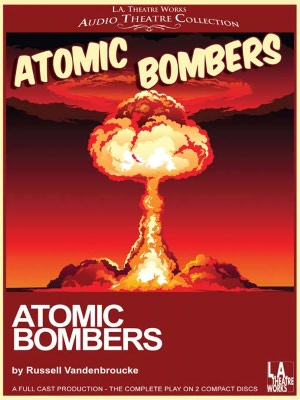
Atomic Bombers


The evening of February 29, I very much enjoyed attending a University of Louisville Theatre Department production of "Atomic Bombers," written and directed by my colleague Russ Vandenbroucke:
The play, dramatizing the lives of the extraordinary team of international physicists racing to make an atomic bomb during World War II, will be performed Feb. 29-March 4 at 8 p.m. nightly plus a matinee at 3 p.m., March 4. All performances are at the Thrust Theatre, 2314 S. Floyd St.

Directed by Vandenbroucke, a theater professor, the play will be the third stage production of the play originating from an earlier short play by Vandenbroucke that was performed on stage and for public radio.

Before writing and producing the play, Vandenbroucke had to obtain permission from Richard Feynman, the eccentric American scientist and Nobel Prize winner whose essay in a science journal was his inspiration. Vandenbroucke even went as far as to engage the president of the California Institute of Technology, where Feynman taught, to aid his request.

Feynman agreed to Vandenbroucke’s proposal and the first play was based on the atomic bomb tests at Los Alamos, New Mexico. Vandenbroucke later expanded the play to include the initial work at the University of Chicago which was broadcast on public radio during the 50th anniversary of the bombing of Hiroshima, Japan.

“It is a funny play about a very serious subject,” Vandenbroucke said. “This was the greatest gathering of scientific geniuses at one time and place for a single purpose. Only later did they realize the full extent of the horrible devastation that resulted.”
Those interested in the material should note that Russ has cooperated in producing a CD.

Anyone interested in how comedy can be employed for critique should check out this play.


Visit this blog's homepage.

For 140 character IR and foreign policy talk, follow me on twitter.

Or for basketball, baseball, movies or other stuff, follow this personal twitter account.

Monday, November 07, 2011

USC talk

I'm flying to LA tomorrow in order to talk Wednesday at 12:30 pm at USC's Center for International Studies. The talk will focus on elements of my sabbatical project: "The Comedy of Global Politics."

Eventually, I believe a video recording of the talk will appear here.


Visit this blog's homepage.

Follow me on twitter.

Sunday, May 22, 2011

Sabbatical project

In fall 2011, I will be on sabbatical. Given that courses are over and my near-term service obligations are coming to a close soon, I will be able to work on this project as much as I'd like beginning in a couple of weeks.

Curious readers might want to know my plans. Right?

Well, I will be working on a book-length project tentatively titled The Comedy of Global Politics. Essentially, it is a call for a new narrative framework in IR that is consistent with critical theory. It is based on a series of papers that I have written and delivered at academic conferences over the past few years.

Realist theorists of international relations are pessimists and embrace tragic narratives to help explain IR. The University of Chicago neorealist John Mearsheimer, for instance, called his major theoretical work The Tragedy of Great Power Politics.

Classically, the main character of a tragedy is a person of nobility, the story is set in the "great hall" or on the battlefield, and the plot features the downfall of the protagonist -- often his death. Realist theory is primarily about great powers, their story is set in the competitive "high politics" arena of the international system, and the plots are typically gloomy (featuring war, imperial overstretch, etc.). The parallels are obvious.

By contrast, comedic narratives often focus on ordinary people and allow for happy endings -- or they reveal and critique the foibles of elites. Satire, farce and black comedy can be subversive.

In a paper presented a few years ago, I argued that great power politics during the war on terror seems like a ludicrous mismatch between events, state practices, and IR theory. Despite realist expectations, major powers are not engaging in balancing behavior, great power war itself seems obsolete, the US and China are major trading partners and not foes, NATO is thriving not disintegrating, weak and failed states, plus terrorists, are viewed as the major threats to major states, etc.

In other chapters, I will use a comedic perspective to view the buildup to the Iraq war as farce, examine the wide recognition that nuclear deterrence is an absurd strategy, and explain the U.S. view of Pakistan in 2001 as a potentially ridiculous case of mistaken identity. Another chapter examines how the pre-war anti-war movement in 2003 potentially took advantage of what another scholar has called an "ironic speech situation" to allow for broad public criticism of planned US policy in a difficult context. Finally, the ongoing development of "cooperative security" as a grand strategy for major states potentially provides a pathway to incorporate the needs and interests of ordinary people in IR.


Visit this blog's homepage.

Tuesday, February 22, 2011

Crazy World

I've found more evidence supporting my paper on the legitimacy crisis affecting nuclear deterrence strategy. Journalist and MIT Political Science PhD Fred Kaplan quoted William Kaufmann, a special assistant to every Secretary of Defense from 1961 to 1981. This is from Kaufmann's obituary in The Washington Post, December 17, 2008:
Reflecting on his career in 1983, Dr. Kaufmann criticized the defense policy world, likening it to a deep pit. "It was easy to get caught up in the whole nuclear business," he told Kaplan. "You could eat and breathe the stuff. . . . Then you move away from it for a while, look at it from a distance and think, 'God that's a crazy world.'"
Kaplan quoted the same words in a piece for Time on September 27, 2010.

Visit this blog's homepage.