Search This Blog

Showing posts with label new cold war. Show all posts

Saturday, February 20, 2016

Syria and War as an Institution

Scholars like Ohio State's John Mueller have been arguing for decades that war is declining -- and that war deaths have decreased dramatically. Foreign correspondent John Andrews summarizes the long-term trends in The Economist earlier this year:
The death toll from the first world war was around 16m; the toll from the second world war was at least 55m. Yet even as the global population rose from 3 billion to 7 billion in the 50 years to 2010, the number of war-related deaths plummeted: that average was 180,000 a year during the four decades of the cold war; 100,000 a year in the 1990s; and 55,000 a year in the first decade of this century. The downward trend reflected the fact that, with rare exceptions, such as the Russia-Georgia war of 2008, states no longer send their armies to wage war against each other.
Andrews notes, however, that deadly conflicts in Syria and South Sudan cast doubt on the meaning of those stats:
The bad news is that 2016 will confirm that the trend has reversed itself. Instead of fighting each other, states battle religious, ideological or ethnic insurgencies, or help allies supress insurgents—or fall apart in civil wars that defy easy resolution. The civil war in Syria alone has been enough to move the trend upwards: the country’s descent into chaos since 2011 has claimed some 250,000 lives; since December 2013 civil war in South Sudan may have cost over 50,000 lives.
Is Syria an anomaly from recent trends, or does it reflect evidence that international war involving great powers is always possible? Even today, barely a week after a Syrian ceasefire agreement was announced, some experts fear the possibility of war between Russia and Turkey -- a NATO ally. The risks of escalation would be intensified in that scenario.

The apparent lesson is that neither scholars nor states can take non-violence for granted. The prevalence of violence and war went down for a number of reasons, but some of them require difficult diplomacy. And of course, great power restraint is a huge plus.

Monday, July 28, 2014

At least he didn't mention Munich....

A few days ago, the chairman of the Joint Chiefs of Staff, Army General Martin E. Dempsey said the following at the Aspen Security Forum (full text here):
“You’ve got a Russian government that has made the conscious decision to use its military force inside of another sovereign nation to achieve its objectives -- first time, I think, probably, since 1939 or so that that’s been the case,”
To some readers, the remark fails the laugh test even though no one in the room apparently laughed.

In that last link, former Reagan Assistant Secretary of the Treasury Paul Craig Roberts is hot and bothered that the United States is demonizing Russia and Vlad Putin in apparent preparation for war -- and he means World War III, all caps and Roman numerals. The title of his post (which I received somehow in my email) is "The World Is Doomed By Western Insouciance; don’t expect to live much longer."

That title didn't fail the laugh test as I chuckled when reading it. That's why I put it in bold.

Anyway, Roberts notes that the U.S. has been using its military force inside of other countries a great deal just in the post-cold war era. Think Bush in Iraq or Obama's drone war in "Somalia, Pakistan, and Yemen." Thus, how could anyone say this is the first time a country has used its military inside another since 1939?

Is that what Dempsey meant? Was he saying that no state since 1939 had militarily intervened in another state like Putin's Russia has in Ukraine? If so, that would be profoundly stupid.

However, it's pretty clear that Dempsey was saying Russia hadn't intervened in this way since 1939.

In context, his statement was in a Q&A conducted by Lesley Stahl of CBS News. She had asked Dempsey about ISIS in the question before and then said:
MS. STAHL:  OK, let’s switch to Ukraine and Russia.  There were reports today that the Russians were firing from Russian territory into Ukraine.  How does that change the situation, if it does? 
GEN. DEMPSEY:  Well, I think it -- I think it does change the situation.  I mean, you’ve got -- you know, you’ve got a Russian government that has made the conscious decision to use its military force inside of another sovereign nation to achieve its objectives -- first time, I think, probably, since 1939 or so that that’s been the case.  So you’ve got -- you’ve got -- in my view, you’ve got a very different security environment inside of Eastern Europe. 
The problem for Dempsey is that even by more generous reading, the claim is still pretty stupid.

Just Russia now: Hungary 1956. Czechoslovakia 1968. Afghanistan 1979.

AFGHANISTAN 1979 until 1989.

Georgia 2008.

So maybe Roberts has a point about the laugh test.


Visit this blog's homepage.

For 140 character IR and foreign policy talk, follow me on twitter.

Or for basketball, baseball, movies or other stuff, follow this personal twitter account.

Monday, March 17, 2014

"Peace Through Strength"

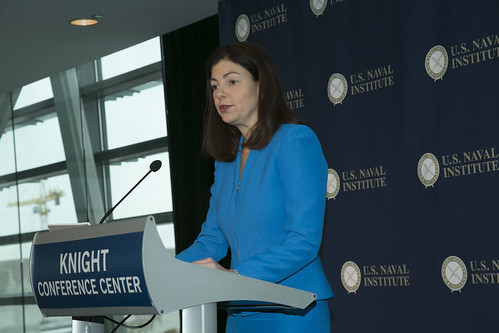
Senator Kelly Ayotte

This morning, I attended a McConnell Center event featuring Senator Kelly Ayotte, Republican of New Hampshire. Though she recently sponsored popular bipartisan legislation, Ayotte delivered a highly partisan attack on the Obama administration's policy towards Russia.

Basically, Ayotte argued that the Obama's administration's "reset" policy toward Russia has been too conciliatory. Indeed, she said that this policy has failed and caused Vladimir Putin to take advantage of American weakness -- primarily in Ukraine. She emphasized these points as evidence of Barack Obama's weakness:
• "His decision in 2009 not to place NATO missile defense systems in Poland and the Czech Republic. 
• Obama’s choice in 2010 to “brush aside” the Russian invasion of Georgia, which happened during the George W. Bush administration, by pushing through a trade agreement with Russia.
• And Obama overlooking violations of one nuclear arms agreement at the same time the two countries were negotiating a new Strategic Arms Reduction Treaty."
She noted that despite American overtures to Russia, it has not been helpful in regard to the "humanitarian tragedy" in Syria or Iran's nuclear and missile programs. Plus, Russia has "a horrible record" on human rights.

In the question and answer session, Ayotte agreed with an audience member who claimed that the $17 trillion dollar national debt is America's number one concern. Indeed, Ayotte referenced Joint Chiefs Chair Admiral Mullen who said that the "biggest threat to our national security is our debt." Notably, the Senator's website has a debt meter on the front page.

Ayotte praised Ronald Reagan throughout her speech, but she definitely didn't emphasize either of the Bush presidencies.

Indeed, the partisan nature of the speech was as much about what Ayotte did not say as what she did say. Her attacks were pointed at the Obama administration, but she very carefully overlooked some pertinent details:
1. While Russia's attacks on Ukraine are a clear violation of international norms protecting state sovereignty, she did not mention the difficult rhetorical position the U.S. faces because of the Bush administration's adventure in Iraq. This has long been a problem, as I noted in 2008 in regard to Georgia.
2. Ayotte made passing reference to Georgia, but did not explain whether this Bush-era conflict should be tied to her overall argument about Russian adventurism, which she linked to American weakness. Was America weakened by more than a decade of fighting insurgents and terrorists in Iraq and Afghanistan? She didn't say.
3. Oh, about that debt. Ayotte didn't mention that Bush's tax cuts (which, granted, are mostly now Obama's as well), plus the wars in Iraq and Afghanistan, played a huge role in the accumulation of the $17 trillion debt -- and will play an even bigger role in the accumulation of future debt. Did that weaken the US and embolden Putin in 2008? 
4.  About those missile defenses and the alleged INF arms control violation, Ayotte didn't mention that the Bush administration unilaterally killed the anti-ballistic missile defense treaty with Russia in 2002. Would anyone want Russia to do that with the INF or START treaties? No. All signs suggest both the US and Russia are implementing the new START accord. The INF allegation is new and the Obama team is attempting to sort out the details via diplomacy -- much like the Reagan administration did with an alleged violation of the ABM treaty in the 1980s. 
By the way, Western European states favored the decision to scrap the missile defense system she mentions, primarily because the U.S. is aiming to deploy instead an alternative technology that many defense experts believe will be superior technology (Aegis on land).
5. Ayotte also didn't mention Russia's help in getting Syria to agree to eliminate its chemical arsenal. Or the role it plays in trying to prevent Iran nuclear weapons. Russia doesn't want a nuclear-armed Iran. 
Finally, Ayotte's policy suggestions didn't really offer new ideas to the debate -- or even ideas that are significantly different from the status quo. Today was all about carping about alleged weakness, not suggesting actual policy that would provide new leverage over Russia:
In response to Russia’s actions in Ukraine, Ayotte stopped short of calling for military intervention, but she urged Obama to order a series of economic and diplomatic sanctions sanctions on Russia.
Ayotte called for the U.S. and the world community to “alienate” Putin, to increase natural gas production in an effort to cut off Russia economically and to “revisit” the decision not to put missile defense systems in Poland and the Czech Republic.
Ayotte also backed freezing bank accounts and blocking visas for Putin’s top aides — which Obama had done earlier in the day.
The G-8, a group of the top industrialized nations, also may expel Russia in response to its invasion of Ukraine.
Ayotte did call for more American military assistance to Ukraine, so that the country could defend itself -- and opposed the proposed defense cuts that are under discussion in Washington as part of planned deficit reduction.

The Senator openly agreed with many policies already taken -- she would not take military action, approves of some US signals with its military, etc. Indeed, the links I included above in her proposals point to policies the U.S. is already taking or considering.

Really, the conclusion was very bland given the "peace through strength" vision of Reagan she offered throughout the speech. It was as if an '80s defense hawk had ended a talk on the "window of vulnerability" by emphasizing that the U.S. should build bomber aircraft and nuclear submarines to supplement its arsenal....Oh wait, we already had those, so land-based missile vulnerability probably wouldn't cause world war III. .


Visit this blog's homepage.

For 140 character IR and foreign policy talk, follow me on twitter.

Or for basketball, baseball, movies or other stuff, follow this personal twitter account.

Monday, February 12, 2007

Is great power conflict back?

Since the end of the cold war, the world has not featured much great power competition. Moreover, the 9/11 attacks and fall 2001 anthrax scare focused tremendous attention on threats from transnational terrorism and small states with "weapons of mass destruction." Virtually all the world's major powers aligned together in a "war on terrorism."

Indeed, scholars of international relations have starting debating whether or not balancing behavior is a relic of the past. The United States is so powerful relative to other states, some argue, that balancing behavior is NOT to be expected.

Recently, however, there have been some signs that great power competition may be returning.

China recently tested an ASAT, for example, which may one day pose a threat to US space dominance.

This past week, Russia made some noise too.

Consider this statement from President Vladimir Putin in his address to the annual Munich security summit. As the BBC reported February 10:
Mr Putin told senior security officials from around the world that nations were "witnessing an almost uncontained hyper use of force in international relations".

"One state, the United States, has overstepped its national borders in every way," he said, speaking through a translator.

"This is very dangerous. Nobody feels secure anymore because nobody can hide behind international law.

"This is nourishing an arms race with the desire of countries to get nuclear weapons."
As Council on Foreign Relations senior fellow Ray Takeyh points out, the US and Russia have serious differences concerning Iran.

February 9, the New York Times reported that Russian defense minister Sergei B. Ivanov warned a NATO group meeting in Spain that Russia might initiate a new arms competition if the US deploys radars and defensive missiles in Poland and the Czech Republic. Those states are a long way from North Korea, though the US claims Iran is the potential threat.

In Munich, some Americans also had great power competition in mind. The BBC quoted Senator John McCain:
"Moscow must understand that it cannot enjoy a genuine partnership with the West so long as its actions at home and abroad conflict fundamentally with the core values of the Euro-Atlantic democracies. In today's multi-polar world there is no place for needless confrontation."
McCain's Senate colleague Joseph Lieberman declared that Putin's "provocative" address "sounded more like the Cold War."

News reports suggested that Defense Secretary Robert Gates tried to deflate this rhetoric in his Munich speech, but he had his own concerns as well:
Looking eastward, China is a country at a strategic crossroads. All of us seek a constructive relationship with China, but we also wonder about the strategic choices China may make. We note with concern their recent test of an anti-satellite weapon.

Russia is a partner in endeavors. But we wonder, too, about some Russian policies that seem to work against international stability, such as its arms transfers and its temptation to use energy resources for political coercion.
I don't think a new cold war is on the immediate horizon, but the Bush administration hasn't worked very hard to build a sense of shared interests in international community.

Whether one is worried about global warming, the Geneva conventions, or a potential "preemptive" war on Iran, other great powers continue to wonder about the prospects of American unilateralism.


Visit this blog's homepage.