
I'm interested in international relations, American foreign policy, climate change, US presidential elections, public debate, Kansas Jayhawks basketball, film, and major league baseball.
Showing posts with label gender. Show all posts
Showing posts with label gender. Show all posts
Tuesday, February 11, 2020
Research update
In the last year, I've had several publications appear online and/or in-print.
1. Rodger A. Payne (2020) Canada, the America First agenda, and the western security community, Canadian Foreign Policy Journal, DOI: 10.1080/11926422.2020.1712219.
If you want access, the journal publisher provided an eprint link I can share with 50 people. Send me a note.
2. Rodger A. Payne (2020) Stigmatization by Ridicule: From Dr. Strangelove to Donald Trump, in Non-Nuclear Peace; Beyond the Nuclear Ban Treaty, ed by Tom Sauer, Jorg Kustermans, and Barbara Segaert (Palgrave Macmillan), pp 87-113. DOI: 10.1007/978-3-030-26688-2_5.
I have a pdf if you are interested. This was tied to the conference I attended in Antwerp, Belgium, in May 2019.
3. Rodger A Payne (2019), Grappling with Dr. Strangelove’s “Wargasm” Fantasy, International Studies Review, , viz018, https://doi.org/10.1093/isr/viz018
This one is a bit older (online March 2019), but it remains forthcoming in print afaik. Any members of ISA can download this.
4. Rodger A. Payne (2019), “America First” and U.S.–Canadian Relations, in Canada–US Relations
Sovereignty or Shared Institutions? ed. by David Carment and Christopher Sands (Palgrave Macmillan), pp. 61-83. DOI: 10.1007/978-3-030-05036-8_4
This was related to my fall 2018 Fulbright in Canada, but I actually delivered the paper at a workshop at Johns Hopkins SAIS in June 2018. It's already been downloaded over 200 times, so I presume it was used in some courses over the last year. That's one primary purpose of the Canada Among Nations annual volume. I think I have a pdf of this too.
Visit this blog's homepage.
For 280 character IR and foreign policy talk, follow me on twitter.
Or for basketball, baseball, movies or other stuff, follow this personal twitter account.


Sunday, February 24, 2019
2019 Oscars
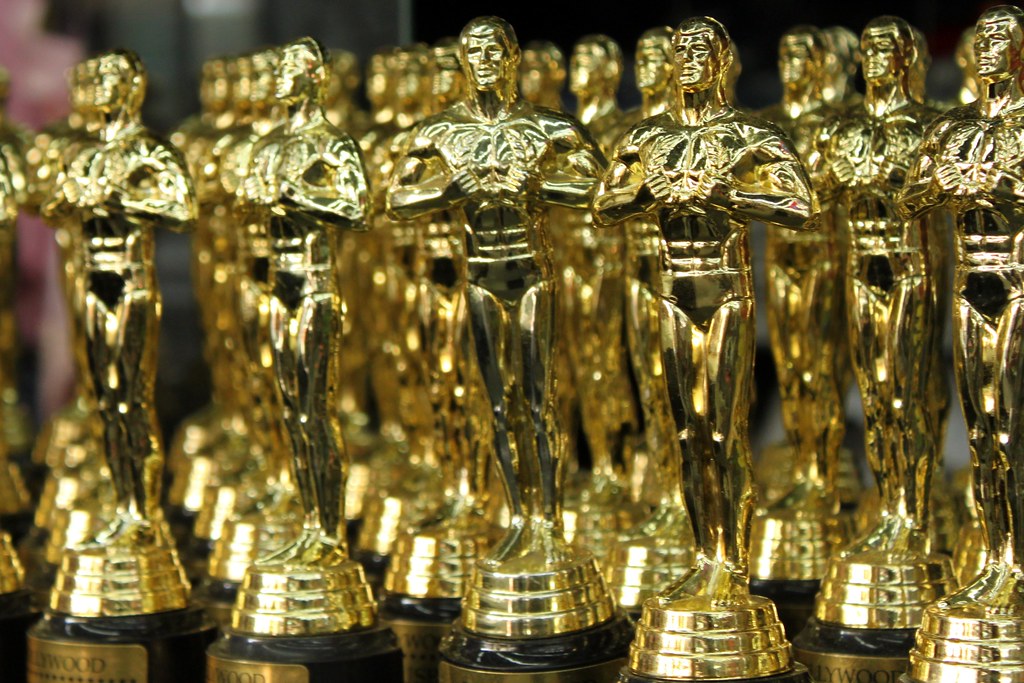 |
| Photo: Credit: Prayitno from Flickr |
Even though I have seen a fairly large number of the films and performances, I will as usual update this post as we watch more of these films. Note for future readers: Films and performances shaded in yellow below will indicate additions/edits after the Oscars are awarded (and the original blog posting).
Moreover, as I do each year, I'm going to rank-order the films and acting performances. Obviously, this is my completely subjective perspective -- and hardly an ideal way to think about art. Plus, obviously, I can only rank the performances I watched.
Keep in mind that these are not my predictions about winners in each category. I looked at the Hollywood Stock Exchange and other sites for predictions from odds-makers and betting markets.
Spoiler Alert: Roma is a slight favorite for Best Picture and its director (Alfonso Cuarón) seems to be one of the biggest favorites in a major category. In other categories, Bohemian Rhapsody star Rami Malek and The Wife star Glenn Close are strongly favored to pick up best acting awards. Mahershala Ali (Green Book) and Regina King (If Beale Street Could Talk) are also now highly favored in the supporting roles.
Here is the full list of 2019 Oscar nominations in the major categories I follow most closely:
Best Picture:
“Roma”
“BlacKkKlansman” **
“Vice” **
“Green Book”
“The Favourite” **
“A Star Is Born”
“Bohemian Rhapsody”
“Black Panther”We selected films to watch based on (a) availability streaming, on DVD, or at the local theater that is within walking distance of our homes in Ottawa or Louisville; (b) how much we wanted to see a critically-acclaimed film (Green Book's Metacritic rating is "only" 69; same as What We Had, for example); and (c) in the end, as free time grew short, how many Oscar nominations a film received.
I don't think Green Book was still showing at our theater when we returned to Louisville from Canada and started targeting the highest profile films. Before the awards were announced, we saw a number of other well-regarded films that did not receive nominations -- based on critical ratings and availability.
I really liked both BlacKkKlansman and Vice and would not be disappointed or especially surprised if either of them won the highest honor. The Favourite was also very interesting, but I would be surprised if it or any of the other films I saw received the award.
March 2019 update: Green Book was an entertaining and interesting film, but I agree with the critics that it probably was not the best picture of the year. In fact, it is probably not as good even as some excellent films that were not nominated for the award it received.
Eighth Grade deserved to be among these films. Also, Can You Ever Forgive me. And First Reformed. I would have cut the bottom three.
Lead Actor:
Christian Bale, “Vice” **
Rami Malek, “Bohemian Rhapsody”
Viggo Mortensen, “Green Book”
Bradley Cooper, “A Star Is Born”
Willem Dafoe, “At Eternity’s Gate”
Bale is lost in the role as Vice President Dick Cheney. He becomes Cheney, as critics often say, and it's truly an impressive performance. Malek is also terrific as Freddie Mercury, but a good deal of the acting involves him lip-syncing. So I favor Bale over Malek.
I felt like Cooper was channeling Kris Kristofferson and I've never seen the 1970s version of the film. I have seen plenty of Robert DeNiro films and it often felt like Viggo Mortensen was channeling some of his work. He sounded like 1970s DeNiro and looked like puffy Jake La Motta.
I saw the ads for At Eternity's Gate many times in Ottawa, but have not yet seen the film.
Note: I am very surprised Ethan Hawke was not nominated in this category. Actually, I might have placed him at the top of the list.
I also liked Robert Redford in The Old Man & the Gun. See it.
Lead Actress:
Glenn Close, “The Wife”
Melissa McCarthy, “Can You Ever Forgive Me?”
Olivia Colman, “The Favourite” **
Yalitza Aparicio, “Roma”
Lady Gaga, “A Star Is Born”
Close has long been fantastic -- can we give her a Nobel for acting? If you haven't seen it, Close plays "the wife" of a Nobel prize-winning writer in this nominated performance.
McCarthy is really good too and I found the movie to be far more entertaining than I expected.
My spouse and I watched the first season of Broadchurch this fall, which was my previous biggest exposure to Olivia Colman's work. She's talented, but her role in The Favourite seemed to be about the same as the two women nominated in the supporting category. I'd like to see a screen-time breakdown.
Aparicio's performance was also very good. Indeed, Aparicio is a key reason why Roma is such a great movie. But I doubt she'll win given that non-Spanish speakers (like me) must rely on subtitles and cannot evaluate her performance in the same way we can the English speakers. Gaga was good, but I'd be very surprised if she won. She is apparently in line to win an Oscar for Best Song.
I hope members of the Academy considered Elsie Fisher from Eighth Grade. And Emily Blunt for A Quiet Place. See those films if you have not.
Supporting Actor:
Mahershala Ali, “Green Book”
Richard E. Grant, “Can You Ever Forgive Me?”
Sam Elliott, “A Star Is Born”
Adam Driver, “BlacKkKlansman” **
Sam Rockwell, “Vice” **
Ali is the favorite, but some of those screen-time articles I linked above mention that he probably should have been contending in the best actor category.
Grant is also a prominent part of his film, but is clearly a supporting character. Grant steals many scenes, which isn't easy because McCarthy is also excellent. Grant has a few brief scenes when she is not on-screen.
It seems like Elliott plays the same gruff character you've seen before, but he does a good job adding some balance and depth in this role. Driver is fine, but I think he's been as good if not better in other films. See Paterson or even Logan Lucky. Or While We're Young.
I would have nominated Steve Carell as Donald Rumsfeld in Vice, over Rockwell (who plays George W. Bush).
Supporting Actress:
Regina King, “If Beale Street Could Talk”
Amy Adams, “Vice” **
Rachel Weisz, “The Favourite” **
Emma Stone, “The Favourite” **
Marina de Tavira, “Roma”
Adams was great, but Weisz or Stone would also be deserving choices if there is an upset.
Director:
Alfonso Cuarón, “Roma”
Spike Lee, “BlacKkKlansman” **
Adam McKay, “Vice” **
Pawel Pawlikowski, “Cold War” **
Yorgos Lanthimos, “The Favourite” **
This is a strong category and I would not be completely surprised by any outcome. But Cuarón is a pretty heavy favorite. Spike Lee is apparently set to win a share of an adapted screenplay Oscar.
I really enjoyed all five of these films, but I'm not sure I would have made the exact same choices for nominations in the category. Who's missing? How about Marielle Heller, director of Can You Ever Forgive Me? People who write about the Oscars often focus on its lack of diversity, especially in this category as only 5 women have ever been nominated for directing. This year, five men are again nominated.
This is the 91st Academy Awards. In this century, only three women have been nominated. It's not because there are not viable possibilities. Women directed many critically acclaimed films in 2018, including Leave No Trace, The Rider, and You Were Never Really Here, in addition to Can You Ever Forgive Me? I mention Heller because of the film's two acting and one writing nominations. All of those named films were on par with at least a couple of films in this category.
Best Documentary Feature:
“Free Solo,” Jimmy Chin, Elizabeth Chai Vasarhelyi
“RBG,” Betsy West, Julie Cohen
“Minding the Gap,” Bing Liu
“Of Fathers and Sons,” Talal Derki
RBG is in a tight competition with Free Solo, which looked somewhat frightening in the many previews we saw in Ottawa on the big screen. RBG is an informative documentary about the oldest current Supreme Court Justice.
Minding the Gap seems more like a narrative film, with multiple complex characters and themes. This is praise. The story was very personal for the filmmaker Bing Liu, obviously, so it will be interesting to follow his career and see what he does in the future.
I recorded Hale County on my DVR when PBS recently broadcast it and Of Fathers and Sons is streaming on Kanopy. Because we have been watching other films, we have not yet seen those films, despite availability.
Update: I saw the incredible Free Solo on demand from the National Geographic channel. It's an intense film, but it was interrupted repeatedly by commercial breaks. Frankly, those breaks diminished the need to look away. Frightening, but awe-inspiring.
Best Foreign Language Film:
“Roma” (Mexico)
“Cold War” (Poland) **
“Shoplifters” (Japan)
“Capernaum” (Lebanon)“Never Look Away” (Germany)
Roma will sweep, most likely. Cold War was a very good film, but probably not as good as Ida -- an excellent film by the same director that won this category a few years ago.
Shoplifters
Animated Feature:
“Spider-Man: Into the Spider-Verse,” Bob Persichetti, Peter Ramsey, Rodney Rothman
“Isle of Dogs,” Wes Anderson
“Incredibles 2,” Brad Bird
“Mirai,” Mamoru Hosoda
“Ralph Breaks the Internet,” Rich Moore, Phil Johnston
** We saw these films or performances in a theater on a big screen.
This is a category that my spouse and I often ignore, especially since our daughters have gone away to college and beyond. I've listed it because I actually saw two of the films this year, one intentionally because of the Oscar nomination (and because I liked the first Incredibles).
The Spider-Man movie
Wes Anderson has made some great movies -- Grand Budapest Hotel, Moonrise Kingdom, and Rushmore were genuinely terrific and I recommend you see them if you have not. They are better than many if not most of the films listed above that are nominated for Best Picture in 2018. The Royal Tenenbaums was good and I even liked Bottle Rockets, which has some obvious flaws and used to be difficult to find.
Isle of Dogs does not reach those peaks, but it is a pretty good movie, especially for an animated feature where the competition is often family films. It was so good that I went back and watched The Fantastic Mr. Fox this year, convincing my spouse (who does not generally like "cartoon" films) that anything with George Clooney cannot be that bad. Anderson has created an impressive collection of films and it will be interesting if he finally wins an Oscar for an animated film. He's previously been nominated in the Best Picture and Best Animated Feature categories, as well as for writing and directing.
Incredibles 2 suffered the same flaw as many superhero sequels. The stories are not all that interesting and they are all-too-familiar.
Visit this blog's homepage.
For 280 character IR and foreign policy talk, follow me on twitter.
Or for basketball, baseball, movies or other stuff, follow this personal twitter account.
Sunday, December 04, 2016
Dr. Strangelove's "Wargasm"
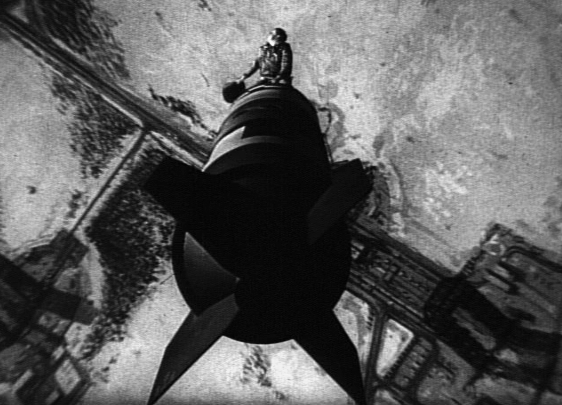
Here's the abstract:
Dr. Strangelove continues to be one of the most acclaimed comedic films of all-time, often appearing on critics’ lists enumerating great films. Likewise, international relations experts commonly view the film as a “no brainer” choice among the most essential IR-themed movies. Dan Lindley’s 2001 Teaching Guide to Dr. Strangelove offers the standard rationale for studying this film. It can be “a springboard to discuss deterrence, mutually assured destruction, preemption, the security dilemma, arms races, relative versus absolute gains concerns, Cold War misperceptions and paranoia, and civil–military relations.” This paper considers critical theoretical concerns raised in the film that Lindley and others overlook. First, the film’s narrative is scripted as a satire or black comedy rather than as a tragedy or romance. This is a meaningful choice that strongly influences the way the film should be understood. Second, as film critic Tony Macklin argued decades ago (1964), the film can be viewed as a sex allegory, a dominant theme that has typically been ignored. Even director Stanley Kubrick acknowledged the film’s “sexual framework.” What does the film’s “Wargasm” imply about international relations and nuclear strategy?
Visit this blog's homepage.
For 140 character IR and foreign policy talk, follow me on twitter.
Or for basketball, baseball, movies or other stuff, follow this personal twitter account.
Thursday, May 15, 2014
More Gendered IR
Somehow, I missed this comment from General Stanley McChrystal, from an interview in Foreign Affairs in the March/April 2013 issue:
The headline for the interview is "Generation Kill," which was also the title of an HBO miniseries in 2008. That show was about the 2003 American experience in Iraq.
I didn't watch the show, but this video seems to get at the gendered message:
This is a follow-up to last week's post.
Visit this blog's homepage.
For 140 character IR and foreign policy talk, follow me on twitter.
Or for basketball, baseball, movies or other stuff, follow this personal twitter account.
If you look at the role I had in Iraq, it is sexy, it is satisfying, it is manly, it scratches an itch in the American culture that people like.The interviewer, Gideon Rose, had just asked the General to respond to people who say "I like the Iraq Stan McChrystal of raids and drones and targeted strikes, but I don't like the Afghanistan Stan McChrystal of clear, hold, and build and counterinsurgency. I want to deploy the first but avoid the costs and difficulties of the second."
The headline for the interview is "Generation Kill," which was also the title of an HBO miniseries in 2008. That show was about the 2003 American experience in Iraq.
I didn't watch the show, but this video seems to get at the gendered message:
This is a follow-up to last week's post.
Visit this blog's homepage.
For 140 character IR and foreign policy talk, follow me on twitter.
Or for basketball, baseball, movies or other stuff, follow this personal twitter account.
Wednesday, May 07, 2014
Strangelove, indeed
 |
| Photo credit: NASA Nothing phallic here, right? |
The most important theme of the film is that it makes fun of the sad, perverse, and absurd reality that the U.S. and the Soviet Union could destroy each other within 30 minutes.I use "Dr. Strangelove" in my film class, primarily as a critique of nuclear deterrence strategy. Many former civilian and military leaders around the world now argue for abolition of nuclear weapons and they repeatedly insist that nuclear deterrence strategy is absurd. Ridiculous. I've been working on this theme for a chapter in my comedy book.
The first time I ever showed the film in a class was while I was a term/visiting professor at Northwestern. To fulfill part of my overload teaching assignment, the department chair had allowed me to teach a small seminar on nuclear deterrence. The handful of students and I watched a video of the film very late in the term after everyone had a strong feel for deterrence theory and the class had read many original declassified documents about nuclear planning, threats, etc.. Back in those days -- around 1990 -- the film did not replay regularly on cable television. Streaming media was not ubiquitous and it was a real treat to be able to see Stanley Kubrick's masterpiece.
Did I mention that every student in that small seminar was male? No women had signed up.
In more recent years, I've adapted the film class to a wider audience of political science students. The course still focuses on "Global Politics Through Film," but it is now regularly taught as one of our senior capstone seminars, a "culminating undergraduate experience." To capture a wider range of ideas from the discipline, I have been addressing some of the other prevalent themes of the film:
Indeed, the gender politics in the film are obviously quite provocative, essentially equating male sexual fantasies with war and nuclear planning. The latest Planning Guidance for Response to a Nuclear Detonation suggests that absurd nuclear fantasies continue to influence today’s security policymakers.I was reminded about this today when I happened across a magazine article about the politics of the Pentagon's F-35 aircraft, also known as the most expensive weapon the U.S. has ever attempted to build. Needless to say, it has been a controversial weapon given those costs, plus various setbacks, delays, and uncertainties about the piloted weapon's purpose in an age of drone warfare. Still, one alleged impetus for the new fighter echoes a theme that Stanley Kubrick emphasizes in "Dr. Strangelove":
"There's always this sexual drive for a new airplane on the part of each service," says Tom Christie, the Pentagon's chief weapons tester from 2001 to 2005. "Persistent, urgent and natural."That's a gendered lesson about "Dr. Strangelove" that Lindley does not overtly discuss in his film teaching guide. Perhaps it is what he had in mind when he calls nuclear exchange scenarios "sad, perverse, and absurd."
P.S. Coincidentally, I also recently read a book review by Akemi Johnson that discussed What Soldiers Do; Sex and the American GI in World War II France by Mary Louise Roberts. This paragraph gives you an idea of that book's thesis about gender and IR:
“The history of war,” Roberts writes, “cannot be separated from the history of the body.” Beyond combat, the bodies involved—the ones that physically connect, flesh upon flesh—are usually those of male soldiers, arrived from a foreign land to liberate, destroy or occupy, and those of female civilians, attracted or yanked into the military world. The interactions between them are intimate yet iconic, private yet political. A rape by an American soldier threatens to expose harsh realities about American hegemony; another GI’s part in an international romance suggests an entire country’s willing deference to benevolent US control. Harnessed for propaganda and protest, tangled in injustices like institutional lynching, these sexual relationships are essential to understanding war and its aftermath.
Visit this blog's homepage.
For 140 character IR and foreign policy talk, follow me on twitter.
Or for basketball, baseball, movies or other stuff, follow this personal twitter account.
Subscribe to:
Posts (Atom)