Search This Blog

Showing posts with label media criticism. Show all posts

Thursday, October 17, 2024

Immigration and Crime


I participated in a panel in my department today on Foreign Policy and the 2024 election. I talked about NATO and climate change -- with these questions in mind: Will these policy issues influence the outcome of the election (maybe climate change); and how will the election results influence policy going forward?

Colleagues talked about Russia/Ukraine, Gaza/Lebanon, China, and immigration.

The last issue was the most controversial as the panelists (and student audience members) had the deepest disagreement on this issue during the Q&A.

I feel compelled to fact-check some of the statements that were flying around the room.

Contra to alarming claims, the Biden administration has not had an "open borders" policy. This claim is basically a Republican talking point in recent presidential campaigms, not some settled matter of public policy. The libertarian Cato Institute, which used to be reliably Republican, agrees. On the left, advocates of open borders certainly do not view the US border as open. 

Next, immigrants do not commit "most crime" or even a disproportionate share of them.  A number from New York City referenced in today's discussion was essentially made up by "police sources" and reported in the tabloid New York Post.  Meanwhile, a more thorough dive by the NY Times this past February revealed quite different official data from the NYPD:

But police data indicate that there has been no surge in crime since April 2022, when Gov. Greg Abbott of Texas started sending buses of migrants to New York to protest the federal government’s border policy.

More than 170,000 migrants have arrived in the city since then, and it is difficult to know what crime statistics would show had they not come. But as the migrant numbers have increased, the overall crime rate has stayed flat. And, in fact, many major categories of crime — including rape, murder and shootings — have decreased, according to an analysis of the New York Police Department’s month-by-month statistics since April 2022.

The story also quotes (by name) experts: "Jeffrey Butts, director of the Research and Evaluation Center at the John Jay College of Criminal Justice, said that there was no discernible migrant crime wave."

Beyond NYC, the paper also referenced academic studies: 

"In 2023, researchers at Stanford University found that immigrants were imprisoned at lower rates than people born in the United States. In 2020, a University of Wisconsin-Madison study noted that undocumented immigrants in Texas tended to have fewer felony arrests than legal residents."

The Department of Justice's National Institute of Justice recently discussed a study it funded conducted using Texas data, which is perhaps the one referenced by the TImes (or a follow-up): 

 An NIJ-funded study examining data from the Texas Department of Public Safety estimated the rate at which undocumented immigrants are arrested for committing crimes. The study found that undocumented immigrants are arrested at less than half the rate of native-born U.S. citizens for violent and drug crimes and a quarter the rate of native-born citizens for property crimes.

Reuters collected an array of academic studies in mid-summer debunking the myth of out-of-control immigrant crime. "A meta-analysis of more than fifty studies on the link between immigration and crime between 1994 and 2014 found there was no significant relationship between the two." . 

The evidence seems overwhelming. The American Immigration Council looked at data from 1980 to 2022 and found "that as the immigrant share of the population grew, the crime rate declined." The Council also looked at recent data from the FBI and Census Bureau:

Using Uniform Crime Reporting data from the Federal Bureau of Investigation (FBI) and population data from the U. S. Census Bureau, the Council also explored the relationship between total crime rates and immigrant shares of the population between 2017 and 2022 at the state level. Using beta regression analyses and data from all 50 states, the result shows no statistically significant correlation between the immigrant share of the population and the total crime rate in any state. This means higher immigrant population shares are not associated with higher crime rates, which aligns with a wealth of prior research on this topic.

The Brennan Center for Justice links to numerous studies. The Center notes that the immigrant crime myth goes back to at least the 1930s and has been used to tarnish "Irish, Catholic, Jewish, Italian, Mexican, Japanese, Chinese, and German people" who immigrated. One study by a Northwestern scholar referenced in the Reuters story I noted above uses data going back 150 years. The results showed that more recent immigrants are even less likely to commit crimes and become incarcerated than previous waves of immigrants. 

Personally, I've referenced stats in my classes from the Anti-Defamation League that reveal much the same information -- immigrants commit fewer crimes than citizens. By the way, links in this quote are in the original and not all of them currently work. The bolded parts are also in the original. 

Study after study has shown that immigrants – regardless of where they are from, what immigration status they hold, and how much education they have completed – are less likely than native-born citizens to commit crimes or become incarcerated.

According to the U.S. Chamber of Commerce, while the overall percentage of immigrants and the number of undocumented immigrants in the U.S. both increased between 1990 and 2016, the violent crime rate in the U.S. during that time plummeted 48 percent and the property crime rate dropped by 41 percent. More recent population and crime data from the Pew Research Center reveals the continuation of this trend. Studies have consistently found that immigrants are less likely to be incarcerated than native-born Americans and that there is a negative correlation between levels of immigration and crime rates.

Other studies have found that crime rates are lowest in states with the highest immigration growth rates, and that states with larger shares of undocumented immigrants tend to have lower crime rates than states with smaller shares.

The ADL also debunks myths about terrorism, non-citizen voting, public health, etc. Customs and Border Protection also post annual stats. While those numbers undoubtedly reflect growing border encounters, they do not show a great number of criminals coming across the border as a percentage of the total. This is a link to the obviously non-alarming crime numbers from CBP.

When pressed for numbers, the Trump campaign responds with anecdotes about specific crimes. In a nation of 330 million people, this is a terrible and misleading way to document anything. Spend a few minutes on the internet and one can find misleading instances of all sorts of horrible crimes committed by all sorts of trusted people -- mothers, coaches, teachers, priests, etc. Those specific cases would not necessarily make any generalizable point. 

Michael Light, the University of Wisconsin-Madison professor, said U.S. research overall does not indicate immigrants are more likely to commit crime.

"Of course, foreign-born individuals have committed crimes," Light said in an interview. "But do foreign-born individuals commit crime at a disproportionately higher rate than native-born individuals? The answer is pretty conclusively no."


Visit this blog's homepage.

For 280 character IR and foreign policy talk, follow me on twitter.

Or for basketball, baseball, movies or other stuff, follow this personal twitter account.

Sunday, December 04, 2016

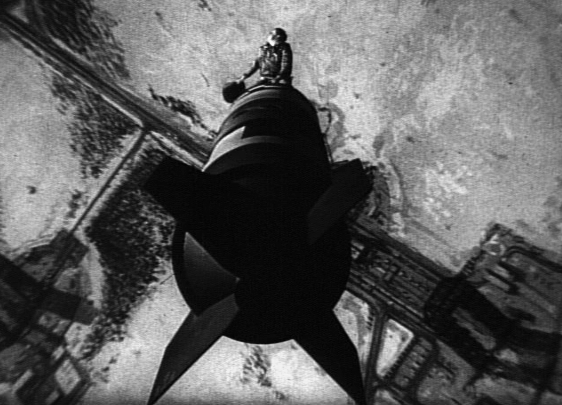
Dr. Strangelove's "Wargasm"


I forgot to blog about this, but back on November 4-5, I attended the annual ISAC-ISSS conference at Notre Dame University. If you are interested, my paper was entitled "Grappling with Dr. Strangelove’s Wargasm Fantasy," which was placed on a panel "Perspectives on Gender and Security."

Here's the abstract:
Dr. Strangelove continues to be one of the most acclaimed comedic films of all-time, often appearing on critics’ lists enumerating great films. Likewise, international relations experts commonly view the film as a “no brainer” choice among the most essential IR-themed movies. Dan Lindley’s 2001 Teaching Guide to Dr. Strangelove offers the standard rationale for studying this film. It can be “a springboard to discuss deterrence, mutually assured destruction, preemption, the security dilemma, arms races, relative versus absolute gains concerns, Cold War misperceptions and paranoia, and civil–military relations.” This paper considers critical theoretical concerns raised in the film that Lindley and others overlook. First, the film’s narrative is scripted as a satire or black comedy rather than as a tragedy or romance. This is a meaningful choice that strongly influences the way the film should be understood. Second, as film critic Tony Macklin argued decades ago (1964), the film can be viewed as a sex allegory, a dominant theme that has typically been ignored. Even director Stanley Kubrick acknowledged the film’s “sexual framework.” What does the film’s “Wargasm” imply about international relations and nuclear strategy?


Visit this blog's homepage.

For 140 character IR and foreign policy talk, follow me on twitter.

Or for basketball, baseball, movies or other stuff, follow this personal twitter account.

Thursday, September 08, 2016

Trump on Iraq

Last night, as he repeatedly has, Republican presidential nominee Donald Trump claimed to Matt Lauer on national television that he was an opponent of the Iraq war prior to its start in March 2003:
“I was totally against the war in Iraq. You can look at Esquire magazine from '04, before that,” Trump told Matt Lauer during NBC’s “Commander-in-Chief Forum” Wednesday night, responding to a criticism Democratic nominee Hillary Clinton made earlier in the evening that Trump was not being honest about his position.
On September 11, 2002, Trump was interviewed on Howard Stern's radio program. At about the 1:40 mark of the audio embedded in the video below, Stern asks him directly if he is in favor of invading Iraq. Trump said, "Yeah, I guess so. Uh, you know, I wish the first time it was done correctly."


As the Washington Post reported today, Trump also seemed to support the war when it was initially underway. He certainly wasn't hinting that it was going to be a long and costly disaster:
In an interview with Fox News one day after the March 2003 Iraq invasion, Trump praised the effort while talking about the war’s impact on Wall Street. 
“Well, I think Wall Street’s waiting to see what happens, but even before the fact they’re obviously taking it a little bit for granted, and it looks like a tremendous success from a military standpoint, and I think this is really nothing compared to what you’re gonna see after the war is over,” Trump told Fox News’s Neil Cavuto.
This is the most revealing line in the WaPo story, addressing the media's coverage of this year's presidential election: "[Trump's] claim has been repeatedly debunked by independent fact checkers, though Lauer did not press him on the issue."


Visit this blog's homepage.

For 140 character IR and foreign policy talk, follow me on twitter.

Or for basketball, baseball, movies or other stuff, follow this personal twitter account.

Wednesday, October 22, 2014

Iraq's New Old Chemical Arsenal

Yesterday, a student asked me about the recent news reports indicating that Iraq did, in fact, have "weapons of mass destruction" back in 2002 and 2003 when the U.S. was attempting to justify a "preemptive" war. The New York Times reported that American soldiers were injured in the past decade by chemically-armed munitions found in Iraq.

Already, a slew of articles in the media have debunked the claim that this vindicates George W. Bush and his Iraq misadventure. This Washington Post piece is perhaps the best since it primarily quotes Bush administration claims from the pre-war period.

The Times piece certainly does not try to claim that Bush is vindicated:
The discoveries of these chemical weapons did not support the government’s invasion rationale. 
After the terrorist attacks of Sept. 11, 2001, Mr. Bush insisted that Mr. Hussein was hiding an active weapons of mass destruction program, in defiance of international will and at the world’s risk. United Nations inspectors said they could not find evidence for these claims. 
Then, during the long occupation, American troops began encountering old chemical munitions in hidden caches and roadside bombs. Typically 155-millimeter artillery shells or 122-millimeter rockets, they were remnants of an arms program Iraq had rushed into production in the 1980s during the Iran-Iraq war. 
All had been manufactured before 1991, participants said. Filthy, rusty or corroded, a large fraction of them could not be readily identified as chemical weapons at all. Some were empty, though many of them still contained potent mustard agent or residual sarin. Most could not have been used as designed, and when they ruptured dispersed the chemical agents over a limited area, according to those who collected the majority of them. 
In case after case, participants said, analysis of these warheads and shells reaffirmed intelligence failures. First, the American government did not find what it had been looking for at the war’s outset, then it failed to prepare its troops and medical corps for the aged weapons it did find.
Read the piece and it offers more reason to believe that these revelations do not help the save the Bush administration's reputation:
Participants in the chemical weapons discoveries said the United States suppressed knowledge of finds for multiple reasons, including that the government bristled at further acknowledgment it had been wrong. “They needed something to say that after Sept. 11 Saddam used chemical rounds,” Mr. Lampier [“a recently retired Army major who was present for the largest chemical weapons discovery of the war”] said. “And all of this was from the pre-1991 era.” 
Others pointed to another embarrassment. In five of six incidents in which troops were wounded by chemical agents, the munitions appeared to have been designed in the United States, manufactured in Europe and filled in chemical agent production lines built in Iraq by Western companies.
A decade ago, when I was blogging regularly about this, the media would occasionally report about old chemical munitions found it Iraq. I posted this passage on May 19, 2004:
What is very clear is that there was no vast infrastructure of WMD programs and no readily deployable arsenal. The nuclear program was dead. No one denies Iraq had chemical weapons in the 1980s and that scientists could again make them. What is the appropriate level of threat justifying preventive war? 
I ended up writing and publishing a number of pieces about that question and the so-called "Bush Doctrine" of "preemptive war." In one of them, I quoted from this exchange involving David Kay, who was the head of the Iraq Survey Group in 2003 (the original team looking for WMD) and then-U.S. Senator Mark Dayton:
DAYTON: Which weapons of mass destruction qualify in that upper echelon of truly mass destruction? 
KAY: Well, I think all of us have and would continue to put the nuclear weapons in a different category. It's a single weapon that can do tremendous damage, as opposed to multiple weapons that can do the same order of damage. As you know, the fire-bombing of Tokyo, in terms of number of people killed, was roughly equivalent to a single bomb in Nagasaki, but it took a lot more aircraft to do it. 
So I still treat, and I think we should politically treat, nuclear as a difference. But I must say, the revolution of biology, some developments in cyber -- I think we're going to have a blurring out there of capabilities. And that makes the control and makes the intelligence problem far more difficult to estimate. 
DAYTON: Just based on your general knowledge, how many countries would you say in the world today would qualify under the category of developing weapons of mass destruction-related program activities or having such activities?
KAY: Senator Dayton, I hesitate to give you an off-the-cuff number because I know it'll probably is going to be like the 85 percent; I'm going to have to live with it for longer than I want to.I would say that in the nuclear area, in addition to those that we know have possessed nuclear weapons, that includes India... 
DAYTON: I want to go to the vernacular that we're using in this broader category. 
KAY: The broader category. Oh, I suspect you're talking about probably 50 countries that have programs that would fall somewhere in that broader vernacular. 
DAYTON: So if we're going to take out those countries or their governments which are engaged in what we would call weapons of mass destruction-related program activities, we're going to be cutting quite a world swathe. 
KAY: Well, Senator Dayton, I think you're on to the issue. We no longer are going to be living in a world in which we can control capabilities. Intentions are what are going to be important.
Kay is correct. The war was primarily justified based on the threat allegedly posed by Iraq's nuclear program. If the bar for preemptive war is lowered to justify attacks against states with potentially menacing chemical or biological capabilities, then states with such preemptive doctrines could launch attacks against thousands of universities or industries in dozens of states.


Visit this blog's homepage.

For 140 character IR and foreign policy talk, follow me on twitter.

Or for basketball, baseball, movies or other stuff, follow this personal twitter account.

Tuesday, January 22, 2013

A Democratic Majority?

Photo Credit: WhiteHouse.gov

Yesterday, Democrat Barack Obama was inaugurated for his second term as U.S. President. His party, in fact, has won at least a plurality of the votes in five of the past six presidential elections. On average, Democrats have received about 4.5 million more votes than Republicans in every presidential election since George H.W. Bush won decisively in 1988. Was that the end of the Reagan era?

The Democratic party has also controlled the U.S. Senate since the 2006 midterm elections. Indeed, in the fifteen years between January 2001 and January 2015, Democrats will have controlled the Senate for all but four and one-half years. That's roughly two-thirds of the years to-date of the twenty-first century.

Republicans currently control the U.S. House of Representatives, but this is thanks largely to gerrymandering and quirks of political geography. Democratic candidates in the 2012 elections received one million more votes than did Republicans. Indeed, FairVote.org has estimated that Democrats were actually preferred roughly 52-48% by the electorate in the most recent elections. The Democrats controlled a majority of the House from January 2007 until January 2011, which means they have won a meaningful majority of votes cast in three of the past four congressional elections.

Why mention these facts? Well, it is interesting how quickly political reality can change. Remember when some pundits and insiders were predicting a "durable" majority position held by the Republican Party?

That alleged majority was built largely on the Republican control of the south and the exurbs. To get a taste of the era, consider the following analysis that I found while going through old drafts of posts that were never posted on this blog. The piece was written by Ronald Brownstein in the February 2006 issue of The American Prospect. The columnist was reviewing four contemporary books about the South and American politics:
The South now furnishes the decisive votes for Republican control of the House of Representatives, the Senate, and the White House. Outside the South, Democrats still hold the advantage in the competition on all three fronts. But the Republican dominance of the South has grown so pronounced that it swamps the Democratic strengths elsewhere and provides the GOP with its margin of majority for both Congress and the White House.

Consider the Senate. In the 11 states of the old Confederacy plus Oklahoma and Kentucky -- the generally accepted political definition of the South -- Republicans hold 22 of the 26 Senate seats. In the rest of the country, Democrats control seven more Senate seats than the GOP....

The same is true in the House. Outside the South, Democrats hold a 152-140 edge in House seats....The imbalance is even more pronounced in the race for the White House. In 2000, Al Gore won just over 70 percent of the Electoral College votes at stake outside the South. But George W. Bush narrowly won the White House because he swept all 165 Electoral College votes in the 13 southern states. Four years later, John Kerry won 68 percent of the Electoral College votes outside the South. But Bush won because he again swept the 13 Southern states -- this time worth 168 Electoral College votes after population growth measured in the 2000 Census.
In my review of the 2004 presidential election results, I noted some "ongoing demographic changes" that were already influencing voting patterns in Nevada, New Mexico, North Carolina, and Virginia. I described these as a "good sign for Democrats for 2008 and beyond," even though they had just experienced their most disappointing election of the past quarter century.

I suspect, somewhere, Republican analysts are looking at the most recent voting and demographic data in an effort to find some pathways to victory in 2016.


Visit this blog's homepage.

For 140 character IR and foreign policy talk, follow me on twitter.

Or for basketball, baseball, movies or other stuff, follow this personal twitter account.

Saturday, June 30, 2012

Cliché Time: Lies, Damn Lies & Statistics

If I had more time, I'd examine this June 25 Courier-Journal op-ed by John David Dyche in more detail. Dyche fills his paragraphs with "facts," implying that this means it is not biased or distorted in any way.

Wrong.

Here's a sample of the mediocy:
The Urban Institute-Brookings Tax Policy Center estimates that 46 percent of households will not pay federal income tax for 2011. The Heritage Foundation asserts that in 1984 only 14.8 percent of the population paid no federal income tax.
Obviously, Dyche is trying to imply that the U.S. has so expanded the social welfare state that few Americans now pay income taxes. Compared to 1984, that is obviously untrue. Rather, the problem is that since 1984, the wealthiest Americans have acquired a far greater share of the country's wealth and capture a very large portion of annual income. Just between 2002 and 2007, the wealthiest captured two-thirds of all income growth. The data over the last 30 years is particularly depressing. And since 2008, the Great Recession has further concentrated wealth and massively increased poverty at the bottom.

Moreover, the Earned Income Tax Credit explains some of the change as well.

Dyche also ignores the payroll tax.

This set of "facts" from the op-ed is also misleading:

NPR, using inflation-adjusted dollars, reports that, “In 1962, federal spending was $707 billion and accounted for 18 percent of U.S. GDP. In 2011, federal spending was $3.1 trillion and accounted for 24 percent of GDP.” As recently as 2008, total federal spending was about $2.5 trillion, and the long term, historical average of federal spending is 20 percent of GDP.
Why pick 1962 as the baseline? That was before Johnson's Great Society, so it ignores Medicare, Medicaid, etc. Does Dyche mean to suggest that America was a better place when those social welfare protections were not in place? The "long term, historical average" is fairly ridiculous since the U.S. had fairly limited federal spending until the Great Depression. The social safety net that is in place helps protect against the wild economic swings capitalism periodically suffers.

One fact Dyche did not note: federal revenues (thanks to tax cuts, as well as the recession) are now lower than they have been as a portion of GDP in over 60 years. Obviously, deficits would be much lower if taxes on the wealthy had not been repeatedly reduced. What was the top rate in 1962? Answer: over 90%!!

Incidentally, a significant portion of current spending is debt service, meaning that higher revenues over the past 30 years would have meant a lot less government spending now.


Visit this blog's homepage.
For 140 character IR and foreign policy talk, follow me on twitter.
Or for basketball, baseball, movies or other stuff, follow this personal twitter account.

Sunday, February 12, 2012

Media bias

Does mass media have a liberal bias? Conservatives, of course, frequently claim that it does have such a bias.

However, as I've taught my students in American Foreign Policy for many years, talk-radio is dominated by the right, newspapers and television are increasingly corporate, Fox News is obviously right-leaning, and "regular" liberal reporters embrace norms of fairness that cause them to report balanced information even when there's no justification -- such as on climate change.

I previously meant to blog this Paul Waldman item, which speaks to media quoting of conservative or liberal think tanks. From The American Prospect, October 2010:
Fairness and Accuracy in Reporting (FAIR), a progressive group that opposes media bias and censorship, reports that progressive groups have seen their proportion of media citations steadily rise in recent years.

But the left is still chasing the right. The Center for American Progress is probably the signature success of recent liberal institution building; its 2008 budget was $26.3 million. But the Heritage Foundation, its closest competitor on the right, spent $64.6 million that year. The left's think tanks get quoted more than they used to, reports FAIR, but the right's think tanks still get quoted more than the left's. In 2008, conservative think tanks made up 31 percent of all think-tank citations, while progressive think tanks made up 21 percent. The gap has narrowed but not disappeared.
Waldman actually provides a good deal of interesting information about progressive attempts to build a media network to counter the conservative successes. However, as Waldman notes, Air America's failure demonstrates one huge hurdle faced by those making the effort to build liberal counterparts to Fox News and Rush Limbaugh. Progressives
seek out outlets like National Public Radio that are less combative and more factual. It shouldn't be surprising that a substantial body of social-psychological research has found that conservatives tend to be less tolerant of ambiguity than liberals.
In one of my college Communications classes, the professor gave students a test that determined one's degree of dogmatism. It turned out that I was the least dogmatic person in the class.

My debate colleague at the time, incidentally, was the most dogmatic person in the class -- though he wasn't a conservative so far as I know.


Note: This item was pulled at random from my huge stack of "to-be-blogged" material. Sorry for the lack of blogging lately. I've been fairly active on Twitter, which makes me a better reader, but I just have not been in the mood to blog. I'm going to try to reduce the stack of items pulled from magazines and newspapers because it would be nice to have someplace to find these items when I try to recall where I put something.


Visit this blog's homepage.

Follow me on twitter.

Non-academic twitter info is here.

Sunday, September 04, 2011

Palin in Iowa

September 18 2008 1180
Photo credit: Dave Davidson (2008 campaign)

Who writes Sarah Palin's speeches? Saturday, in Iowa, she spoke out against crony capitalism:
Sarah Palin did not say whether she would seek the Republican presidential nomination, but...in a 40-minute speech before a Tea Party rally here, which was one of her most expansive addresses since she accepted the Republican vice presidential nomination three years ago, she railed against “crony capitalism” in both parties.

“I want all of our GOP candidates to take the opportunity to kill corporate capitalism that is leading to this cronyism that is killing our economy,” Ms. Palin said.
Does she understand the meaning of "crony capitalism"? From Investopedia:
What Does Crony Capitalism Mean?

A description of capitalist society as being based on the close relationships between businessmen and the state. Instead of success being determined by a free market and the rule of law, the success of a business is dependent on the favoritism that is shown to it by the ruling government in the form of tax breaks, government grants and other incentives.
In Iowa Saturday:
[Palin] outlined economic proposals for creating jobs, including the elimination of all federal corporate income taxes. She said the cozy relationship between political contributions and government favors needed to be exposed and eliminated.
And as a reminder, consider Sarah Palin's multi-million dollar job working for Rupert Murdoch at Fox News. From The Nation's Eric Alterman in the September 5 edition:
One key factor must always be kept in mind when discussing Rupert Murdoch: he has a lot of money ($7.6 billion, according to Forbes) and makes even more for other people. Between 1977 and 2001, News Corporation outearned every other blue-chip company save Berkshire Hathaway and Walmart. And while money might not buy you love in America, it does buy a great deal of special favors and improper indulgences from powerful people.

Being a billionaire media mogul is even more fun when it comes to politics. Not only do politicians need your cash; they need your newspapers, magazines and TV networks too. It is this unholy nexus that Murdoch has mastered...

Murdoch regularly uses book deals, television contracts and columnist gigs as bribes to the powerful, just as he uses these same properties to punish those who refuse to go along. Don’t forget that until recently, Murdoch had four potential Republican presidential candidates on the Fox payroll. One of them—Sarah Palin—even got a state-of-the-art studio built in her home, gratis. And each of these powerful people has a pretty strong incentive to look the other way every time one of Murdoch’s properties or employees feels it necessary to break a law here or there in the service of the great man’s power, profits and influence.
Either Sarah Palin is a brilliant ironist, or she represents the dénouement of a horrifying Orwellian nightmare.


Visit this blog's homepage.
Follow me on twitter.

Saturday, November 06, 2010

Olbermann

I very rarely watch Keith Olbermann's television program any more, though I certainly understand how it serves a purpose in America's political discourse. Arguably, it served a much bigger purpose when it was launched during the Bush era. Few people in the media gave much real scrutiny to the Iraq war and Olbermann was willing to poke at some of the weaker claims.

Olbermann has now been suspended from his job for donating to several Democratic political candidates in 2010.

As it happens, I had a debate case many years ago about the harm of employer's requiring employees to forego constitutional rights. Given how the U.S. Supreme Court has equated political contributions with political speech, this is a troubling case. Moreover, it is difficult to see how an opinionated journalist like Olbermann is allowed to say almost anything (loudly) on-air without violating his network's ethics standards, but cannot make private political contributions.

Olbermann works for MSNBC, which apparently overlooked Republican colleague Joe Scarborough's donations in 2006. Apparently, those were reported in advance, which hardly makes the double standard less of a double standard given that the ethical concern is that media members shouldn't appear to have conflicts of interest when reporting about politicians they support. If transparency is the issue, I'd think public FEC reports would suffice.

Indeed, in 2007, MSNBC identified nearly 150 journalists who gave to political campaigns. A 2010 report by OpenSecrets.org found 235 media donors this year -- giving nearly half a million bucks!

Olbermann's "crime" isn't exactly unique in his field.

Media Matters has documented that Fox News "personalities" operate by a different ethical code altogether:
In recent years, at least twenty Fox News personalities have endorsed, raised money, or campaigned for Republican candidates or causes, or against Democratic candidates or causes, in more than 300 instances and in all 50 states.* Republican parties and officials have routinely touted these personalities' affiliations with Fox News to sell and promote their events.
The list is not merely former Republican politicians like Newt Gingrich, Mike Huckabee, Sarah Palin, Karl Rove, etc. (and those are just the stars). Rather, it also includes Fred Barnes, Glenn Beck, Monica Crowley, Sean Hannity, Michelle Malkin, etc.


Visit this blog's homepage.

Monday, August 02, 2010

Reynolds on Journolist

Instapundit conservative blogger Glenn Reynolds (also a law professor at the University of Tennessee) published a provocative op-ed about Journolist in Sunday's Knoxville News.

Reynolds begins by pointing out that J-List was merely a list service, and "like most email lists, much of the content was profane or sophomoric." However, Reynolds quickly references a few selective (and incendiary) quotes and implies that they are all attributable to journalists. Then, he makes a few hasty generalizations about the list (and media) from these few selective quotations. Remember, the list members exchanged well north of 10,000 postings since 2007.

Yes, some of the quotes are embarassing. In turn, some of the people who wrote what was quoted have apologized for their remarks. All of the participants thought they were contributing to an off-the-record forum that they did not expect to become public.

Furthermore, some of the most incendiary quoted postings were not written by journolists, though Reynolds emphasizes at the very beginning that the list included "reporters at top publications like the Post, the New York Times, Newsweek, Politico, PBS, Time, etc." Reynolds never mentions that the list additionally included academics (like me), policy wonks, social movement and labor activists, etc. I don't know how many of the 400 members were working journalists, but then again neither does Glenn Reynolds. Listowner Ezra Klein long ago disabled the function that allowed members to see the email identities of the other members. Only people who posted were known to everyone else -- and many members were silent parties on the list. There's no way of knowing if they even read the content.

Moreover, many of the journalists on the list were bloggers or people who work for opinion outlets like Mother Jones, The Nation, The New Republic, etc. This is an important distinction since many listmembers are being criticized for lack of objectivity when their job is to provide opinions. Given academic freedom, scholars like Reynolds and I are likewise free to express our opinions in private email lists or in public newspaper columns. Are the J-list critics like Reynolds saying that journalists of all types should not be free to talk privately to each other and to academics, activists or wonks?

In any case, let's consider Reynolds's discussion of what he sees as the list's worst offenses to journalism:
Some JournoList members talked about getting the FCC to shut down Fox News, or about denying web traffic to rivals deemed too conservative. And, most troubling, there were concerted efforts to choose a storyline and spread it across the outlets for which they all worked, so as to manipulate the public's perceptions. When John McCain chose Sarah Palin as his running mate, JournoList participants coordinated their attacks.
Should I begin by pointing out that Instapundit primarily links to and blogrolls fellow conservatives? His blogroll doesn't include Daily Kos or Ezra Klein, for instance, and just last week Reynolds declared that he won't send traffic to particular websites.

As has been reported, the single member who asked a question about whether the FCC could shut down Fox News (“but is there any reason why the FCC couldn’t simply pull their broadcasting permit once it expires?”) was in fact a law professor -- and working journalists replied that it was a bad idea. Nobody actually advocated the idea. It was an hypothetical question about what might be possible, working from a assumption that Fox is an arm of the Republican Party rather than a genuine news network.

Professors -- even Reynolds -- sometimes conjecture about ideas that are quickly viewed as incredibly dumb by others with more expertise in the subject area. That doesn't mean the forum hosting the idea is to blame.

As for the remaining attacks, Reynolds provides no evidence for them. Yes, individuals on Journolist may have urged colleagues not to write about specific stories, or to emphasize other important stories in their blog posts or opinion outlets in order to shape a particular news cycle -- but there's no evidence that these posters were non-opinion journalists and no evidence that the ideas were overlooked in the media (even by J-listers). Where are the smoking guns?

Daily Caller originally quoted Chris Hayes of The Nation and some other opinion journalists arguing that the Jeremiah Wright story was a distraction from the real issues in the Clinton-Obama primary campaign and that many right-wing media outlets (like Fox) were trumpeting the Wright videos for partisan purposes. Not even Hayes's colleagues at The Nation listened to his advice as the magazine posted dozens of stories about Wright in 2008. Indeed, many J-listers undoubtedly wrote about the Jeremiah Wright story regardless of what colleagues were urging: Ezra Klein pointed out his own post the very next day after being encouraged to go silent.

By contrast, when any overtly political activism appeared on J-List, Klein shut it down.

The idea that J-list was the source for Sarah Palin attacks is mind-boggling. Andrew Sullivan was not on the list. So far as I know, no one associated with television programs featuring Katie Couric or Charlie Gibson was on J-list. Tina Fey (or SNL writers) never posted, so I presume no one from SNL was a listmember. And Sarah Palin herself provided plenty of new ammunition on a daily basis from the campaign trail. She's the one that emphasized Alaska's proximity to Russia, supported the bridge to nowhere, talked divisively to the "real America" about Barack Obama's "socialism," and claimed "Obama sees America as imperfect enough to pal around with terrorists."

The attacks on Palin practically wrote themselves. The Daily Caller posted first reactions by members of J-list who (like the American people) had very little idea of Sarah Palin's identity. Most of the participants in the thread responded to her words and ideas in any case -- and several slimey lines of attack that did appear in other political outlets were dismissed in the thread by various J-list members.

Daily Caller reproduced this email and many J-list critics have referenced it as proof that an "unofficial campaign" of journalists was secretly backing the Obama campaign:
Daniel Levy of the Century Foundation noted that Obama’s “non-official campaign” would need to work hard to discredit Palin. “This seems to me like an occasion when the non-official campaign has a big role to play in defining Palin, shaping the terms of the conversation and saying things that the official [Obama] campaign shouldn’t say – very hard-hitting stuff, including some of the things that people have been noting here – scare people about having this woefully inexperienced, no foreign policy/national security/right-wing christia[n] wing-nut a heartbeat away …… bang away at McCain’s age making this unusually significant …. I think people should be replicating some of the not-so-pleasant viral email campaigns that were used against [Obama].”
First, Levy is not a journalist, obviously.

Second, Levy was talking about the very large group of people (including bloggers) who openly advocated for Obama in specific domains even though they were not in any way coordinating with the campaign -- or even with each other. That's why he talks about "viral" outlets. And third, Levy thought national novice Palin provided an opening for the exact kinds of attacks that unknown Obama experienced. And he was right. Andrew Sullivan's infatuation with Trig (shared by others) proves the point.

As Kathleen Parker opined last week, the J-list controversy is "weak tea— a tempest in Barbie's teacup."

Ironically, and perhaps hypocritically, Reynolds previously coauthored a book on "the appearance of impropriety," which argued that many contemporary Washington ethics battles are "tempests in ethical teapots." The book criticized the press and bureaucracy for focusing on "regulatory minutiae."

Maybe Reynolds should give it another read.


Visit this blog's homepage.

Thursday, July 29, 2010

The Right's Journolist

Daily Caller leaks of private Journolist emails continue, now focusing on the fact that one or more "political operatives" were apparently on the list, sometimes spamming colleagues with appeals to pay attention to their message, issue, or candidate. Anyone on a political listserv of any type has received this kind of email -- I often receive them even on academic lists.

The Journolist problem seems to be that such "networking" was conducted by email. After all, the political right has long brought together political operatives, journalists, bloggers and members of think tanks (or interest groups). On July 26, Joe Conason wrote an excellent piece for Salon about one such regular meeting.

Specifically, Conason wrote about the weekly Wednesday meetings hosted by Republican political operative Grover Norquist.
Specific, orderly, disciplined, ideological coordination -- and not the freewheeling blather to be found on Journolist -- has been proceeding every week for nearly two decades at the "Wednesday meetings" convened by lobbyist Grover Norquist in the Washington offices of Americans for Tax Reform.
Conason includes a couple of long quotes from people who attended these meetings and I'd encourage everyone to check out his piece.

Of course, it's actually fairly easy to find information about these sessions. For example, journalist Patty Reinert (Mason) wrote an informative article in 2008, when she worked at the Washington Examiner:
It’s 10 a.m. on Wednesday and Grover Norquist, founder and president of Americans for Tax Reform, and 150 of his closest center-right allies have packed the second-floor conference room at his L Street office for their weekly invitation-only, off-the-record meeting...a whirlwind hour-and-a-half meeting in which speakers on the agenda get three minutes each. The rules are simple: Get up. Talk about what you are working on. Answer questions. Surrender the microphone and sit.

...The “Wednesday Meeting,” which began in 1986 and has since spawned conservative strategy sessions in virtually every state and in many countries around the world, is Norquist’s signature creation
Norquist himself is quoted describing the flow at the meetings:
“The point of the meeting is to get everybody who is center-right to tell each other what they’re doing, to share technology, share tactics, share strategy, tell stories,” Norquist explained during an interview. “You don’t get to talk about mistakes somebody else has made. ... It’s a positive meeting, not a negative meeting.”
Perhaps more importantly, here's how Daily Caller editor Tucker Carlson described Norquist in a New Republic article he wrote ("What I Sold At the Revolution") June 9, 1997 (I have EBSCO access):
Norquist is more than your garden-variety Washington lobbyist. He's one of the most influential conservative strategists in America--an intimate of Newt Gingrich, a small-government radical, the Che of the Republican Revolution.

...The purpose, he [Norquist] says, is not simply to influence specific pieces of legislation, but to build and strengthen what he calls the Leave Us Alone Coalition, a nationwide alliance of conservative activists. The coalition is Norquist's version of the Bolshevik vanguard, and, like the early Soviets, Norquist envisions a day when this revolutionary cohort will lead the proletariat to rise up, crush the corrupt liberal ruling class and reorder society along radically new lines.
Finally, consider the money paragraphs from the piece, highlighting the hypocrisy in Carlson's current journalism:
Today, the [Norquist-hosted] meetings draw a group of anywhere from fifty to eighty people--think tank analysts, members of Congress, sympathetic journalists and Hill staffers--who gather every Wednesday morning at 10:30 to talk about how to advance the Movement. The meetings are worth going to, says someone who attends, "if you want to know what The Washington Times and National Review will be writing about next week."

Norquist's meetings were influential partly because he himself was considered above ideological reproach, a man wholly and single-mindedly devoted to the Movement.
Journolist was nothing like that.

Nothing.


Visit this blog's homepage.

Monday, July 26, 2010

Ackerman: Absence of malice?

On Journolist in 2008, Spencer Ackerman offered some disturbing advice to other list members in the wake of the Reverend Wright scandal that was starting to dominate the news cycle. Ackerman suggested,
"If the right forces us all to either defend Wright or tear him down, no matter what we choose, we lose the game they’ve put upon us. Instead, take one of them — Fred Barnes, Karl Rove, who cares — and call them racists."
This was reported last week in the Daily Caller and it has been getting a lot of play in the blogosphere and even in some mainstream media outlets.

Former Richard Viguerie attorney Mark J. Fitzgibbons claims today in the American Thinker that Ackerman's line shows libelous malice and could be grounds for legal action:
Ackerman skipped the intermediary suggestion of even asking loaded questions of Obama's conservative critics and proceeded directly to proposing false accusations against figures -- "who cares" -- on the right...

The malice exhibited in the e-mails is about more than journalistic ethics, and it may have legal consequences, with the immediate potential to cause jitters in the bars of Georgetown and Manhattan...

Malice is not designed to get to the truth. Quite the opposite: Malice is designed to harm without regard to the truth. Malicious libel against public figures is not a protected press freedom.
Conservative talking head (and Chapman University Law Professor) Hugh Hewitt says that Ackerman committed slander -- and that the other members of Journolist are complicit because they stood by in silence about the attack.

In a giant leap of logic, Hewitt compares the incident to a famous crime from the mid-1960s:
On March 13, 1964, New Yorker Kitty Genovese was attacked and killed near the entrance to her Queens home. The murder remains a much discussed incident because of the number of ordinary New Yorkers who are thought to have heard her cries for help or in some way to have observed all or part of the assault on her and yet to have done nothing.
Are Fitzgibbons and Hewitt on to something important?

To get at this, let's consider Fitzgibbons's initial point: Did Ackerman suggest labeling people as racists without reason? Few of the stories about the remark quote Ackerman's next line, which provides a justification for his claim:
Ask: why do they have such a deep-seated problem with a black politician who unites the country? What lurks behind those problems? This makes *them* sputter with rage, which in turn leads to overreaction and self-destruction.
For all I know, Ackerman had a particularly bad Barnes CSPAN appearance in mind when he wrote about him on J-list. As Ackerman's then-roommate reported,
"A right-wing caller to C-SPAN identifies himself as a big Fred Barnes fan and asks a question during the course of which he refers to Barack Obama as “monkey boy.” Barnes doesn’t bat an eye and just moves to answer the question."
Or maybe Ackerman recalled an unfortunate Barnes suggestion about racial profiling from 2001.

As for Karl Rove, you don't have to spend much time on Google to come up with a dubious pattern of words and deeds suggesting racial undertones.

Lay discussions of libel and slander generally say that the claim has to be false.

Additionally, both Fitzgibbons and Hewitt ignore the fact that these were private comments made on an off-the-record listserv. Can someone commit libel or slander under such circumstances? I don't know, but I'm not the lawyer breathlessly talking about libel or slander. Again, lay discussions of the law tend to emphasize the public (even published) nature of the malicous attack.

Finally, neither of these attorneys offer any examples of Ackerman or anyone else actually following the young scribe's advice on Journolist. Did J-listers try to distract attention from the Wright story by labeling conservatives as racists without cause? Where are the published claims from the Wright affair?


Visit this blog's homepage.

Sunday, July 25, 2010

Journolist: Reading the comments so you don't have to

Daily Caller has been cherry-picking embarrassing emails from thousands (probably tens of thousands) of Journolist emails written over a period of about three years. Publisher Tucker Carlson admits they have to cherry-pick because "a lot of the material on Journolist is actually pretty banal."

Keep in mind that Journolist was an off-the-record listserv that Carlson tried to join ("I can promise you I have no interest in flaming anyone or even debating"), so the leaks are pretty sleazy.

After the Daily Caller hypes the material (frequently on Fox News), the right-wing blogosphere has been referencing these examples as if they reflected the typical conversations of Journolist and the views of the 400 or so members of Journolist.

Daily Caller emphasized one tasteless post from someone working in public radio being unwilling to help if she suddenly confronted a suffering Rush Limbaugh and another from a better-known columnist sneering at NASCAR fans just after the 2008 election results. Suddenly, all list members are guilty-by-assocation. It's not a lot different than the "real America" campaign of 2008.

Clearly, the message seems to be that J-listers are not part of the "real America."

I've read a lot of the right-wing blogs "reporting" on Journolist this past week and have been appalled at how the writers so often generalize from the same few examples -- even when they are pretty weak tea. Fellow former J-lister Kevin Carey explains:
For example, in the course of a long string of Journolist emails about Fox News, a law professor wondered whether the FCC could legally decide not to renew Fox's license. A journalist from Time responded by saying, in essence, "that would be a terrible idea." Nobody mentioned it again. Yet this exchange produced a gigantic 60-point Caller headline: "FOX HUNT: Liberal journalists suggest government shut down Fox News." It was an obvious lie: no journalist, much less journalists, plural, had suggested any such thing.
Much more disturbing, however, are the comments left on these right-wing blog sites. Posters are only too willing to reveal what should happen to non-real Americans.

For example, take a look at a recent FreeRepublic post, which alleged that it had identified 107 J-listers:
MindBender26: At the risk of being called an anti-semite, (which I am the opposite of, I am very pro-Israel), has anyone noticed that this list seems to have a very large percentage of Jewish names?

detective: Thanks for the list. Can we add party affiliation, sexual orientation and a short bio? I have never heard of most of these people and it would be nice to be able to put them in context.

oldbrowser: What is curious is that these are mostly Jewish names with white faces.

Tallguy: I probably could have come up with at least 30 of them right off the top of my head. We're not talking about center-left political writers here... these people are flaming communists.

hosepipe: Look at them.. A whole generation of traitors.
From an American Thinker post:
wbhickok: get all 600 something names of these slimy JournoLists... I'm sure it goes much deeper. This is an impressive list of the old communists and red-diaper babies. But there is more...Lot more will come out and more, and more of these people will be exposed as evil anti-American Marxists that they are.

Syrin: Holy ****ing cow. The grand list of traitors of the state. "Journalists" in favor of censorship. These people should ALL be tried for treason and given the appropriate penalty.

Cynthia: Are any of the names associated with Saturday Night Live? A sad reality, another one, from 2008 is that an unseemly number of people got their news, their NEWS from snl. pathetic. It's as if the masses have had a frontal lobotomy.

rashputin: The companies represented by these people are ignoring so they're actually admitting that they're a single monolithic propaganda machine, not multiple competing organizations.

Pete: Treason.What they have conspired and done is undermine the freedom of the press, and subvert the Constitution. They have conspired and lied to the public, they have broken the trust. Since they have gotten together to defraud the public, they should be prosecuted under the RICO act as a minimum. Treason, or high crimes against the Constitution, seems more appropriate.
From Patterico's Pontifications:
Aaron Worthing: My big takeaway is how much these people sound like the idiots at Daily Kos.

JosephD: This isn’t just scheming to spin the news. This is fascism.
Journolisters have been taken to task for talking privately and sometimes making intemperate comments that seem indefensible (especially when taken out-of-context).

By contrast, these members of the right are willing to make intemperate comments anonymously on public blogs.

I can see why that's so much better [sarcasm -- OFF]. J-listers have been vilified for not publicly rebuking the list members who made dumb remarks. Where are the right-wing blog posts condemning their reader reactions?

There's more vile invective in these few threads than I recall in nearly three years on J-list. Some J-listers strongly disliked some of the views on the Israeli-Palestinian conflict held by the publisher of The New Republic, but they didn't really say anything much different on the list than what they were willing to defend in public.

Of course, Journolist occasionally hosted heated debates -- but they were generally civil and genuinely dedicated to what Habermas might call "the forceless force of the better argument."

We've seen nothing made public about the long 2008 primary campaign debate threads about which kind of health care system was needed. And the Hillary Clinton supporters certainly backed their candidate against the lists Obama backers. I'm interested in climate change politics, but even I sometimes felt overwhelmed by long (and well-linked) discussions of the merits of cap-and-trade versus carbon taxes versus regulatory approaches.


Visit this blog's homepage.

Friday, July 23, 2010

Journolist fantasies

Sorry, a bit more on Journolist.

What's bothered conservatives most?

First, list member Spencer Ackerman privately used violent rhetoric to try to inspire fellow J-listers to distract from the Reverend Jeremiah Wright controversy in 2008. He suggested playing a "racism" card.

Second, a number of conservatives see conspiracy (or groupthink) in some listmembers' attempts to form the "line" on Sarah Palin -- someone largely unknown to the American public when named as John McCain's running mate in 2008.

Some rebuttal:

Conservatives seem to have forgotten the public threatened violence emanating from members of their own team.

And in regards to conspiracy, they forgot the leaked post-2006 election memo from a VP at Fox News.

And the Iraq war news, supported by paid Pentagon operatives.

Kudos to John Tabin of The American Spectator (a conservative outlet) for his genuinely more balanced views on all of this.

See James Fallows too.


Visit this blog's homepage.

Thursday, July 22, 2010

Journolist: Conservative hypocrisy

Conservatives have penned a number of outraged responses to the Journolist hullabaloo, but the most hypocritical response I've read so far was written by Fred Barnes:
Until JournoList came along, liberal journalists were rarely part of a team. Neither are conservative journalists today, so far as I know. If there's a team, no one has asked me to join. As a conservative, I normally write more favorably about Republicans than Democrats and I routinely treat conservative ideas as superior to liberal ones. But I've never been part of a discussion with conservative writers about how we could most help the Republican or the conservative team.
This appeared in the opinion pages of the Wall Street Journal.

Is Barnes unfamiliar with the so-called "vast right-wing conspiracy"? That phrase likely reflects a measure of hyperbole, but there's clearly intense overlap and message commonality among Republican party operatives and right-wing media outlets.

In fact, as noted at the end of his column, "Mr. Barnes is executive editor of the Weekly Standard and a commentator on Fox News Channel." The Journal is owned by Ruport Murdoch, who also owns Fox. Barnes went to work for Fox in 1996.

It's a media trifecta!

What about the links to Republican party politics?

The Weekly Standard is edited by William Kristol, who came to fame in part (aside from family connections), because of his work for Dan Quayle and more importantly, his leadership of the concerted effort to stop the Clintons' health care initiative.

The December 1993 memo, "Defeating President Clinton's Health Care Proposal" was penned under the auspices of the Project for the Republican Future. The memo was "his first of what would become legendary strategy memos circulated among Republican policymakers." Kristol published some parts of the memo in the Wall Street Journal in January 1994.

Brad DeLong helpfully posted the full memo in March 2009:
These four pages are an attempt to describe a common political strategy for Republicans in response to the Clinton health care plan.
The coordination was certainly effective. Media Matters, June 2009:
As Haynes Johnson and David S. Broder documented in The System (Little, Brown and Co., 1996), during the battle over President Clinton's reform plan, "a loose confederation of special-interest groups nationwide ... united for one purpose -- to kill what they termed derisively 'Clintoncare.'"
I've searched archives of The New Republic (Barnes employer) in 1993 and 1994 and he frequently cited Kristol's analysis on health care and other issues. On April 4, 1994, Barnes wrote, "Kristol makes a strong case, but few Republicans are willing to join him in attacking universal coverage."

Barnes seemed to be a team player even before he joined Fox in 1996.

After Clinton-care was defeated, "The Project [for the Republican Future] was disbanded and the staff incorporated into the operations of the magazine The Weekly Standard when it was begun by Rupert Murdoch and the News Corporation in 1995."

Barnes now seems to be fully committed to the Kristol-Murdoch-Republican cabal.


Visit this blog's homepage.

Wednesday, July 21, 2010

Journolist updates

The Journolist leaks continue this week.

Last month, I failed to notice how former listmember Dave Weigel (forced out of his position at the Washington Post) was criticized for accurately using an inflammatory term with origins in Republican party politics dating to the Watergate-era. I'd say "shame on Jonathan Strong," but that's redundant.

I also originally missed former listmember Scott Winship's interesting speculations about the likely leaker. The post brought several new suspects to mind.

List founder Ezra Klein outed former listmember Gautham Nagesh, who used to work for Tucker Carlson's website that is leaking the emails. Former listmember David Dayen notes that Carlson asked to join Journolist shortly before he started publishing the leaks. Carlson was not asked to join. Nagesh says he is not the leaker -- and confirms that the list was wonkish and not a place for birthing conspiracies.

Klein demonstrates that the latest sensationalist headlines are very misleading and the stories reference individual emails often taken completely out of context. Here's a nice overview of the situation, written by a former listmember, who does not think the tentacles from this story are fully extended. If that's true, Matt Welch of Reason explains that Carlson and Strong have some serious work to do ahead:
The real spade-work on the JournoList trove is not just fishing for a single chunk of Drudge-bait, but tying an off-the-record listserv conversation with a coordinated flurry of on-the-record commentary. Locker-room trash-talk can be fun to spy in on (in a train-wreck kind of way), but if there's a real opinion-journalism scandal underneath any of this it will lie in attempts, concscious or unconscious, to foist political message discipline on disparate and unsuspecting audiences. This ain't that.
Media Matters pursues the fairly obvious conspiracy to make Journolist look like a conspiracy.

BTW, full disclosure, I'm not on Cabalist.

I'd probably like to be.


Visit this blog's homepage.

Wednesday, June 16, 2010

China and Kissinger Associates

Awhile ago, I meant to blog about a April 19, 2010, piece in Time about China written by Joshua Cooper Ramo of Kissinger Associates. Specifically, I was struck by these sentences:
...many Chinese worry about what they see as the aimlessness of a weakened U.S. The Chinese want to like Obama, but they regard even his most prized initiatives, like the new U.S. posture on the use of nuclear arms, as a sign of weakness. (No Chinese leader would dial back the country's option for unlimited nuclear response in self-defense.) Mao's old line has become a trope in China: It's better to deal with Republicans.
Where to begin?

Let's start with "the new U.S. posture on the use of nuclear arms." As I noted more than two months ago, the United States simply noted that it "will not use or threaten to use nuclear weapons against non-nuclear weapons states that are party to the NPT and in compliance with their nuclear non-proliferation obligations." It could, however, employ a "devastating conventional military response."

These kinds of "negative security assurances" have been sought by non-nuclear states since the negotiation of the NPT and are employed by other nuclear-armed states. The U.S. exempted non-compliant states like Iran and North Korea and even made explicit counterproliferation threats against them. Thus, the U.S. arguably dialed-up some threats in the new nuclear posture even as it made a limited "no first use" promise.

Next, what about Ramo's sentence in parentheses? "No Chinese leader would dial back the country's option for unlimited nuclear response in self-defense." In point of fact, China's nuclear posture is far "weaker" by Ramo's standard. As Nina Tannenwald points out in her work on the nuclear taboo, China first offered an unconditional "no first use" declaration in 1964. The state has maintained this policy for nearly 50 years -- and frequently renews the pledge.

Contra to Ramo's thesis, China has actually urged the U.S. to sign a sweeping "no first use" pact, which would yield an even "weaker" posture (by Ramo's standard).

I'm not really familiar with Ramo, but his uncle Simon Ramo provided the "R" in TRW. That might make him somewhat sympathetic to the military industrial complex, which worries (presumably) about any weakening of American militarism.

Ramo boss Henry Kissinger is a long-time advocate for China. Reporter Bill Gertz of The Washington Times calls Kissinger the leading former bureaucrat for marshaling China policies that are "undermining America." Then again, Kissinger was a loyal Republican party servant long before he was a China hack. So, I'd read Ramo's conclusion with that caveat in mind.


Visit this blog's homepage.

Tuesday, April 21, 2009

Quick quacks

Today, at the Duck of Minerva group IR blog, I posted "Can recession cause regime change?" This piece, exploring whether regimes in autocratic states like Russia and China can survive the recession, continues my blogging on the alleged "upside of the downturn."

Sunday, I posted "Iraq: The Undead and the Dead," which concerns the reduced media scrutiny of the Iraq war and the apparently large (and overlooked) number of suicides (and acts of family violence) by returning veterans.


Visit this blog's homepage.