Search This Blog

Thursday, March 14, 2019

Best Films of 2018

Metacritic makes an annual list of the top films of the previous years based on top-10 lists produced by various film critics. This is an aggregation based on lists produced by 334 critics:
FILMS MENTIONED ON MOST CRITIC TOP 10 LISTS - 2018
Movie and Metascore# 1st Place# 2nd Place# OtherPoints
196 Roma653377.5341.5
285 First Reformed2215101199.5
390 The Favourite131589.5161
490 Burning131069.5130.5
590 Eighth Grade13870129
687 If Beale Street Could Talk81076.5123.5
788 Black Panther6673107.5
887 Hereditary7768103.5
983 BlacKkKlansman3482.5100.5
1093 Shoplifters8855.596.5
1188 Leave No Trace4106195
79 Annihilation71345.595
1384 You Were Never Really Here5664.592.5
1487 Spider-Man: Into the Spider-Verse5105492
1592 The Rider7657.591.5
1688 A Star Is Born7949.589
1780 Sorry to Bother You4454.576.5
1890 Cold War5348.571
1984 Widows325470
2088 Paddington 2643865
2179 The Ballad of Buster Scruggs3345.561.5
2287 Can You Ever Forgive Me?174160
2389 Zama7429.559
2486 Mission: Impossible – Fallout2148.558
2581 Mandy5235.556
2677 Blindspotting6330.555
2785 Support the Girls1439.552
2893 Minding the Gap183151
84 First Man124251
3078 The Other Side of the Wind632650.5
I've now seen 20 of the 30 listed films. My rankings would be (roughly):

Tier I Outstanding: top award choices

Roma
BlackKKlansman
First Reformed

Tier 2 Very good: strong consideration for awards

The Favourite
If Beale Street Could Talk
The Rider
Eighth Grade
Can You Ever Forgive Me?
Cold War
Shoplifters
First Man

Tier 3 Well above average, but flawed in some way

Leave No Trace
Annihilation
Burning
Blindspotting
You Were Never Really Here
A Star is Born
Sorry to Bother You
Support the Girls
Widows
Black Panther
Paddington 2
Ballad of Buster Scruggs
Minding the Gap
MI Fallout
Spider-Man: Into the Spider-Verse


This list is not very precise as most of these films are truly very good and worth viewing. Everything through First Man reflects top-notch film-making. Those listed afterwards are also good, but most have one or more flaws that made them less interesting to me.

Despite saying I probably would not see it, my wife and I watched Paddington 2 in 2022 after seeing The Unbearable Weight of Massive Talent in 2021. The latter film references the former and we heard good things from our oldest daughter. It was fine. 

Tier 4 Skip it

The Other Side of the Wind 

Orson Welles's final film was not very good and perhaps should not have been released after all. A lot of the acting was terrible and I wanted it to end long before it finally did. There were some beautiful shots from the film-within-a-film, but mostly I kept thinking about how much I liked Chinatown. John Huston's presence brought that to mind. 

I'll update this list with highlighted additions after this post first appears.

Of the 10 films I've missed as of the original post, it's unlikely I'll see Paddington 2.

These are the others in alphabetical order. I'll move them up as I see them:

Hereditary
Mandy
Zama

Regular readers will note that I've dropped First Man a bit since my end-of-year ratings. On any given day, I might feel slightly differently about film rankings within the different tiers. A lot of the films my spouse and I have seen in early 2019 have superior acting performances with great storytelling. 2018 was a good year for film.

Visit this blog's homepage.

For 280 character IR and foreign policy talk, follow me on twitter.

Or for basketball, baseball, movies or other stuff, follow this personal twitter account.

Sunday, February 24, 2019

2019 Oscars

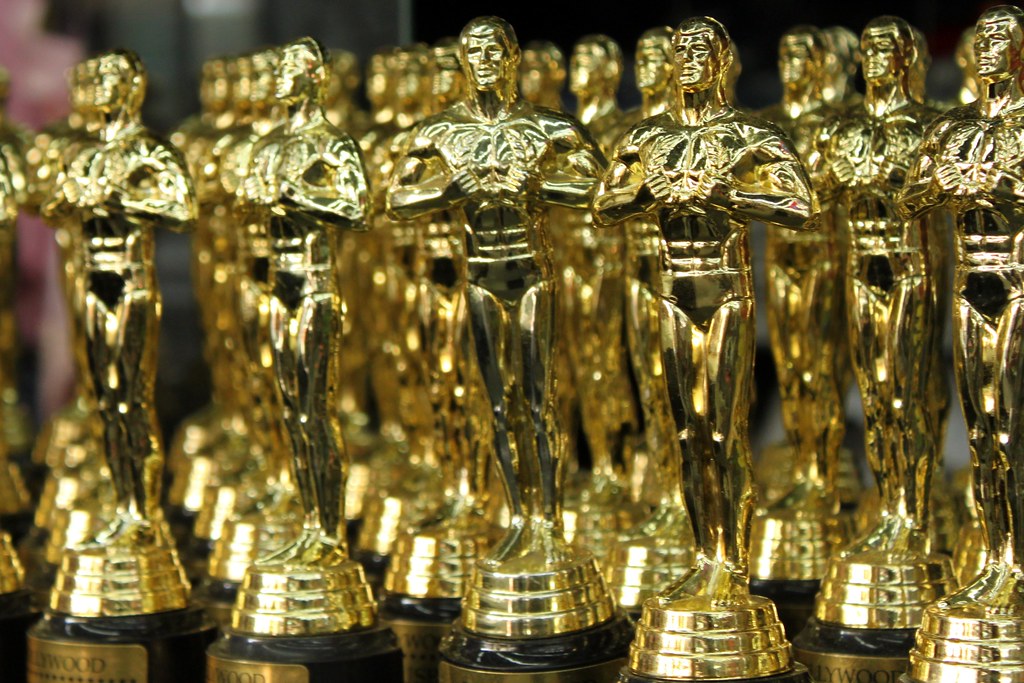
OSCARS statuettes
Photo: Credit: Prayitno from Flickr
The Academy Award ceremonies are tonight and my spouse and I have again been spending a good portion of our leisure time viewing nominated films and acting performances. Regular readers may recall that we managed to see three of the films nominated for Best Picture during the 2018 calendar year. That was partly because one nominee was out in the summer and another was a Netflix release.

Even though I have seen a fairly large number of the films and performances, I will as usual update this post as we watch more of these films. Note for future readers: Films and performances shaded in yellow below will indicate additions/edits after the Oscars are awarded (and the original blog posting).

Moreover, as I do each year, I'm going to rank-order the films and acting performances. Obviously, this is my completely subjective perspective -- and hardly an ideal way to think about art. Plus, obviously, I can only rank the performances I watched.

Keep in mind that these are not my predictions about winners in each category. I looked at the Hollywood Stock Exchange and other sites for predictions from odds-makers and betting markets.

Spoiler Alert: Roma is a slight favorite for Best Picture and its director (Alfonso Cuarón) seems to be one of the biggest favorites in a major category.  In other categories, Bohemian Rhapsody star Rami Malek and The Wife star Glenn Close are strongly favored to pick up best acting awards. Mahershala Ali (Green Book) and Regina King (If Beale Street Could Talk) are also now highly favored in the supporting roles.

Here is the full list of 2019 Oscar nominations in the major categories I follow most closely:

Best Picture:

“Roma”
“BlacKkKlansman” **
“Vice” **
“Green Book”
“The Favourite” **
“A Star Is Born”
“Bohemian Rhapsody”
“Black Panther”

I want to see Green Book soon and it is the second favorite according to the betters and odds-makers.

We selected films to watch based on (a) availability streaming, on DVD, or at the local theater that is within walking distance of our homes in Ottawa or Louisville; (b) how much we wanted to see a critically-acclaimed film (Green Book's Metacritic rating is "only" 69; same as What We Had, for example); and (c)  in the end, as free time grew short, how many Oscar nominations a film received.

I don't think Green Book was still showing at our theater when we returned to Louisville from Canada and started targeting the highest profile films. Before the awards were announced, we saw a number of other well-regarded films that did not receive nominations -- based on critical ratings and availability.

At times, Roma (the slight favorite in this category) seems like a really well-done home movie from the 1970s. This isn't a negative comment -- the film seems authentic.

I really liked both BlacKkKlansman and Vice and would not be disappointed or especially surprised if either of them won the highest honor. The Favourite was also very interesting, but I would be surprised if it or any of the other films I saw received the award.

March 2019 update: Green Book was an entertaining and interesting film, but I agree with the critics that it probably was not the best picture of the year. In fact, it is probably not as good even as some excellent films that were not nominated for the award it received.

Eighth Grade deserved to be among these films. Also, Can You Ever Forgive me. And First Reformed. I would have cut the bottom three.

Lead Actor:

Christian Bale, “Vice” **
Rami Malek, “Bohemian Rhapsody”
Viggo Mortensen, “Green Book”
Bradley Cooper, “A Star Is Born”

Willem Dafoe, “At Eternity’s Gate”

Bale is lost in the role as Vice President Dick Cheney. He becomes Cheney, as critics often say, and it's truly an impressive performance. Malek is also terrific as Freddie Mercury, but a good deal of the acting involves him lip-syncing. So I favor Bale over Malek.

I felt like Cooper was channeling Kris Kristofferson and I've never seen the 1970s version of the film. I have seen plenty of Robert DeNiro films and it often felt like Viggo Mortensen was channeling some of his work. He sounded like 1970s DeNiro and looked like puffy Jake La Motta.

I saw the ads for At Eternity's Gate many times in Ottawa, but have not yet seen the film.

Note: I am very surprised Ethan Hawke was not nominated in this category. Actually, I might have placed him at the top of the list.

I also liked Robert Redford in The Old Man & the Gun. See it.

Lead Actress:

Glenn Close, “The Wife”
Melissa McCarthy, “Can You Ever Forgive Me?”
Olivia Colman, “The Favourite” **
Yalitza Aparicio, “Roma”
Lady Gaga, “A Star Is Born”

Close has long been fantastic -- can we give her a Nobel for acting? If you haven't seen it, Close plays "the wife" of a Nobel prize-winning writer in this nominated performance.

McCarthy is really good too and I found the movie to be far more entertaining than I expected.

My spouse and I watched the first season of Broadchurch this fall, which was my previous biggest exposure to Olivia Colman's work. She's talented, but her role in The Favourite seemed to be about the same as the two women nominated in the supporting category. I'd like to see a screen-time breakdown.

Aparicio's performance was also very good.  Indeed, Aparicio is a key reason why Roma is such a great movie. But I doubt she'll win given that non-Spanish speakers (like me) must rely on subtitles and cannot evaluate her performance in the same way we can the English speakers. Gaga was good, but I'd be very surprised if she won. She is apparently in line to win an Oscar for Best Song.

I hope members of the Academy considered Elsie Fisher from Eighth Grade. And Emily Blunt for A Quiet Place. See those films if you have not.

Supporting Actor:

Mahershala Ali, “Green Book”
Richard E. Grant, “Can You Ever Forgive Me?”
Sam Elliott, “A Star Is Born”
Adam Driver, “BlacKkKlansman” **
Sam Rockwell, “Vice” **

Ali is the favorite, but some of those screen-time articles I linked above mention that he probably should have been contending in the best actor category.

Grant is also a prominent part of his film, but is clearly a supporting character. Grant steals many scenes, which isn't easy because McCarthy is also excellent. Grant has a few brief scenes when she is not on-screen.

It seems like Elliott plays the same gruff character you've seen before, but he does a good job adding some balance and depth in this role. Driver is fine, but I think he's been as good if not better in other films. See Paterson or even Logan Lucky. Or While We're Young.

I would have nominated Steve Carell as Donald Rumsfeld in Vice, over Rockwell (who plays George W. Bush).

Supporting Actress:

Regina King, “If Beale Street Could Talk”
Amy Adams, “Vice” **
Rachel Weisz, “The Favourite” **
Emma Stone, “The Favourite” **
Marina de Tavira, “Roma”

I also want to see Beale Street soon. The movie disappeared from our local theater too quickly, had only this one major category nomination, and is not yet available on DVD.

April 2019 Update: Beale Street proved to be an excellent film -- one of the year's best -- and Regina King provides an excellent performance. She did not have nearly the screen time as Weisz or Stone have in their film, so it must have been difficult for voters to parse this.

Adams was great, but Weisz or Stone would also be deserving choices if there is an upset.

Director:

Alfonso Cuarón, “Roma”
Spike Lee, “BlacKkKlansman” **
Adam McKay, “Vice” **
Pawel Pawlikowski, “Cold War” **
Yorgos Lanthimos, “The Favourite” **

This is a strong category and I would not be completely surprised by any outcome. But Cuarón is a pretty heavy favorite. Spike Lee is apparently set to win a share of an adapted screenplay Oscar.

I really enjoyed all five of these films, but I'm not sure I would have made the exact same choices for nominations in the category. Who's missing? How about Marielle Heller, director of Can You Ever Forgive Me? People who write about the Oscars often focus on its lack of diversity, especially in this category as only 5 women have ever been nominated for directing. This year, five men are again nominated.

This is the 91st Academy Awards. In this century, only three women have been nominated. It's not because there are not viable possibilities. Women directed many critically acclaimed films in 2018, including Leave No Trace, The Rider, and You Were Never Really Here, in addition to Can You Ever Forgive Me? I mention Heller because of the film's two acting and one writing nominations. All of those named films were on par with at least a couple of films in this category.

Best Documentary Feature:

“Free Solo,” Jimmy Chin, Elizabeth Chai Vasarhelyi
“RBG,” Betsy West, Julie Cohen
“Minding the Gap,” Bing Liu

“Hale County This Morning, This Evening,” RaMell Ross
“Of Fathers and Sons,” Talal Derki

RBG is in a tight competition with Free Solo, which looked somewhat frightening in the many previews we saw in Ottawa on the big screen. RBG is an informative documentary about the oldest current Supreme Court Justice.

Minding the Gap seems more like a narrative film, with multiple complex characters and themes. This is praise. The story was very personal for the filmmaker Bing Liu, obviously, so it will be interesting to follow his career and see what he does in the future.

I recorded Hale County on my DVR when PBS recently broadcast it and Of Fathers and Sons is streaming on Kanopy. Because we have been watching other films, we have not yet seen those films, despite availability.

Update: I saw the incredible Free Solo on demand from the National Geographic channel. It's an intense film, but it was interrupted repeatedly by commercial breaks. Frankly, those breaks diminished the need to look away. Frightening, but awe-inspiring.

Best Foreign Language Film:

“Roma” (Mexico)
“Cold War” (Poland) **
“Shoplifters” (Japan)

“Capernaum” (Lebanon)
“Never Look Away” (Germany)

Roma will sweep, most likely. Cold War was a very good film, but probably not as good as Ida -- an  excellent film by the same director that won this category a few years ago.

Shoplifters appeared on many lists as one of the top films of 2018, so I'm eager to see it when it is available either streaming or on DVD. is an excellent film and definitely worth finding. My spouse and I eventually got it from our local public library branch.

Animated Feature:

“Spider-Man: Into the Spider-Verse,” Bob Persichetti, Peter Ramsey, Rodney Rothman
“Isle of Dogs,” Wes Anderson
“Incredibles 2,” Brad Bird

“Mirai,” Mamoru Hosoda
“Ralph Breaks the Internet,” Rich Moore, Phil Johnston

** We saw these films or performances in a theater on a big screen.

This is a category that my spouse and I often ignore, especially since our daughters have gone away to college and beyond. I've listed it because I actually saw two of the films this year, one intentionally because of the Oscar nomination (and because I liked the first Incredibles).

The Spider-Man movie is the favorite and I'll probably see it eventually. I probably will not see the others in this category.  is very entertaining. I saw it Labor Day weekend 2019 on a flight from Copenhagen to Chicago, on my way back from an academic conference in Germany. It's funny.

Wes Anderson has made some great movies -- Grand Budapest Hotel, Moonrise Kingdom, and Rushmore were genuinely terrific and I recommend you see them if you have not. They are better than many if not most of the films listed above that are nominated for Best Picture in 2018. The Royal Tenenbaums was good and I even liked Bottle Rockets, which has some obvious flaws and used to be difficult to find.

Isle of Dogs does not reach those peaks, but it is a pretty good movie, especially for an animated feature where the competition is often family films. It was so good that I went back and watched The Fantastic Mr. Fox this year, convincing my spouse (who does not generally like "cartoon" films) that anything with George Clooney cannot be that bad. Anderson has created an impressive collection of films and it will be interesting if he finally wins an Oscar for an animated film. He's previously been nominated in the Best Picture and Best Animated Feature categories, as well as for writing and directing.

Incredibles 2 suffered the same flaw as many superhero sequels. The stories are not all that interesting and they are all-too-familiar.

Visit this blog's homepage.

For 280 character IR and foreign policy talk, follow me on twitter.

Or for basketball, baseball, movies or other stuff, follow this personal twitter account.

Thursday, January 24, 2019

December events

As I did for November, October, and September, I'm posting this to summarize my major Fulbright activities in Ottawa for a month of my visit. This time, I'm writing from Louisville as I've returned home. Once again, I won't detail the various meetings I had with colleagues to discuss my project. Several people generously gave their time, but I plan to thank them publicly when the work related to those meetings is produced.

Let's begin with professional opportunities and activities. On December 5, I went to hear former US Ambassador to Canada, Bruce Heyman, talk about US-Canadian relations as part of the Canada 2020 event series. Much of Heyman's talk focused on the new USMCA trade deal. He more-or-less assured the audience that the bilateral relationship would be fine in the long run.


December 7, my spouse and I visited Parliament Hill and attended the Question Period. The office of the Honorable Catherine McKenna, MP for the riding where we lived in Ottawa (and the Environment Minister), provided tickets. It was especially interesting that difficult questions for the government were coming from both the right (Conservatives) and left (NDP). The Conservatives were pushing the government about economic conditions in Alberta, which they tied to poor management of energy pipeline politics. The NDP asked pointed questions about the lagging commitment to address climate change. Unfortunately, there were not many members of the Cabinet in attendance, meaning that answers for the government were delivered by lower ranking MPs.


I spent a fair amount of time in early December preparing for my Fulbright presentation, which occurred at NPSIA on December 13. It was well attended and I blogged about it here. Earlier that week, I also attended the Fulbright presentation of Purdue scholar Leigh Raymond at University of Ottawa. He talked about carbon pricing schemes with a focus on ongoing developments he was studying in Canada.

A week later, my spouse and I managed to tour the US Embassy in downtown Ottawa, thanks largely to a connection I made through Fulbright Canada. I had been offered a tour during the fall, but didn't actually follow up on that until seeing embassy personnel at the Fulbright holiday party.

We left Ottawa on the last day Carleton was open in 2018, Friday, December 21, ahead of a predicted snow/ice storm. We had originally planned to leave on the 22nd but it seemed unwise to wait. We spent nearly a week in NY and Connecticut visiting friends and family prior to driving back to Louisville.

I should also mention some other Ottawa activities that were not tied specifically to my project, but were nonetheless valuable. On December 4, my spouse and I walked to Gatineau in Quebec (just across the Ottawa River) to visit the Canadian Museum of History . I had gone through one floor during September orientation, but I wanted to see much more of the museum. It was educational and entertaining. We both certainly learned a good deal about Canadian history. The lower floor has an excellent section on indigenous peoples.


Sunday night, December 9, I attended my first NHL game as my spouse and I watched the Boston Bruins defeat the Ottawa Senators. Actually, I admit that we left the tied game and heard the final score after overtime on the radio. It was a brutally cold evening, it was getting late, and we are not hockey fans. Tip for anyone traveling to Ottawa: there were numerous cheap tickets available on Stub Hub. It was a fun cultural experience, though the game was sparsely attended.

We visited the Bank Museum the following week, which had a special exhibit on Viola Desmond (the Rosa Parks of Canada) -- a woman of color who refused to sit in the balcony of a movie theater even though the theater would not sell her a ticket for the lower sections. She is now on a $10 CAD bill, which explains why they had an extensive exhibit at the Bank Museum.

Image result for new $10 cad bill woman

I brought some of those bills back to the US to give as gifts to our daughters.


Visit this blog's homepage.

For 280 character IR and foreign policy talk, follow me on twitter.

Or for basketball, baseball, movies or other stuff, follow this personal twitter account.

Monday, December 31, 2018

Films of 2018

1988 Academy Awards, view from my balcony seat
Credit: Images Alight on Flickr

As I note every December, I watch a lot of movies, though most are viewed on my television -- on DVD, from DVR recordings, or streamed from Netflix or Amazon Prime. Because I have not yet seen that many new films in the theater, I cannot at this time write a credible post on the best movies of 2018. Most of the highly touted films are released in December, a very busy month. Eventually, of course, I will see them.

Again this year, I missed several of the summer blockbusters as well.

Indeed, many of the best films I saw this past year were movies that I originally missed in the theaters in prior years. I saw a number of late 2017 Oscar-bait films in theaters earlier this year. Again, I'll surely see most of the 2018 Oscar-bait films early in 2019. I tend to discuss those films in my posts about the Oscars.

To make this abbreviated 2018 list (also, to jog my memory), I scanned the top grossing movies of the year, as well as IMDB's most popular titles for 2018. I also consulted Metacritic, which my spouse and I use to point us towards good movies all year long.

In rough rank order of my preference, these were the top 2018 films I saw this year, as best as I can recall:

Roma
BlackkKlansman **
First Man **
What They Had **
Eighth Grade
Searching
The Sisters Brothers **
Isle of Dog
Tully
Death of Stalin
Annihilation
Private Life
Chez Nous (This Is Our Land) **

** I saw these films in the theater, mostly in Ottawa at the ByTowne Cinema.

I suspect there are some serious Oscar contenders on this list. Indeed, that's a very good set of movies; I'd recommend essentially all of them (though Chez Nous had some serious weaknesses). Roma is like a real-life look into Mexico City life in the 1970s. BlackkKlansman is perhaps Spike Lee's best film since the early days of his career. First Man was an impressive technical achievement with a riveting story and interesting main character. What They Had, Eighth Grade, and Searching all struck strong emotional chords and were gripping dramas. The satire of The Sisters Brothers, Isle of Dog, Tully, and Death of Stalin made for fine commentary on an array of human predicaments and life in the 21st century (and 20th).

Annihilation is a metaphor for self-destruction. I read it broadly, reflecting long-term human annihilation of the biosphere. The environmentalist in me liked it more than the film fan.

The remainder of my 2018 list consists of genre films -- comedies, action flicks, and science fiction. They are not ranked very carefully, though I think that the ones near the top are superior to the ones near the bottom.These were all good films too, but some are flawed:

Deadpool 2
A Quiet Place
Small Town Crime
Mission Impossible: Fallout
Black Panther
Game Night
Hearts Beat Loud
Polka King

I'm not typically a fan of comic book films and mostly avoid/ignore horror. The high rankings of Deadpool 2 and A Quiet Place demonstrate that it is possible to make quality movies in those genres. I was really entertained by Game Night and liked Hearts Beat Loud, so it would be hard to find a dud here. I liked Black Panther, but cannot see why critics place it among their top 10 films of the year.

Documentary

Science Fair **

This was a fun and entertaining doc and it features some fellow Louisville residents in prominent roles.

Here's the annual list of 2018 movies that I intend to see in the future (hopefully in 2019):

22 July, American Animals, Anna and the Apocalypse, Ant Man and the Wasp, At Eternity's Gate, Avengers: Infinity War, Ballad of Buster Scruggs, Beautiful Boy, Beirut, Ben is Back, Black '47, Blaze, Blindspotting, Border, Boy Erased, Burning, Can You Ever Forgive Me?, Chappaquiddick, Cold War, Colette, Crazy Rich Asians, Dark Money, Destroyer, Disobedience, Don't Worry He Won't Get Far on Foot, Early Man, Far from the Tree, The Favourite, First Reformed, The Front Runner, Golden Exits, Goldstone, Green Book, The Guernsey, The Guilty, Happy as Lazzaro, The Happy Prince, The Hate U Give, Hereditary, Hold the Dark, If Beale Street Could Talk, Juliet Naked, Keep the Change, Kindergarten Teacher, Leave No Trace, Love After Love, Mid90s, Minding the Gap, Ocean's 8, Old Man & the Gun, Other Side of the Wind, Outside In, The Party, Private War, Prospect, Ready Player One, The Rider, Shoplifters, Sicario: Day of the Soldado, Sierra Burgess Is a Loser, A Simple Favor, Solo: Star Wars Story, Sorry to Bother You, Stan & Ollie, A Star is Born, Support the Girls, Sweet Country, The Tale, Tea with the Dames,  Thoroughbreds, Thunder Road, Under the Silver Lake, Unsane, Upgrade, Utoya - July 22, Vox Lux, Widows, The Wife, Wildlife, Won't You Be My Neighbor?, You Were Never Really Here, Zama.

Keep in mind that I didn't (yet) get around to seeing many 2017 movies from last year's wishlist:

1922, Alien Covenant, All the Money in the World,  Ballad of Lefty Brown, Beguiled, Berlin Syndrome, Buster's Mal Heart, Call Me By Your Name, Catfight,  Detroit, The Founder, Foxtrot, From Nowhere, Gerald's Game, Girl With All the Gifts, God's Own Country, Happy End, Headshot, The Hero, Hostiles, Hounds of Love, I Daniel Blake, It Comes at Night, Killing of a Sacred Deer, Kong: Skull Island, Land of Mine (Under Sandet), Lost City of Z, Marshall, Moka, Molly's Game, Mother!, Norman, Personal Shopper, Phantom Thread, Professor Marston & the Wonder Women, Quiet Passion, Salesman, Sense of Ending, The Square,  Stronger, Super Dark Times, Survivalist, Sweet Virginia, T2 Trainspotting, To the Bone, United Kingdom, Wakefield, Wonder, Wonder Woman, You Were Never Really Here.


Visit this blog's homepage.

For 140 character IR and foreign policy talk, follow me on twitter.

Or for basketball, baseball, movies or other stuff, follow this personal twitter account.
Sunday, December 30, 2018

Books of 2018


As I have annually since 2005, I am posting a nearly complete list of books I read in the preceding year.

Please allow me to repeat the ground rules: First, I generally do not list academic books that I reviewed unless the review was published. In my academic job, for instance, I often read a number of books competing for a $100,000 prize exhibiting the best "ideas for improving world order."

Of course, since I'm an academic, I read multiple chapters and large sections of many books pertinent to my research and teaching. However, I'm not going to list those here unless I read them cover-to-cover. Save for the books I use in class or read for review, I often skim over some portions even of outstanding books. It's a time/efficiency issue.

So, what did I read this year, mostly for pleasure? (a few of the recommended books include a link to Powell's books; the blog receives a 7.5% commission on sales that begin via my Powell's links). I posted short reviews of most books at Goodreads (migrating from Shelfari years ago). 

Non-fiction

War: A Memoir by Marguerite Duras 

Nudge by Richard Thaler and Cass Sunstein

The Ideas Industry by Dan Drezner

Death of Expertise by Tom Nichols

Atomic Obsession by John Mueller

The North American Idea by Robert Pastor

Up, Up, and Away: The Kid, the Hawk, Rock, Vladi, Pedro, le Grand Orange, Youppi!, the Crazy Business of Baseball, and the Ill-fated but Unforgettable Montreal Expos by Jonah Keri

The Machine by Joe Posnanski

Cooperstown Casebook by Jay Jaffe

Armchair Book of Baseball by John Thorn

Man From the Train by Bill James

Killing of Osama bin Laden by Seymour Hersh

The Noble Hustle by Colson Whitehead

I really enjoyed most of these non-fiction books and it was difficult to rank them. Just about everything above the Hersh book is worth your time. I picked up the Duras volume at my mother-in-law's house when we were cleaning it out after she died a couple of years ago and was quite taken with the personal stories by a World War II survivor.

The books by Thaler and  Sunstein, Drezner, and Nichols are all aimed for a wider market, but are written by academics. In one way or another, these scholars discuss the way individuals and/or societies make decisions. I found Nudge fascinating, was occasionally distracted by Drezner's argument, and found too much of Nichols to be anecdotal.

The Mueller and Pastor books were tied to my various research projects this year, though neither was directly on point.

Posnanski's work on the Big Red Machine of the mid-1970s was fun to read, but I learned a lot more from Jaffe and Keri. I'd have put Jaffe higher on the list, but the numerous player evaluation pieces make this more like an encyclopedia to consult occasionally than a book to tackle cover-to-cover. I really enjoyed reading Keri's book about the Expos, which I read while living in Canada.

I've discussed the Bill James book on the blog in the recent past -- and believe he could have benefited from a tighter edit. With Hersh, I didn't know what to believe -- his anonymously referenced pieces or the conventional wisdom. That made the book frustrating to read. I likewise found the Whitehead book to be somewhat disappointing with insufficient discussion of poker.

Finally, I also read just about every word in Baseball Prospectus 2018, but not in cover-to-cover fashion. The 2018 book was again edited by Aaron Gleeman and Bret Sayre. Annually, I looking forward to the new edition, likely due in February.

Fiction

As I traditionally do, I place the best works of literature at the top of the list, then the genre fiction (though there are some books that could be placed in either category). The least interesting or entertaining books are listed last in each section.

1984 by George Orwell

Blindness by Jose Saramago

No Country for Old Men by Cormac McCarthy

Citizen Vince by Jess Walter

Morgan's Passing by Anne Tyler

Funny Girl by Nick Hornby

Travels With My Aunt by Graham Greene

Kalki by Gore Vidal

Butterfly by James M. Cain

As I have previously explained, I re-read Orwell's classic 1984 with some frequency. This year, I picked it up because I was asked to participate in an event at the Public Library to discuss the importance in the current era. It's still great and I always notice something I previously overlooked.

I saw the film based on Blindness, but enjoyed the book's social commentary a good deal. It's worth your time. The film based on McCarthy's book seemed to stick very close to the original text, though I viewed and read them some years apart (intentionally). Citizen Vince is a quasi-political crime story set during the 1980 presidential election season. It is occasionally funny, and is fairly clever, but it is not as humorous as the Hornby and Tyler books. I hadn't read Anne Tyler in decades, literally, and cannot believe I didn't return to her works earlier. Actually, the Greene book is light and witty too.

All those books are recommended.

Kalki is satirical, but I found it kind of heavy-handed and perhaps overly reliant upon the mood of the 1970s. Cain wrote unsettling noir. It's tought to recommend it, though this story is very short.

And now the much longer list of genre fiction:

In the Woods by Tana French

Winter by Len Deighton

Mr. Mercedes by Stephen King

Pray for a Brave Heart by Helen MacInnes

Stained White Radiance by James Lee Burke


Far Side of the Dollar by Ross Macdonald

A Rage in Harlem by Chester Himes

A Little Yellow Dog by Walter Mosley

The Green Ripper by John D. MacDonald

Odds On by Michael Crichton (as John Lange)

Killing Orders by Sara Paretsky

The Handle by Donald Westlake (as Richard Stark)

Why Me? by Donald Westlake

Ceremony by Robert Parker

Comfort to the Enemy by Elmore Leonard

H is for Homicide by Sue Grafton

Bordersnakes by James Crumley

This was not a strong set of genre fiction works. I enjoyed reading French while in Ireland, was captivated by Deighton's historical family saga set mostly in Germany, and found this Stephen King to be a real page-turner (even if it had some serious flaws).

Thanks mostly to Bookmooch and PaperBack Swap, I continue to read books by a diverse array of (mostly) hard-boiled crime story authors. These writers typically develop a single main character across a long series of books: Parker's Spencer, Stark's Parker, John MacDonald's Travis McGee, Grafton's Kinsey Millhone, Paretsky's VI Warshawski, Burke's Dave Robicheaux,  Mosley's Easy Rawlins, and Ross Macdonald's Lew Archer. All of these were fairly mediocre and forgettable. Indeed, until refreshing my memory with Google, I'd already forgotten the plot of at least half of the books listed above.

A couple of these stories imagine crimes against casinos/resorts (Stark/Lange), but several others similarly involve the main characters trying to penetrate a protected fortress of one kind or another (Crumley, MacInnes). Other stories involve corrupt politics or politicians (Spencer's tale, as well as Robicheaux's), troubled education systems (Spencer again, Archer, and Rawlins) and dubious religious figures (Millhone, McGee, and the detectives in Himes). 


Visit this blog's homepage.

For 280 character IR and foreign policy talk, follow me on twitter.

Or for basketball, baseball, movies or other stuff, follow this personal twitter account.

Wednesday, December 19, 2018

November events

As I did for September and October, I'm blogging about my activities in Ottawa tied to my Fulbright research chair. Again, this serves as preparatory work for my final report to the funding agency.

Though I'm not going to detail every meeting, I talked to multiple local academics and regularly attended a security-related brownbag on the Carleton campus. A couple of those meetings with faculty will apparently lead to a future research project and I'll mention it eventually when I have more concrete details. It will tie together some of my past work on narratives and the Iraq war.

I will note a lunch with Dr. Gerry Schmitz, a former policy analyst with the Parliamentary Information and Research Service from 1981-2011. I previously blogged about a couple of important upcoming events on US-Canada relations that Gerry is helping to organize that will include my participation. Gerry is also a professional film critic and has a new book that compiles many of his reviews.  Film is a major common interest, of course.

On November 9, I attended a presentation by one of the deans of Canadian IR, Kim Richard Nossal, "I Mean, What's an Ally? The Trump Cession and Canadian Foreign Policy." Nossal outlined many of the horrible things Trump has said about Canada and Canadians--and discussed the potential implications for US-Canadian relations.

On November 14, I attended a panel at University of Ottawa on "What do the U.S. midterms mean for Trump (and Canada)?" NPSIA colleague Meredith Lilly focused on US-Canada trade issues, which was helpful for my research, and veteran international affairs analyst Michael Kergin offered some interesting relevant ideas as well.

Early in the month, I was interviewed by two Carleton Journalism students who wanted to talk about the upcoming US midterm elections. I correctly forecast that the Dems would win 35 or more new seats and that the Republicans would hold the Senate.

For leisure, early in the month, my spouse and I took our dog to visit the falls on the Rideau river, which is near the French Embassy east of downtown Ottawa.


On November 11 Remembrance Day, we visited the Canadian War Museum. It was too large to go through all the exhibits on one day, so we focused on the World War I exhibitions, including the special one to commemorate the 100 year anniversary of the armistice, though I also went through the section on post World War II-Canadian policy.


On November 30, we visited the Diefenbunker Museum in Carp, which is located in the former bunker that was going to host top Canadian government officials during the Cold War in the event of a nuclear attack. There were rooms filled with old computers, communication equipment, and high-level meeting spaces. The Prime Minister's bedroom looked like a 1960s vintage college dorm room -- or summer camp room.


My daughters visited Ottawa for  American Thanksgiving. It was brutally cold, but we did visit the National Gallery (and IKEA).


I also played in a faculty poker game and won a few Canadian dollars.


Visit this blog's homepage.

For 280 character IR and foreign policy talk, follow me on twitter.

Or for basketball, baseball, movies or other stuff, follow this personal twitter account.

Tuesday, December 18, 2018

Climate Politics In Canada

When teaching, I often explain to my students that other western democracies generally don't have debates about the veracity of climate science. Instead, the debates often focus on the cost and appropriateness of particular policy measures.

In Canada, for example, I attended a Fulbright scholar panel recently that revealed this quite clearly. The business lobbyist on the panel, who used to work for conservative PM Steven Harper, favored a form of carbon pricing. That typically means either taxing carbon or creating a cap on carbon levels and auctioning permits.

Today, I was reading a recent magazine article (from an insert in the Toronto Globe and Mail) and found this interesting excerpt in a piece on Canadian oil sands:
Suncor CEO Steve Williams, meanwhile, has emerged as one of the most ardent critics of climate-policy footdragging you'll find anywhere. 
"It is a matter of profound disappointment to me," Williams told a Calgary crowd recently, "that science and economics have taken on some strange political ownership--why the science of the left wing is different than the science of the right wing." You could be forgiven for thinking he was directing his ire at opponents of his industry, but his actual target was the political right and its refusal to give a fair hearing to economists arguing that carbon pricing represents the most efficient way to take action. It was, in essence, an established oil sands CEO dressing down his most vocal boosters--telling them it's time to get with the program on climate change.
The article continues by discussing various efficiency innovations firms have introduced in the production of energy from oil sands:
Oil sands companies have embraced the need to act on climate change not because it might make them look better, but because the risk of not acting has proven to be so great--a fact made clear to the industry almost daily since the name "Keystone XL" first hit the international political radar. Oil sands companies know they have no viable future unless they can find a way to be welcome and profitable in a low-carbon economy. 
The other critical lesson oil sands companies have learned is that there is opportunity in taking action. For many, this has meant obsessive efficiency improvements. By consuming less fossil fuel in the digging and processing of bitumen, they have cut costs and boosted profits, even as they've shrunk the carbon footprint of each barrel of oil. It's mainly a question of competitiveness, but also an opportunity to develop pollution-reducing technologies that may one day be of enormous value in the marketplace. 
Canadians are also talking seriously about uses of those oil sand bitumen that don't involve burning it for energy. An interesting study on that theme was prepared by Alberta Innovates (provincially-funded) and was discussed in an October Corporate Knights article.
The study, known as Bitumen Beyond Combustion, gave a reasonably positive outlook for bitumen-based materials that are expected to see demand growth over the period until 2030, a time when demand for crude oil will grow at a slower rate than it has over the past decade. 
Chief among those materials are carbon fibres derived from bitumen. Carbon fibre is a fast-growing product that is both strong and light. Currently, the industry is growing at a compound annual growth rate of more than 10 per cent. 
Already in use in products like cars, the bitumen study found that future growth would be underpinned on carbon fibres replacing steel, cement and wood – and that bitumen-made carbon fibres could also find a market by being mixed with those materials. 
If carbon fibres took just one per cent of the global steel market by 2030, that would require 3 million barrels of bitumen a day, the study found.
That kind of usage would be significant. In 2017, Canadian oil sands production was about 2.6 million barrels per day. Recent projections suggest 3.8 mbd production by 2025.

The study also discussed asphalt as a major alternative use:
 Another avenue could be asphalt for roads. The market, currently US$50 billion in value globally, is expected to grow 4.1 per cent until 2030, the Bitumen Beyond Combustion report said. 
The oil sands already produce road asphalt for western Canada. The trouble with expanding into new markets is that it needs to be kept very hot for transport, as high as 150 degrees Celsius. But if the process of turning the material into pellets can be made cheaper, oil sands-sourced asphalt would fulfil large demand in China, said Nathan Ashcroft, an engineer with Stantec who worked on the study. 
“That’s something that can be achieved much, much quicker (than carbon fibre),” Ashcroft said. “The infrastructure, the rail cars, are out there, the global pull, the pricing mechanisms – people are building roads all over the world everyday.” 
Getting oil sands-derived asphalt onto international markets in five years is within reach, he said. Markets for carbon fibres mixed with other materials like concrete, which offer an opening for bitumen as a feedstock, will become widespread within the 10- to 20-year timeframe, said engineer Axel Meisen, who also worked on the study.


Visit this blog's homepage.

For 280 character IR and foreign policy talk, follow me on twitter.

Or for basketball, baseball, movies or other stuff, follow this personal twitter account.

Thursday, December 13, 2018

NPSIA Presentation

Today at noon, I gave a talk on "America First, Canada, and the Prospects for Multilateralism." The room seats 18-20 comfortably and my spouse counted 24 people in the NPSIA (Norman Paterson School of International Affairs) Boardroom. I talked for about 40 minutes and then we had roughly 45 minutes of Q&A.

The audience was mostly students and faculty at NPSIA, though a Fulbright Canada program officer, a former principal analyst on international affairs on Parliament Hill, and at least three people from Global Affairs Canada were also in attendance.

The audience members peppered me with good questions that will help with the writing as I move forward on my project. I have a paper due in March when I attend a conference on "Canadian-US Relations" at Iowa State.

Steve Saideman of NPSIA tweeted about the event and snapped a couple of pictures:


This was not actually my research question, but we did discuss this:

The faculty and staff at NPSIA were terrific hosts and I have really enjoyed my time in Ottawa. I'm grateful to Fulbright Canada and to the many patient and accommodating academics at both Carleton and University of Ottawa.

If you are an IR scholar with some level of interest in Canada's relations with the U S, then I recommend you think about applying for this Fulbright opportunity in the future.


Visit this blog's homepage.

For 280 character IR and foreign policy talk, follow me on twitter.

Or for basketball, baseball, movies or other stuff, follow this personal twitter account.

Friday, December 07, 2018

October events


A few weeks ago, I posted about what I did in September during my Fulbright stint in Ottawa, Ontario. This post will summarize my October.

On the 2nd, I attended a Workshop at Carleton on North America 2.0. A group of scholars have been meeting to write an update of Bob Pastor's 2012 book on The North American Idea: A Vision of a Continental Future. I attended a couple of panels and learned a good deal about current and potential ties linking the US, Canada, and Mexico. Coincidentally, Pastor's book was one of the few books I brought to Canada, so I read it in preparation for the meeting.

Based on my "America First" chapter in the forthcoming Canada-US Relations book (in the series on Canada Among Nations), I gave a presentation in David Carment's Canadian Foreign Policy class. Incidentally, I have submitted revised page proofs already and the book is slated to be published on February 14, 2019. On October 15, I attended a presentation about the new USMCA by Chris Sands, who with Carment edited that book.


On October 26, I attended a very interesting panel at Carleton on "Small Wars, Big Data."  It was part of the Conference of Defence Associations meeting, held on campus during Carleton's week of fall break. On the 31st, I attended a presentation on "The War on Terror Gone Wrong" at University of Ottawa by former Canadian diplomat Daniel Livermore.

For my research project on US-Canadian relations, I met fairly regularly with some local academics, read various public speeches by middle power Foreign Ministers, and tried to gain a better understanding of Canadian perspectives. I learned interesting lessons about the domestic appeal of modest anti-Americanism, the great dependence of Canada on trade with US, and the intense interest in the American midterm elections. I voted in Kentucky by dropping my absentee ballot at the American embassy.

During part of October, I also worked on a revision and resubmitted for journal publication my manuscript “Grappling with Dr. Strangelove’s Wargasm Fantasy,” based on a paper I delivered at the 2016 ISSS/ISAC conference at Notre Dame. Earlier this week, I learned that the paper will be appearing as a journal article in International Studies Review.

During the fall weather, my spouse and I walked all over downtown Ottawa (often with our dog Paddy) -- visiting Parliament Hill, the Byward Market, Lansdowne (for the Farmer's Market), the Rideau Canal, etc. We also drove over the Ottawa River to Quebec on Canadian Thanksgiving and hiked in the beautiful Gatineau Park.


Visit this blog's homepage.

For 280 character IR and foreign policy talk, follow me on twitter.

Or for basketball, baseball, movies or other stuff, follow this personal twitter account.

Wednesday, November 21, 2018

Multilateralism Project

Monday, I submitted page proofs for a chapter in the forthcoming 2019 volume of  Canada Among Nations, an annual book about Canadian foreign policy to be published by Palgrave. David Carment of Carleton's NPSIA and Chris Sands of Johns Hopkins SAIS are editing the volume, entitled Canada–US Relations; Sovereignty or Shared Institutions?

My chapter (4) focuses on "'America First' and US-Canadian Relations." Though Canada is a primary concern, the paper discusses the threat "America First" poses to multilateralism and the liberal international order. As I've previously noted, President Trump has labeled Canada (and other allies) a threat to U.S. national security in order to impose steel and aluminum tariffs on these states. He also called Prime Minister Justin Trudeau "weak and dishonest" and repeatedly threatens to end NAFTA and bring "ruination" to Canada's economy.

My chapter discusses whether Trump's approach to international relations could be viewed as an especially intense version of realism that fails to recognize the potential virtues of multilateralism. Most of the institutions Trump threatens were built during the Cold War with the intent of aligning states with the US versus the Soviet bloc. Trump demonizes China, and at least one chapter in the new volume focuses on this strategy, but the President does not seem to recognize the potential  value of having allies working with the US to counter what he calls unfair and illegal Chinese trade practices. Every relationship is a transaction for Trump, a deal to be won or lost, and America can only win in his view if all other states lose -- even if that means demonizing long-time blue chip allies like Canada and Germany. Each relationship is ultimately bilateral and there is advantage to be taken.

I'm now working on a followup paper for a workshop on US-Canadian relations cohosted by last year's Carleton Fulbright scholar, James McCormick, at Iowa State in March. Former Library of Parliament International Affairs analyst Gerald Schmitz is the other host. I've been invited to submit that paper for consideration in a special issue of Canadian Foreign Policy Journal focusing on “America First”? Meeting the Challenges of the New Nationalism for Canada and the World.”  Schmitz is also helping to organize a one-day round-table in Ottawa on January 25th on "America First" and the International Order. I'm scheduled to partake via Skype.

For that paper and round-table, I'm expanding my work on multilateralism and looking at the proposals various western leaders are floating to save multilateralism in the wake of America First (and other threats), particularly in the areas of free trade and security.

Canadian Foreign Minister Chrystia Freeland has since mid-year 2017 called for "finding ways for like-minded democracies to act on our values and fight for the multilateral order." Though Freeland has urged the U.S. to join in the fight to save multilateralism, in October Canada hosted a meeting to fix and reform the WTO. The government invited about a dozen major trading states (including the EU as a single entity in that list). However, notably, the US was not invited to this "like-minded" summit "because it doesn’t share the views of the 13 invited countries, the new Canadian trade minister says."

German Minister for Foreign Affairs Heiko Maas has been calling for "an alliance of multilateralists" linking states like Japan and Canada. He has openly worried about the U.S. threat to the current order, though he too has invited the U.S. to join with its allies in saving multilateralism.

French Foreign Affairs Minister Jean-Yves Le Drian similarly calls for a coalition of goodwill powers to address major international problems (including climate change). In his view, "Europe should align itself with countries like India, Australia, Mexico and other “powerful democracies” that share a commitment to multilateralism." Le Drian says the coalition should work with or without the U.S.

I'll stop with that list for now, but will end by noting that newly reelected Ohio U.S. Senator Sherrod Brown (D), who is sometimes mentioned as a 2020 presidential hopeful, was quoted in the Toronto Globe and Mail on November 3 outlining a potential alternative US strategy that would target China in a trade confrontation, but in a way that might fit with the multilateral aspirations of America's long-time allies:
Mr. Brown is trying to thread the needle: He trumpets his support for tariffs – and blasts Mr. Renacci for supporting free-trade deals under previous presidents – but criticizes Mr. Trump’s handling of the trade war. 
“You don’t play off steel workers against farmers, you don’t play off industry against agriculture, and he’s done that,” Mr. Brown said in an interview during a stop at a campaign office in a strip mall in Brunswick, Ohio, south of Cleveland. “You [should] align with our allies – Canada and Western Europe and Japan, maybe – to stop serial cheaters like China. But instead he attacked Chrystia Freeland for what she was doing and your Prime Minister.
That approach could signal a Democratic justification for approving the new USMCA and a broader way forward for the party in 2020 -- a majority of the US population supports multilateralism and free trade (perhaps in polarized response to Trump's America First), but middle class blue collar workers in Ohio, Michigan, Wisconsin, and Pennsylvania are likely still vulnerable to protectionist appeals by politicians.


Visit this blog's homepage.

For 280 character IR and foreign policy talk, follow me on twitter.

Or for basketball, baseball, movies or other stuff, follow this personal twitter account.
Saturday, November 17, 2018

September events

I've been in Ottawa for months and have barely blogged about my experiences. If you follow me on twitter, then you have a good idea of some of the things I've done.

This post will note a few September highlights.

I arrived in Ottawa on Labour Day weekend and stayed for the first 10 days at a hotel near the airport. Or near this intersection:


On the 14th-15th, I attended Fulbright Orientation at the Lord Elgin hotel just a few minutes walk from my rental house.  This is the view of Ottawa from my hotel room. The building that looks like a castle is a prominent hotel and the multicolored building is an Arts Center.


The group toured various local sights, including Parliament. The bottom photo was taken from the Peace Tower.


On September 27, I attended an event at the Macdonald Laurier Institute for Public Policy (a Canadian think tank) focusing on Russia's Challenge to North American and European Security. The main speaker was Tom Nichols of the Naval War College.


During the month, my spouse and I also took a brief road trip to Hartford, CT, to visit our youngest daughter, who is working in a theater there. I submitted a book chapter that is now in page proofs (more on that soon), and I worked on a revise and resubmit manuscript for a journal.


Visit this blog's homepage.

For 280 character IR and foreign policy talk, follow me on twitter.

Or for basketball, baseball, movies or other stuff, follow this personal twitter account.

Monday, November 05, 2018

1895 murders

Well.

This website from the town briefly mentions the crimes, which occurred December 30, 1895. In my family tree, I've seen McFadden spelled numerous ways, including McFadzean, McFadyn, etc.

Update: I finished the book and now realize that the murder in my family pre-dates the crimes James studies. Since he identifies a suspect based on an alleged initial murder, then it would not appear that this crime was committed by the same killer. However, the crime is very similar to many of the crimes discussed in the book.


Visit this blog's homepage.

For 280 character IR and foreign policy talk, follow me on twitter.

Or for basketball, baseball, movies or other stuff, follow this personal twitter account.