Search This Blog

Showing posts with label threats. Show all posts

Thursday, October 24, 2024

The F Word

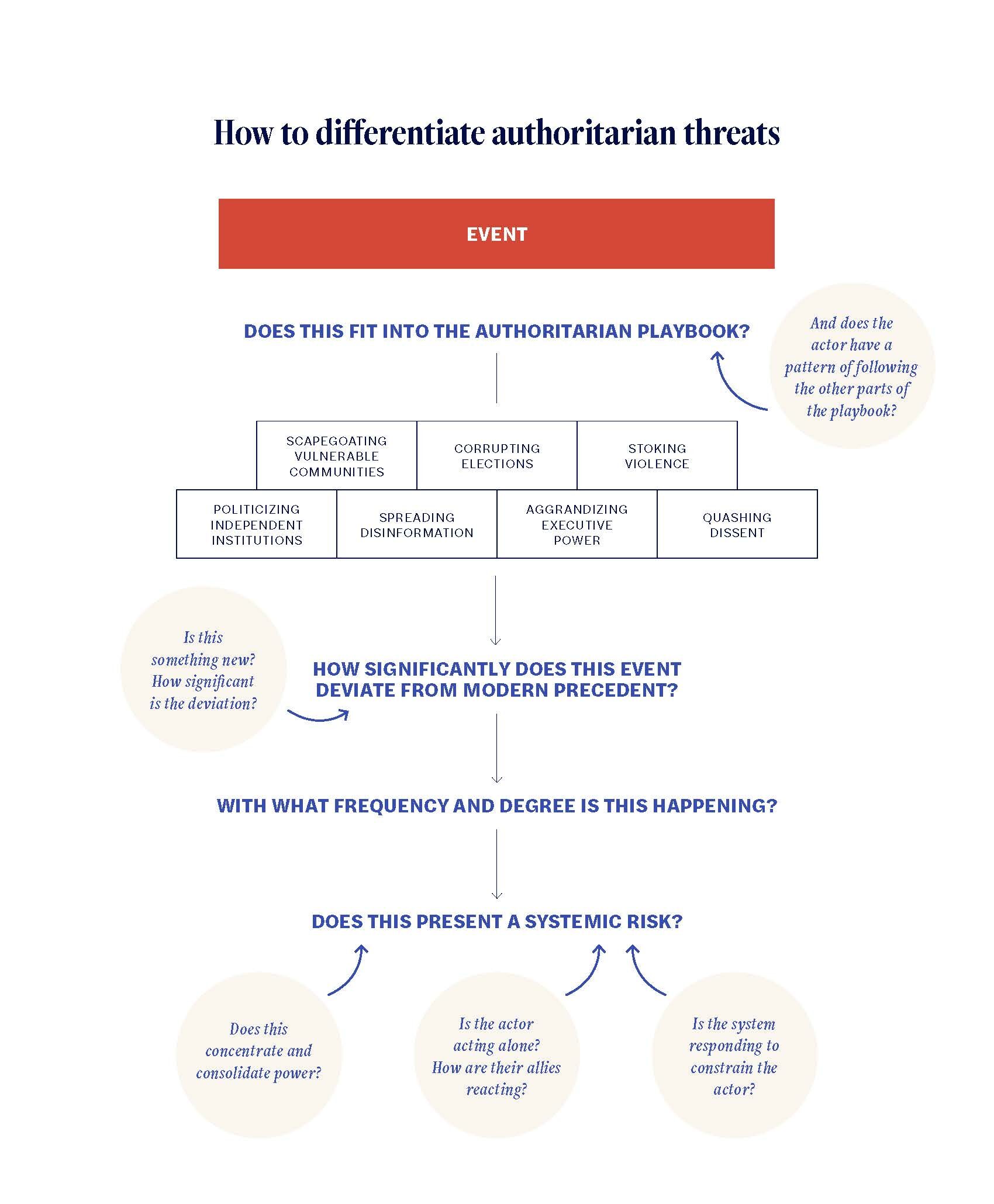
Nope, not that one. I mean fascism. Not all readers may know what that term means or implies, historically. Most have a vague idea that the term is associated with Hitler (and maybe Mussolini), but don't realize that the word isn't merely a label for a type of politics that may seem obscure to them. It's a label for a particularly dangerous type of authoritarian politics that ends democracy. 

Political scientists often point to numerous examples where fascists and fascist-adjacent authoritarians came to power VIA ELECTIONS and then do everything in their power to assure that their political opponents (along with academics, journalist, artists, and other voices of dissent) are silenced, thrown in prison, and even killed. They do not relinquish power and subsequent elections are effectively "rigged" by the fact that opposition has been illegally crushed.

It's been shocking to me for some time that the European Union, a democratic institution, has not done something dramatic about Victor Orban's Hungary. His rise to power -- and many years in office -- exactly reflect this danger. Many Americans on the right are openly infatuated with this pathway and celebrate Orban as if he were someone to emulate. 

In any case, it is important to realize that the road to fascism is the road to the end of democracy, even if a democratic election lies along the pathway. The presence of a prominent (and successful) fascist in American politics poses great potential dangers.

For those wanting more detail, the Council on Foreign Relations provides a helpful definition of fascism: 

Many experts agree that fascism is a mass political movement that emphasizes extreme nationalism, militarism, and the supremacy of the nation over the individual. This model of government stands in contrast to liberal democracies that support individual rights, competitive elections, and political dissent.

In many ways, fascist regimes are revolutionary in nature. They advocate for the overthrow of existing systems of government and the persecution of political enemies. However, such regimes are also highly conservative in their championing of traditional values.

And although fascist leaders typically claim to support the everyman, in reality, their regimes often align with powerful business interests.


Shall we go through the definition?

First, does Trump lead "a mass political movement that emphasizes extreme nationalism, militarism, and the supremacy of the nation over the individual"?

Trump is a self-described nationalist and ran as a populist, claiming to support the little guy who elites had trampled in the past. He claims to lead a very popular mass political movement. Trump lied and said he won the 2016 election in a "landslide" and repeated the lie after the election of 2020

The movement's slogan is literally "Make America Great Again" (MAGA), which is not the same as the liberal democratic objective to prioritize individual rights and dissent. I refer to liberal democracy here as a form of limited government -- the type America has attempted to create since its founding, open to free flowing information, equal protection under the law, minority rights despite majority rule, the rule of law, and a market economy. Americans aspire for a more perfect union, but this can require struggle. America's orginal voters were property-owning white men. Only gradually were other men, women, people of color, adults aged 18 to 21, etc. allowed to partake in this democratic experiment.  

Numerous Trump policies and/or proposals put his view of national goals over individual liberty -- the Muslim ban, the family separation policy, recision of Title IX protections for transgender students, and many more.  If none of that seems bothersome to the reader, don't forget the famous classic poem "First They Came" by Pastor Martin Niemöller.

What about militarism? Trump's efforts to MAGA included (in his first term) an effort to "make our military stronger than ever" as his then-Secretary of Defense said at the time. Trump perhaps wanted to be viewed as the "peace candidate" in 2016, but he repeatedly made (or makes) outlandish military threats against other states -- including North Korea, Iran, and now "the enemy from within." That's militaristic. Trump talks openly about deploying the US military against alleged internal threats -- despite laws designed to prevent that exact scenario. 

Incidentally, that Defense Secretary statement about military strength was from former four-star Marine General Jim Mattis, who reportedly agrees with Kelly and called Trump “the most dangerous person ever.” Notoriously, Trump appointed numerous generals to fill top slots in government, including to positions that are typically reserved for civilians, worrying some scholars of civil-military relations and democratic governance.

Beyond Kelly and Mattis, others from that group have offered similar warnings about Trump as a fascist threat to democracy:

Mark Milley, who was appointed by Trump to be the nation's highest ranking military officer as chairman of the Joint Chiefs of Staff, called him "fascist to the core" and "the most dangerous person to this country" in comments to journalist Bob Woodward.

Some of the non-military former staffers have also agreed with Kelly and signed an open letter.

Second does Trump "advocate for the overthrow of existing systems of government and the persecution of political enemies"? Was his regime "also highly conservative in...championing of traditional values"? 


After January 6, the answer to the first question seems obvious. Trump has been offering the "big lie" since losing to Joe Biden in 2020 and still does not accept the results of the election even though he lost dozens of court cases and all of the "evidence" for a stolen election has been convincingly  and thoroughly debunked. Even when Trump sympathizers attempted to recount ballots in Arizona, they arrived at a result that favored Biden by even more votes than the original count. Trump knew that he lost -- according to his Attorney General and his political advisors. His own daughter (Ivanka, who served in the administration) admits that he lost. 

Some people might consider all this and merely think Trump is a "sore loser." But there's much, much more. He gathered protesters and extremists to Washington in an effort to stop the certification of the 2020 election, he worked with political figures in various states to manufacture fake Electoral College electors and ballots, he is charged with inciting protesters to criminal and violent behavior, and he both privately and publicly urged Mike Pence to take actions that are not in the power of the Vice Presidency. 

Since losing, Trump has repeatedly said he will seek revenge on his political enemies -- it's a growing list that includes lots of Republicans that have spoken out against his lies. I do not have time or energy to document each case as an "NPR investigation has found that Trump has made more than a hundred threats to investigate, prosecute, jail or otherwise punish his perceived opponents, including private citizens." By name he has mentioned Joe Biden, Barack Obama, Nancy Pelosi, Adam Schiff, Liz Cheney, Anthony Fauci, etc. Trump openly says he wants retribution. 

The championing of conservative values is part of Trump's message so I won't belabor it. He appointed judges who eliminated the right to abortion and calls now for a "states-right" approach, which is what segregationists wanted for civil rights. He supports tax cuts and gun rights and makes anti-immigration and massive deportation a central argument for his election. These are now all conservative causes -- to say nothing of his recent use of anti-LGBTQ rhetoric. 

Third, despite Trump claiming "to support the everyman," did he, "in reality...often align with powerful business interests"? Trump's main legislative victory as president was a huge tax cut that primarily aided wealthy people and business interests. He appointed a large number of billionaires to his Cabinet -- and very few women or people of color. Elon Musk, the world's richest man, has been advising Trump and openly campaigning for him in person and on his social media site. 

That's the CFR list, but I could easily add more points. Trump has said he would be a dictator on day one. He has stoked violence in American politics -- a critique I have been making for many years. Trump repeatedly praised authoritarians and dictators while he was president -- and after. The list includes Russia's Vladimir Putin, North Korean dictator Kim Jong Un, Hungary's Victor Orban, and Chinese President Xi Jinpin. Behind the scenes he apparently admired Adolph Hitler. He has "joked" about serving as president beyond two terms (contrary to the US constitution) and reportedly made all kinds of policy suggestions that would not be legal. Some of the generals and other former Trump officials speaking out against him say he has no understanding of the rule of law. 

I haven't even mentioned his almost unfathomable propensity to lie -- notably even claiming falsely that his January 6 speech encouraged merely peaceful protest, that no one was killed that day, or that no one was armed. All readily disproved. Oh, and by the way, this lying is buttressed by his constant criticism of the media, which he has called "the enemy of the people," and threats to jail reporters and strip away broadcast licenses. 

Anyone thinking of voting for this man should take into account the views of the numerous inner circle Republicans -- including former Vice President Dick Cheney -- who are courageously speaking out against Trump and urging his defeat in November's election. 

NOTE: I may update this piece with links and ideas that I overlooked.

Visit this blog's homepage.

For 280 character IR and foreign policy talk, follow me on twitter.

Or for basketball, baseball, movies or other stuff, follow this personal twitter account.

Friday, October 04, 2024

Trump's Violent Fantasies

Donald Trump is back to his habit of fantasizing about the government (under his leadership) using illegal violence against criminals, immigrants, and/or political opponents. I blogged about this in 2019 when he was in office. I also compiled references to his violent rhetoric dating to the start of his first campaign in 2015 through 2019.

A couple of days ago in Erie, PA, Trump said something that sounded like the plot for "The Purge." It imagined a whole new level of violence:

"You know, if you had one day, like one real rough, nasty day," he said, during a section of the speech about how left-wing politicians are allegedly preventing police from enforcing the law, "one rough hour, and I mean real rough, the word will get out and it will end immediately. End immediately. You know, it'll end immediately."

Trump defenders say that the former president was speaking "in jest," but it didn't seem like a joke (watch below) and is entirely consistent with comments he has made over the years. Plus, populists employing similar authoritarian rhetoric have actually empowered death squads in various countries around the world. In the Philippines, for example, 1000s of people were killed by the police during a war on drugs and crime authorized by a newly elected populist right-wing president. A similar pattern emerged in Brazil in 2019 where the police killed 17 people per day, on average. 

In those deaths, the police act as judge, jury, and executioner. So much for constitutional protections like due process of law and prohibitions on cruel and unusual punishment. How is it conservative to abandon the bill of rights? 

If you want to skip straight to the quoted message in the video below, you cannot, because Trump starts with "one real rough, nasty day" around 2:15, gets off-track with a made-up anecdote about Kamala Harris (referencing a decriminalization law signed by Arnold Schwarzenegger years before Harris was elected to state or national office), and then around 3:25 into the video mentions "one rough hour, and I mean real rough." The first few minutes ramble through some complaints about debate moderators and some made-up stuff about crime. He criticizes statistics, though candidate Trump often references (made up or out-of-date) statistics to support his points.

That last linked article from the Washington Post notes that crime statistics have been in general decline since the 1990s, but did spike in 2020, Trump's final year of office (during the pandemic). Crime stats remained a bit high until 2022, but have declined substantially since then. 


Visit this blog's homepage.

For 280 character IR and foreign policy talk, follow me on twitter.

Or for basketball, baseball, movies or other stuff, follow this personal twitter account.

Saturday, September 07, 2024

Dick Cheney is Voting for Kamala Harris

Former Vice President Dick Cheney has often been criticized on this blog. However, the Cheney family agrees with me about the threat Donald Trump poses to democracy. Liz Cheney famously co-headed the January 6 Committee. Now, Dick Cheney is speaking out:

"In our nation’s 248-year history, there has never been an individual who is a greater threat to our republic than Donald Trump. He tried to steal the last election using lies and violence to keep himself in power after the voters had rejected him. He can never be trusted with power again. As citizens, we each have a duty to put country above partisanship to defend our Constitution. That is why I will be casting my vote for Vice President Kamala Harris," said on Friday, September 6, Dick Cheney in an interview with the media.

The odd wording in that last phrase likely indicates the extent to which AI is being used to put together stories on the web. It's not great. 


Visit this blog's homepage.

For 280 character IR and foreign policy talk, follow me on twitter.

Or for basketball, baseball, movies or other stuff, follow this personal twitter account.

Friday, August 23, 2019

Looking for dangerous patterns in language

In my National and International Security Policy course this semester, I'm including a session on the threat of white nationalism. This is partly because of several recent prominent acts of racially-motivated violence.

However, I'm also concerned about the American political leaders who might incite such violence -- or stand quietly to the side while their allies incite such violence.

The most extreme kind of racial violence ends in genocide, or some other form of mass atrocity. As a signal of that kind of future violence, students of genocide are particularly concerned when political leaders start equating their political opponents "with animals, vermin, insects or diseases." Scott Straus, who recently won the Grawemeyer Award for Ideas Improving World Order, argues that particularly menacing narratives were a central element in genocides that occurred in the countries he studied (primarily in Africa):
Straus tells us that it is ideologies and ideas—or "founding narratives"—and the way these inform the strategies, tactics, and decisions of political leaders that matter more than anything else. Founding narratives are, according to Straus, those mythically framed national ideologies that define who is in and who is out, or who rules and who is ruled—ideologies that establish hierarchies between primary and secondary citizens and juxtapose the 'good,' state-supporting part of the population and the 'evil' part that is blamed for undermining and destroying the state. 
Basically, genocide does not happen in states founded on inclusive, tolerant, pluralist principles. It happens when political leaders convince some parts of their population that other portions are the evil sources of all that is wrong with the country.

Chris Wallace of Fox News has noticed that the current President of the United States keeps making particularly divisive claims about the districts of people of color serving in Congresss. For example, Trump said that Elijah Cummings's district in Maryland is a“disgusting, rat and rodent infested mess.” Trump wrote that “no human being would want to live there.”


In this instance, Trump is one step removed from describing these members of Congress as inhuman. He describes their districts in such terms -- and therefore implicitly says something about the people who live in them.

Moreover, Trump has described some immigrants as animals and "not people." He has described groups of immigrants attempting to migrate to the US as being part of an "invasion" and said that caravans of migrant include "some very bad people." In response he has called for militarization of the southern border and sent US troops there. Trump rarely (if ever?) talks about the violent situations that many (if not most) of these migrants are fleeing -- and the reality that they might well be completely lawful refugees. 

Rather, Trump has joked about where one might be able to get away with shooting immigrants.

Scholars Aliza Luft and Daniel Solomon  argue that dehumanizing language normalizes extreme perspectives,  "alters norms of what is and isn’t perceived as acceptable views or behavior," and "can serve as post-hoc justification" when some people do commit acts of extreme violence.

In terms of extreme political division, Trump has described some media outlets as an "evil propaganda machine for the Democrat Party." He has falsely accused some of his political opponents as describing "evil Jews." He has just this week accused Jewish voters of being "disloyal" when they vote for Democrats. Note: 80% of Jews voted for Democrats in the 2018 midterm elections, a voting pattern consistent with their long-time history. In recent political ads, a Trump voice-over says "Liberals care more about illegal immigrants than they do about our own citizens. It’s time to put America first. We need border security.”

Trump has a long history of characterizing his political foes as "evil" or "sick" or "bad people."

Trump is not the first America politician to demonize his political opponents. After all, Newt Gingrich's political action committee circulated a memo calling on fellow Republicans to escalate their rhetoric a generation ago:
He [Gingrich] established a political action committee called GOPAC to help Republican candidates across the country become more effective campaigners. And in 1990, the group distributed to GOP contenders a pamphlet called “Language: A Key Mechanism of Control,” which encouraged the candidates to “speak like Newt”—that is, to rely upon sharp and divisive rhetoric. It presented a list of 30 “optimistic positive” words to use, including “freedom,” “truth,” and “family.” It also provided a list of “contrasting” words: “crisis,” “decay,” and “red tape.” And this second list recommended going to extremes. Republican candidates, it noted, should call Democrats “shallow,” “radical,” “incompetent,” “pathetic,” “sick,” “bizarre,” and “traitors.” Gingrich’s group was urging GOPers to engage in all-out rhetorical war, going beyond arguing over policies to engaging in the politics of personal destruction.
GOP campaign strategist Frank Luntz has strongly criticized this form of politics:
“It’s the most destructive political memo written in modern politics. All it did was teach hate and division…It’s a precursor of what’s going on today.” (Though Luntz has previously been associated with this memo, he says he was not working for Gingrich when it was drafted and that it was composed by a longtime Gingrich aide named Joe Gaylord. Gaylord did not respond to a request for comment.) “That memo,” Luntz says, “is as cynical and evil as anything that’s been written in American politics.”
Luntz today does not embrace Trump's rhetoric -- and worries where it might be taking the country:
So what does Luntz, who has been a GOP strategist for much of this time, think of Trump’s demagogic breakout? (Luntz, who was at odds with Trump during the 2016 campaign, has reportedly been advising the White House since his old friend Mick Mulvaney became Trump’s chief of staff.) “I don’t want to go there,” he says. “I’m not answering this for anyone. I don’t want to comment. It’s not what I would do. It’s not what I would say.” And Luntz, who blames “both sides” for the toxic political environment, continues: “But I will tell you this. I’m afraid for the country. I do not think we know how low we can goI know what the outcome is. It’s bad. It’s France in 1793. It ends up consuming everything.”
That 1793 reference is to France's infamous "reign of terror," when Maximilien Robespierre and his Committee of Public Safety accused political opponents of treason -- and had them executed. This violence became part of a larger political revolution and bloody civil war.

More extreme concerns about political violence aside, Trump's behavior is also of concern to scholars who study democratic backsliding to authoritarianism. 


Visit this blog's homepage.

For 280 character IR and foreign policy talk, follow me on twitter.

Or for basketball, baseball, movies or other stuff, follow this personal twitter account.

Saturday, November 17, 2018

September events

I've been in Ottawa for months and have barely blogged about my experiences. If you follow me on twitter, then you have a good idea of some of the things I've done.

This post will note a few September highlights.

I arrived in Ottawa on Labour Day weekend and stayed for the first 10 days at a hotel near the airport. Or near this intersection:


On the 14th-15th, I attended Fulbright Orientation at the Lord Elgin hotel just a few minutes walk from my rental house.  This is the view of Ottawa from my hotel room. The building that looks like a castle is a prominent hotel and the multicolored building is an Arts Center.


The group toured various local sights, including Parliament. The bottom photo was taken from the Peace Tower.


On September 27, I attended an event at the Macdonald Laurier Institute for Public Policy (a Canadian think tank) focusing on Russia's Challenge to North American and European Security. The main speaker was Tom Nichols of the Naval War College.


During the month, my spouse and I also took a brief road trip to Hartford, CT, to visit our youngest daughter, who is working in a theater there. I submitted a book chapter that is now in page proofs (more on that soon), and I worked on a revise and resubmit manuscript for a journal.


Visit this blog's homepage.

For 280 character IR and foreign policy talk, follow me on twitter.

Or for basketball, baseball, movies or other stuff, follow this personal twitter account.

Wednesday, March 07, 2018

Trump on War: Korea edition

I'm compiling some statements and tweets from President Donald Trump concerning various alleged threats to US (or international) security.

This post focuses on North Korea. I may add to it as I find additional material. Note: I'm not currently compiling all the stories based on leaked reports, which claim the administration has seriously considered war with North Korea. The administration withdrew its choice for ambassador to South Korea, reportedly, because he was opposed to so-called "bloody nose" strikes against North Korea.

This is from Trump's remarks prior to a briefing on the Opioid crisis, August 8, 2017:
Q    Any comment on the reports about North Korea’s nuclear capabilities? 
THE PRESIDENT:  North Korea best not make any more threats to the United States.  They will be met with fire and fury like the world has never seen.  He has been very threatening beyond a normal state.  And as I said, they will be met with fire, fury, and, frankly, power, the likes of which this world has never seen before.

More from Trump's speech to the UN on September 19, 2017:
North Korea’s reckless pursuit of nuclear weapons and ballistic missiles threatens the entire world with unthinkable loss of human life. 
It is an outrage that some nations would not only trade with such a regime, but would arm, supply, and financially support a country that imperils the world with nuclear conflict.  No nation on earth has an interest in seeing this band of criminals arm itself with nuclear weapons and missiles. 
The United States has great strength and patience, but if it is forced to defend itself or its allies, we will have no choice but to totally destroy North Korea.  Rocket Man is on a suicide mission for himself and for his regime.  The United States is ready, willing and able, but hopefully this will not be necessary.  That’s what the United Nations is all about; that’s what the United Nations is for.  Let’s see how they do 
It is time for North Korea to realize that the denuclearization is its only acceptable future.  The United Nations Security Council recently held two unanimous 15-0 votes adopting hard-hitting resolutions against North Korea, and I want to thank China and Russia for joining the vote to impose sanctions, along with all of the other members of the Security Council.  Thank you to all involved. 
But we must do much more.  It is time for all nations to work together to isolate the Kim regime until it ceases its hostile behavior.
The President spoke in Seoul, South Korea on November 7, 2017. The speech sounded much like the ones George W. Bush used to give about Iraq back in 2002. This is a long excerpt, but it is telling:
The North Korean regime has pursued its nuclear and ballistic missile programs in defiance of every assurance, agreement, and commitment it has made to the United States and its allies. It’s broken all of those commitments. After promising to freeze its plutonium program in 1994, it repeated [reaped] the benefits of the deal and then — and then immediately continued its illicit nuclear activities. 
In 2005, after years of diplomacy, the dictatorship agreed to ultimately abandon its nuclear programs and return to the Treaty on Non-Proliferation. But it never did. And worse, it tested the very weapons it said it was going to give up. In 2009, the United States gave negotiations yet another chance, and offered North Korea the open hand of engagement. The regime responded by sinking a South Korean Navy ship, killing 46 Korean sailors. To this day, it continues to launch missiles over the sovereign territory of Japan and all other neighbors, test nuclear devices, and develop ICBMs to threaten the United States itself. The regime has interpreted America’s past restraint as weakness. This would be a fatal miscalculation. This is a very different administration than the United States has had in the past. 
Today, I hope I speak not only for our countries, but for all civilized nations, when I say to the North: Do not underestimate us, and do not try us. We will defend our common security, our shared prosperity, and our sacred liberty. 
We did not choose to draw here, on this peninsula — (applause) — this magnificent peninsula — the thin line of civilization that runs around the world and down through time. But here it was drawn, and here it remains to this day. It is the line between peace and war, between decency and depravity, between law and tyranny, between hope and total despair. It is a line that has been drawn many times, in many places, throughout history. To hold that line is a choice free nations have always had to make. We have learned together the high cost of weakness and the high stakes of its defense.
America’s men and women in uniform have given their lives in the fight against Nazism, imperialism, Communism and terrorism. 
America does not seek conflict or confrontation, but we will never run from it. History is filled with discarded regimes that have foolishly tested America’s resolve. 
Anyone who doubts the strength or determination of the United States should look to our past, and you will doubt it no longer. We will not permit America or our allies to be blackmailed or attacked. We will not allow American cities to be threatened with destruction. We will not be intimidated. And we will not let the worst atrocities in history be repeated here, on this ground, we fought and died so hard to secure. (Applause.) 
That is why I have come here, to the heart of a free and flourishing Korea, with a message for the peace-loving nations of the world: The time for excuses is over. Now is the time for strength. If you want peace, you must stand strong at all times. (Applause.) The world cannot tolerate the menace of a rogue regime that threatens with nuclear devastation. 
All responsible nations must join forces to isolate the brutal regime of North Korea — to deny it and any form — any form of it. You cannot support, you cannot supply, you cannot accept. We call on every nation, including China and Russia, to fully implement U.N. Security Council resolutions, downgrade diplomatic relations with the regime, and sever all ties of trade and technology. 
It is our responsibility and our duty to confront this danger together — because the longer we wait, the greater the danger grows, and the fewer the options become. (Applause.) And to those nations that choose to ignore this threat, or, worse still, to enable it, the weight of this crisis is on your conscience. 
I also have come here to this peninsula to deliver a message directly to the leader of the North Korean dictatorship: The weapons you are acquiring are not making you safer. They are putting your regime in grave danger. Every step you take down this dark path increases the peril you face.
And Trump's State of the Union address on January 30, 2018:
North Korea’s reckless pursuit of nuclear missiles could very soon threaten our homeland.
We are waging a campaign of maximum pressure to prevent that from happening.
Past experience has taught us that complacency and concessions only invite aggression and provocation.  I will not repeat the mistakes of past administrations that got us into this dangerous position.
We need only look at the depraved character of the North Korean regime to understand the nature of the nuclear threat it could pose to America and our allies.
Otto Warmbier was a hardworking student at the University of Virginia.  On his way to study abroad in Asia, Otto joined a tour to North Korea.  At its conclusion, this wonderful young man was arrested and charged with crimes against the state.  After a shameful trial, the dictatorship sentenced Otto to 15 years of hard labor, before returning him to America last June — horribly injured and on the verge of death.  He passed away just days after his return. 
Otto’s Parents, Fred and Cindy Warmbier, are with us tonight — along with Otto’s brother and sister, Austin and Greta.  You are powerful witnesses to a menace that threatens our world, and your strength inspires us all.  Tonight, we pledge to honor Otto’s memory with American resolve.
Some key tweets, arranged chronologically:


Visit this blog's homepage.

For 140 character IR and foreign policy talk, follow me on twitter.

Or for basketball, baseball, movies or other stuff, follow this personal twitter account.

Tuesday, September 20, 2016

Threat inflation in Russia

While America ponders and laments its 2016 presidential choices, I'm again sorting through old clippings torn from magazines. This snippet seems especially pertinent as it is from a profile of Vladimir Putin, published about a year ago in Time. As I've noted before, Putin's consolidation of power has depended at least in part upon fear appeals.

Donald Trump (and other conservatives and/or Republicans) have been praising Putin for a couple of years now -- and, arguably, forming new policy proposals that are oddly aligned with Russia's interests. For example, the Republicans platform went soft on Russian involvement in Ukraine and Trump often says NATO is obsolete.

Essentially, the Time story linked above notes that the bureaucratic structure Putin has created foments threat inflation:
Most of the top jobs in the security services, the government and the powerful state corporations went to the members of Putin’s St. Petersburg circle, which came to form the core of what Minchenko calls the Politburo 2.0. The structure of this body differs drastically from its Soviet incarnation. Whereas the old Communist Party bosses met regularly to decide the affairs of the state together, Putin keeps his circle divided into clans and factions that seldom meet all at once. This helps prevent any groups from creating a coalition against him, and it also “makes Putin indispensable as the point of balance,” says Minchenko. “Without him the system doesn’t work, because everyone is connected through him personally.” 
But there are major drawbacks. As the rival factions compete for Putin’s attention, they tend to exaggerate the threats that Russia faces. The intelligence services, for instance, might overstate the threat from foreign spies, while the oil and gas tycoons might play up the danger of competitors in the energy market. When Putin meets separately with each of these factions, “he hears from all sides that there are threats everywhere,” says the political consultant Kirill Petrov, who has worked with Minchenko in mapping the elites. “It’s not a healthy atmosphere.”
The story's main point is that Putin is an autocrat, which makes him a strange figure for Americans to emulate:
One of the figures in Minchenko’s diagram, the senior counselor to Putin who spoke on condition of anonymity, concedes that this informal system of relationships breeds paranoia. But the system’s bigger flaw is its total dependence on just one man. “It is power without institutions,” says the adviser. “It means we have no solid ground beneath us.” The state is Putin, and Putin is the state.


Visit this blog's homepage.

For 140 character IR and foreign policy talk, follow me on twitter.

Or for basketball, baseball, movies or other stuff, follow this personal twitter account.

Saturday, June 18, 2016

Fear, threats and anxiety

Realist international relations is a theory built upon fear of real and potential threats, typically defined in material terms. In the post-9/11 age, much of American foreign policy focuses on fear of various kinds of allegedly "existential" threats that seem less concrete than that. Just click on some of the labels below to get an idea of some of my past blogging on this topic. Obviously, various fears continue to resonate given Paris, San Bernardino, Brussels, and Orlando. Donald Trump's politics seem built on fear.

Or are they?

Some months ago, I pulled a page from the January 11/18 issue of The Nation where Simon Wolfe Taylor reviewed Joseph LeDoux's book Anxious. It was posted online in mid-December 2015. LeDoux is an expert in human emotions -- a neuroscientist, not an IR scholar. Neither the words "terrorism" or "war" appear in the piece:
Currently the Henry and Lucy Moses Professor of Science at New York University, LeDoux has been grappling for the better part of the last four decades with questions of how emotions are processed by human and animal brains. 
Indeed, much of the review has to do with anxiety rather than fear, though Taylor ultimately accuses LeDoux of failing to distinguish between them adequately. Taylor does credit LeDoux with his clear thinking on how the brain reacts to genuine threats (fear) because personal safety is at stake.

When reading the review originally, I circled these two passages that center explicitly on fear and the potential links to political science:
Contemporary scientists generally understand fear as the recognition of an identifiable and present threat, and anxiety as the anticipation of an undefined future threat: definitions that bear only the slightest resemblance to Kierkegaard’s and Freud’s conceptions of those states, which themselves differ considerably. 
If this distinction is meaningful, then IR realists and various contemporary politicians build much of theory and programs around uncertain future threats anticipated by anxiety rather than genuine current threats. The reviewer continues:
LeDoux does not consider the idea, advanced most persuasively by the political theorist Corey Robin, that fear is a political idea as much as a conscious state.
Maybe one might say that IR-relevant fears/threats are socially constructed?

I'm not really qualified to speak to how either Taylor or LeDoux discuss anxiety at the personal level, but Taylor credits LeDoux for gesturing towards a humanistic approach to understanding (and addressing) anxiety. This passage is interesting, suggesting that anxiety is actually a positive sign:
Although it could be debilitating, even terrifying, anxiety was regarded by the likes of Kierkegaard, Martin Heidegger, Kurt Goldstein, Paul Tillich, and Reinhold Niebuhr as the price we pay for some of the values we hold most dear, including freedom, imagination, and creativity. There is, according to the existentialists, a positive correlation between anxiety and human potentiality; as Kierkegaard put it, “the more profoundly he is in anxiety, the greater is the man.”
Here is Taylor's description of more humanistic approaches to anxiety:
Rollo May, a psychologist and the author of 1950’s The Meaning of Anxiety, declared: “One has anxiety because it is possible to create.” Patients, he continued, should be encouraged to recognize that the “presence of anxiety means a conflict is going on, and so long as this is true, a constructive solution is possible.” 
Any notion of a positive understanding of anxiety has almost entirely collapsed over the last three decades. To be sure, there are legitimate reasons to be skeptical of the kind of treatment advocated by May and other existentially oriented therapists. Merely asserting a link between anxiety and artistic fulfillment, for example, does little to help a patient in the grip of a panic attack. But the proposition that anxiety can be channeled into constructive behavior or activity is surely an idea worth considering—one with the potential to provide comfort and hope to many thousands of patients
I'm not sure there are lessons here for IR. How could we channel constructive creativity as a mass response to terrorism?


Visit this blog's homepage.

For 140 character IR and foreign policy talk, follow me on twitter.

Or for basketball, baseball, movies or other stuff, follow this personal twitter account.

Sunday, October 25, 2015

Benghazi: Time to Think the Unthinkable?

Three weeks ago, I gave a paper on "Thinking the Unthinkable About National Security Narratives." It was inspired by the brief uproar over Seymour Hersch's claims about the Obama administration's tale about the killing of Osama bin Laden. Indeed, much of the paper tracks a long series of likely political deceptions and fabrications fomented by various U.S. national security elites over the years. I focus on threat inflation, misapplied analogies to justify war, stories to support the conduct of American wars, etc.

Ultimately, the paper will need to expand on the evidence, but it briefly considers the bomber gap, missile gap, and window of vulnerability. These cases largely led to unnecessary and costly increases in US military spending. It also considers inflated threats that helped lead to war -- the Gulf of Tonkin incident and the first Persian Gulf War, for example. I barely discussed the numerous deceptions allegedly employed to sell the most recent Iraq war, which was the subject of so much of my blogging and academic writing for a decade. Instead, I quote some scholars who argue that we won't know for certain about alleged Bush administration deceptions until additional critical materials are declassified.

There are plenty of other likely deceptions with more modest political goals and some are mentioned in the paper (Jessica Lynch, Pat Tillman). Remember, Secretary of Defense Robert McNamara didn't even think the deployment of Soviet Missiles in Cuba in October 1962 posed a new military threat to the US. He described it as a domestic political problem. That's not the way JFK framed it to the American public or to the Soviets.

Indeed, my "Unthinkable" paper describes the problem of deception about national security as endemic -- and especially problematic to study academically because of the huge advantages security elites have in the marketplace of ideas. They control information, largely thanks to secrecy, which gives them the ability to provide a particular narrative about threats, war, etc. They have the authority to speak, thanks to their position in power, which is accompanied by access to impressive material resources as well. The stories elites tell may endure for a long time, even as new evidence challenges some of it. My paper points out that historians and political scientists are still arguing about whether FDR tried to deceive Americans about the need for World War II. The relevant documents are ~75 years old.

Last weekend, the NY Times Magazine drew attention to some of the same questions I'm asking and problems I'm exploring, though Jonathan Mahler chose to focus on the Obama administration story about killing bin Laden.
It’s not that the truth about bin Laden’s death is unknowable; it’s that we don’t know it. And we can’t necessarily console ourselves with the hope that we will have more answers any time soon; to this day, the final volume of the C.I.A.’s official history of the Bay of Pigs remains classified. We don’t know what happened more than a half-century ago, much less in 2011. 
There are different ways to control a narrative. There’s the old-fashioned way: Classify documents that you don’t want seen and, as [Defense Secretary Robert] Gates said, ‘‘keep mum on the details.’’ But there’s also the more modern, social-media-savvy approach: Tell the story you want them to believe. Silence is one way to keep a secret. Talking is another. And they are not mutually exclusive.
In any case, this week, the world watched former Secretary of State Hillary Clinton testify for nearly 11 hours about the September 11, 2012, attack on the American diplomatic mission in Benghazi. The questions that Republicans wanted to ask were much like the ones I'm asking: Did the Obama administration, and especially Secretary Clinton, fabricate a political lie to the American people? Did they do this for reasons unrelated to genuine national security purposes (domestic politics)?

My paper included a number of caveats about the strength of the evidence about various alleged cases of deception because the ideas I'm exploring are ordinarily "unthinkable." Political opponents in the heat of a partisan struggle might accuse their foes of engaging in deception and political fabrication in the area of national security, but the wider reaction is usually much more cautious. And academics are especially cautious.

Critics are often not taken seriously if they argue that elites use national security matters to increase their popularity ("rally 'round the flag"), win elections, create jobs, or divert attention from personal political crisis. This is said to reflect paranoia and conspiracy theorizing.

And, in fact, Mahler's piece was attacked by critics as promoting "conspiracy theory."  Colleagues at the NY Times were apparently worried about the effect this story would have on the credibility of their newspaper's journalism. CNN's Peter Bergen called Mahler's story "bizarre."

So what is the story with Benghazi? Did Clinton seek to deceive? Or are conservatives serving up a juicy conspiracy theory based on thin evidence?

Based on my reading of various conservative twitter users, the question about Clinton's alleged deceptions now seem to be their primary concern. The critics argue that Clinton and others blamed an anti-Islamic video for the attack, when she and others in the administration knew it was an intentional act of terror. This is Clinton's entire statement of September 11, 2012, with the most controversial part in red:
 "I condemn in the strongest terms the attack on our mission in Benghazi today. As we work to secure our personnel and facilities, we have confirmed that one of our State Department officers was killed. We are heartbroken by this terrible loss. Our thoughts and prayers are with his family and those who have suffered in this attack.

This evening, I called Libyan President Magariaf to coordinate additional support to protect Americans in Libya. President Magariaf expressed his condemnation and condolences and pledged his government’s full cooperation.

Some have sought to justify this vicious behavior as a response to inflammatory material posted on the Internet. The United States deplores any intentional effort to denigrate the religious beliefs of others. Our commitment to religious tolerance goes back to the very beginning of our nation. But let me be clear: There is never any justification for violent acts of this kind.

In light of the events of today, the United States government is working with partner countries around the world to protect our personnel, our missions, and American citizens worldwide."
The debate over the years has often focused on a memo drafted by then-White House Deputy Strategic Communications Adviser Ben Rhodes a few days after this statement, which formulated the White House talking points to guide then-UN Ambassador Susan Rice on various Sunday TV programs. The administration wanted to sell the attack as “rooted in an Internet video, and not a failure of policy.” The presidential election was about 7 weeks away and the killing of bin Laden was a featured part of their story for reelection.

Essentially, conservatives claim that the evidence was soon clear that Benghazi was a predesigned terrorist attack and that there had been no anti-video protest at the mission in Libya. Nonetheless, the Obama administration blamed a video repeatedly.

This suggests a partisan deception about policy, right?

What is the evidence for the defense? Obama himself called the event an "act of terror" on September 12. The administration started acknowledging the premeditated terrorism by September 19.  That date is important because it turns out the intelligence agencies were apparently telling the administration that the video protest was the likely cause until September 24. In November 2014, the House Permanent Select Committee on Intelligence released a report that seemingly debunked the theory about political fabrication:


This week, conservatives are convinced that Clinton's same-night email to daughter Chelsea and phone call with Egyptian prime minister (September 12) constitute new smoking gun evidence about their original concerns. In a brief email reference, Clinton told Chelsea that the act was perpetrated by an al-Qaeda like group. She also told the Egyptian PM that “We know the attack in Libya had nothing to do with the film. It was a planned attack — not a protest.”

This sounds like fairly damning evidence and it might well be correct to blame Clinton and the Obama administration for playing politics with national security. However, this version of the narrative overlooks certain facts.

First, the Republicans still have not grappled with the intelligence reports. Was it wrong to say something publicly that was consistent with the intelligence? Readers may remember that this was essentially the defense of the Bush administration regarding Iraq, even though members of the administration often said things that seemed well beyond the intelligence findings. This reading doesn't explain the sentences Clinton apparently communicated to her daughter or to the Egyptians, but ask this question: Is it possible that those far more private instances simply reflect her going beyond the intelligence, perhaps based on unconfirmed evidence? I don't know, and neither do the conservative critics.

Second, Clinton's statement used the passive voice. She didn't say the video caused the attacks, she said some had claimed that. It's a classic Fox News tactic, of course. Indeed, Fox News was running with the video story on September 11, just as many other news agencies were. Susan Rice's statements on Sunday TV went further, but she wasn't the one being scrutinized this week. On those shows, Rice also repeatedly said, "we'll wait to see exactly what the investigation finally confirms." President Obama also made similar remarks that week about waiting for additional evidence to confirm what happened.

Third, the right's interpretations focused narrowly on Benghazi and ignores other important events occurring that day. The inflammatory video in question was provoking demonstrations at American embassies around the world. The US mission in Cairo was of special concern, though other attacks elsewhere led to deaths. The Obama administration was arguably trying to signal that the US would not tolerate this behavior. Perhaps they were thinking that there would be no replay of Iran 1979 on their watch.

I'm not creating this tale for them, I'm just providing a charitable reading of the situation. This is the story Clinton told the members of Congress this week:
FMR. SECRETARY OF STATE HILLARY CLINTON: During the day on September 11th, as you did mention, Congressman, there was a very large protest against our embassy in Cairo. Protesters breached the walls. They tore down the American flag. And it was of grave concern to us because the inflammatory video had been shown on Egyptian television, which has a broader reach than just inside Egypt. 
And if you look at what I said, I referred to the video that night in a very specific way. I said, some have sought to justify the attack because of the video
I used those words deliberately, not to ascribe a motive to every attacker but as a warning to those across the region that there was no justification for further attacks
And, in fact, during the course of that week, we had many attacks that were all about the video. We had people breaching the walls of our embassies in Tunis, in Khartoum; we had people, thankfully not Americans, dying at protests. But that's what was going on, Congressman. 
I'm not sure of Clinton's motives, but her story fits the words. Sure, the Republican story also seems to fit, but it presumes malfeasance without proving it. I'm willing to think about the unthinkable, but I want the evidence of deception to be as strong as it can be.

This post was motivated by several twitter exchanges I had yesterday with people on the right (linked above). I certainly agree that there's reason to be interested in this case, but it seems like a relatively mild instance of a much larger problem. Some people are quite worked up about it, but I didn't notice them screaming for heads to role because of Iraq. Or lies about Jessica Lynch. Or lies about Pat Tillman.

I know that Tom Nichols has a crafty argument about Bill Clinton's role in inflating the chemical weapons threat from Iraq, but Clinton wasn't the President who puffed up a nuclear threat to launch a war on Iraq. As I've written before, referencing David Kay, letting a chemical threat justify preventive war might spark dozens of such wars. 


Visit this blog's homepage.

For 140 character IR and foreign policy talk, follow me on twitter.

Or for basketball, baseball, movies or other stuff, follow this personal twitter account.

Saturday, October 17, 2015

ISSS-ISAC 2015: Springfield, MA


Source: http://images.delcampe.com/img_large/auction/000/215/412/058_001.jpg

Last weekend, I traveled to Springfield, MA, to attend the Annual Joint Meeting of the International Security Studies Section of ISA and the International Security and Arms Control Section of APSA.

For a panel "Thinking About Security," I presented a paper, "Thinking the Unthinkable About National Security Narratives," (latter requires ISA archive access) which considers the often-deceptive narratives constructed and employed by American national security elites to identify threats, justify policy actions (including war and intervention), and sustain support for policy -- including war and intervention. The field is characterized by secrecy and limited participation in both public debate and internal decision-making. Deception and secrecy are arguably endemic and enduring problems in national security affairs and not readily addressed by the ordinary "thinkable" solutions.

It's a very rough paper that needs a great deal of work. The empirical section of the paper is especially crude, only briefly surveying a lot of literature on threat inflation, the misapplication of the Munich analogy, and other instances when security elites employed deceptive narratives. Along with various cold war examples, I mention deceptions involving the Gulf of Tonkin incident, Persian Gulf War, and Iraq war. I also mention a few lesser deceptions, involving Jessica Lynch and Pat Tillman, for example.

Today, I just read a long and interesting piece in the New York Times Magazine by Jonathan Mahler that covers much the same ground (including many of the same examples and concerns about secrecy and deception) though with terrific reporting and analysis of the narrative about the killing of Osama bin Laden. As I said last weekend in Springfield (and this was in my conference proposal), my inspiration for the paper was the Seymour Hersh story about the killing of Osama bin Laden. My paper briefly mentions the various versions of the bin Laden story, but primarily emphasizes the difficulty of finding "truth" on any significant national security issue.

I ran out of time writing, but the paper concludes by arguing (as I often have) the need for more open and inclusive debate in the public sphere. A "marketplace of ideas" is likely not going to work if we want anything like democratic decision-making on national security affairs.

Among other avenues, I plan to look at what the US government used to say about Soviet "disinformation" and deception.


Visit this blog's homepage.

For 140 character IR and foreign policy talk, follow me on twitter.

Or for basketball, baseball, movies or other stuff, follow this personal twitter account.

Wednesday, June 17, 2015

Imagining fear

In the May 2015 Atlantic, Princeton historian David A. Bell reviewed The Coming of the Terror in the French Revolution by Timothy Tackett and Phantom Terror by Adam Zamoyski. In his last paragraphs, Bell makes an interesting point about the way fears can be created in the public imagination despite the lack of genuine threats:
But imagined terrors, as he [Zamoyski] and Tackett very usefully remind us, can have even more political potency than real ones. While early-19th-century Europe had its share of real revolutionary conspirators, the “directing committee” was as much a figment of the imagination as was the nest of spies and traitors that Robespierre claimed, toward the end of the Terror, to have discovered at the heart of the revolutionary National Convention. Both fantasies stand in a long line that stretches straight through to our own day. 
There is nothing particularly unusual, then, about the fears of an “invasion” of illegal immigrants that have such a large place in the mind-set of American conservatives, or the Russian fears of fascism that Vladimir Putin exploited so successfully to generate support for his incursions into Ukraine. Such emotions are an integral part of modern political life, and tempting as it may be to dismiss them as irrational, hysterical, and not worthy of serious discussion, we cannot simply wish them away.


Visit this blog's homepage.

For 140 character IR and foreign policy talk, follow me on twitter.

Or for basketball, baseball, movies or other stuff, follow this personal twitter account.

Sunday, January 06, 2013

America's Enemies

This weekend, I'm spending some time preparing for my graduate seminar on international politics. As many IR scholars do, I typically begin with realism in order for the students to wrap their minds around some of the discipline's core ideas: states, interests, power, threats, security, etc.

Many IR theories position themselves vis-à-vis realism in order to critique, deconstruct, etc.

One obvious problem: realists tend to focus on great power competition and we seem to be in an age that lacks that feature of international politics. In any case, the American public certainly seems to think so. Last February, Mother Jones reported these interesting results of a recent Gallup survey:


Less than a quarter of respondents think that China is America's greatest enemy. The general public is not alone, of course, as John Mearsheimer, perhaps the most prominent academic realist, has long lamented the fact that policymakers fail to treat China as a serious foe.

I'm using the label "threat inflation" for this post because I'm far from convinced that the realists are correct. China and the US have some competing interests, but it also seems pretty clear that they also share many interests and are essentially partners in many endeavors.


Visit this blog's homepage.

For 140 character IR and foreign policy talk, follow me on twitter.

Or for basketball, baseball, movies or other stuff, follow this personal twitter account.

Friday, May 14, 2010

I briefly ducked out...

Recently, on the Duck of Minerva group international relations (IR) blog, I wrote these posts:

Thursday, May 13, "DVD review; 'Capitalism: A Love Story,'" which is obviously my take on Michael Moore's latest film. I'm a big fan of his work, but this movie was flawed.

Saturday, May 1, I posted "Threat inflation: intergalactic edition." The post considers whether IR scholars should take UFO/alien threats seriously. Some major scholars have taken UFOs seriously and Stephen Hawking suggests this might be a good idea.

April 22 featured my post "Information," which is about the problems of secrecy and mystery (in addition to "known unknowns," Rumsfeld's "unknown unknowns") in IR. The piece was specifically tied to the recent explosive sinking of a South Korean naval vessel near North Korean waters.


Visit this blog's homepage.

Wednesday, July 15, 2009

Threatdown: The Heat is on China

China recently passed the US and became the world's top emitter of greenhouse gases. According to US Energy Secretary Steven Chu, Chinese emissions are poised to explode.
If China’s emissions of global warming gases keep growing at the pace of the last 30 years, the country will emit more such gases in the next three decades than the United States has in its entire history, said Mr. Chu, a Nobel laureate in physics.
Chu was speaking at Tsinghua University, apparently viewed as China’s top science university.

On US soil, US officials seem even more worried about China's long-term role, implying that the world may view China as a threat to ecological security:
Commerce Secretary Gary Locke said in a speech to the American Chamber of Commerce that China shared a special responsibility with the United States to address global warming. China passed the United States two years ago as the world’s largest emitter of greenhouse gases, and the two countries together account for 42 percent of humanity’s emissions of these gases.

“Fifty years from now, we do not want the world to lay the blame for environmental catastrophe at the feet of China,” Mr. Locke said.
In 2007, by the way, European officials annoyed American diplomats by reminding the world that US emissions had increased 60% over 1990 Kyoto baseline levels. As recently as 2005, China claimed that it was reducing its greenhouse gas emissions.


Visit this blog's homepage.

Monday, May 26, 2008

Grave

I received a forwarded email today that included these two quotes, back-to-back. Their intent is fairly obvious, since "grave" and "serious" are synonyms:
"They don't pose a serious threat to us."
-- Barack Obama on Iran, speaking in Portland, Oregon on May 18

"I've made it clear for years that the threat from Iran is grave."
-- Barack Obama speaking in Billings, Montana on May 19
After a quick search, I discovered that these are already widely circulated on right-leaning blogs.In context, it is easy to see that both quotes are taken from part of the same argument about Iran. Obama said -- as he has often on the campaign trail -- that Iran is not a serious threat in the same way that the Soviet Union was.

Does anyone deny that?

Here's the first quote, as reported in the IHT on May 20, with surrounding phrases:
Obama said in a speech Sunday that "strong countries and strong presidents talk to their adversaries."

"That's what Reagan did with Gorbachev," he said, adding, "I mean, think about it: Iran, Cuba, Venezuela - these countries are tiny compared to the Soviet Union. They don't pose a serious threat to us the way the Soviet Union posed a threat to us. And yet we were willing to talk to the Soviet Union at the time when they were saying, 'We're going to wipe you off the planet."'

Obama said Iran was a threat partly because it had been emboldened by a war in Iraq backed by Bush and McCain. "Iran is the biggest single beneficiary of the war in Iraq," he said.
And here's the second one, as reported on a Chicago Tribune blog on May 19:
"Anything but their failed cowboy diplomacy that has produced no results is called appeasement," Obama countered. "Here's the truth: the Soviet Union had thousands of nuclear weapons and Iran doesn't have a single one. But when the world was on the brink of nuclear Holocaust, Kennedy talked to Khrushchev and he got those missiles out of Cuba. Why shouldn't we have the same courage and confidence to talk to our enemies? That's what strong countries do. That's what strong presidents do."

Obama said he fully realizes the danger posed by Iran, but that it is nothing compared to those presented by the former Soviet Union.

"The Soviet Union had the ability to destroy the world several times over, had satellites spanning the globe, had huge masses of conventional military power, all directed at destroying us," he said. "So, I've made it clear for years that the threat from Iran is grave. But what I've said is that we should not just talk to our friends. We should be willing to engage our enemies as well. That's what diplomacy is all about."

Obama repeatedly stressed the risk posed by Iran, as he suggested that danger has grown because of policies supported by McCain.

"Iran is a grave threat. It has an illicit nuclear program. It supports terrorism across the region and militias in Iraq. It threatens Israel's existence. It denies the Holocaust," he said. "The reason Iran is so much more powerful than it was a few years ago is because of the Bush-McCain policy of fighting in Iraq and refusing to pursue direct diplomacy with Iran. They're the ones who have not dealt with Iran wisely."

Obama also called Iran the "single biggest beneficiary" of Iraq war and pledged to secure all lose nuclear materials during first term, if he is elected president.
More here.


Visit this blog's homepage.