Search This Blog

Sunday, June 29, 2008

Can this work outside of Berkeley?

This interesting idea to promote solar energy can be found in the May/June Mother Jones
Cisco DeVries of Berkeley, California, who until recently served as the mayor's chief of staff...hit upon a brilliantly simple idea. What if, he asked, the city financed residents' solar rooftops, then levied a 20-year tax assessment on their properties to pay for it? The debt would follow the home, not the owner, and in one fell swoop, the two greatest impediments to home solar would be history.

His bosses ate it up, and Berkeley plans to roll out its new program this summer. City officials will float low-interest municipal bonds to cover the initial costs, and DeVries figures a solar setup factoring in rebates and tax deductions (which can be looked up at dsireusa.org) will cost a single-family household at least $65 a month. Once the system is paid for, the homeowner enjoys free electricity.
The 2 major impediments mentioned in the story are homeowner debt and American mobility. People tend to move every 7 years and the solar technology does not pay for itself in that time span.

Reportedly, dozens of cities are looking into this idea, including San Francisco, sunny Sante Fe and Milwaukee (!). I'm going to bring this up at my next local committee meeting.

Some experts say that photovoltaic cell modules will cost 25-50% less by 2010.


Visit this blog's homepage.

Thursday, June 26, 2008

Obama in Vegas

When Barack Obama goes to Vegas, he apparently isn't completing satisfied with the potential payoffs from safe bets. He wants to win big. Earlier this year, his campaign managed to earn more delegates from Nevada despite finishing second to Hillary Clinton in the state caucuses.

This week, Obama went to Vegas to talk about an issue that has long been near-and-dear to Republicans -- energy, and especially oil. Remember how the 2001 Bush cabinet was loaded with people with ties to the oil industry?

Indeed, Obama gave a terrific speech on energy on Tuesday, June 24. Here are two key paragraphs that speak directly to Senator John McCain's energy plans:
Senator McCain wants a gas tax holiday that will save you – at most – thirty cents a day for three months. And that's only if the oil companies don't just jack up the price and pocket the savings themselves, which is exactly what they did when we tried to do the same thing in Illinois. He's willing to spend nearly $4 billion on more tax breaks for big oil companies – including $1.2 billion for Exxon alone. He wants to open our coastlines to drilling – a proposal that his own top economic advisor admitted won't provide any short-term relief at the pump. It's a proposal that George Bush's Administration says will not provide a drop of oil – not a single drop – for at least ten years. And by the time the drilling is fully underway in twenty years, our own Department of Energy says that the effect on gas prices will be "insignificant." Insignificant.

Just yesterday, Senator McCain actually admitted this. In a town hall he said, and I quote, "I don't see an immediate relief" but "the fact that we are exploiting those reserves would have psychological impact that I think is beneficial." Psychological impact. In case you were wondering, that's Washington-speak for, "It polls well." It's an example of how Washington politicians try to convince you that they did something to make your life better when they really didn't. Well the American people don't need psychological relief or meaningless gimmicks to get politicians through the next election, they need real relief that will help them fill up their tanks and put food on their table. They need a long-term energy strategy that will reduce our dependence on foreign oil by investing in the renewable sources of energy that represent the future. That's what they need.
Much of the remainder of the speech outlines the contours of a long-term energy strategy -- strong federal government backing for renewable sources, including geothermal, solar, and wind power.

Indeed, Obama directly compares his energy initiative to JFK's commitment in May 1961 to land a man on the moon -- and return him safely to earth -- within a decade. Obama:
When John F. Kennedy decided that we were going to put a man on the moon, he didn't put a bounty out for some rocket scientist to win – he put the full resources of the United States government behind the project and called on the ingenuity and innovation of the American people. That's the kind of effort we need to achieve energy independence in this country, and nothing less will do.
Here's the meat of Obama's energy plan:
I have a plan to raise the fuel standards in our cars and trucks with technology we have on the shelf today – technology that will make sure we get more miles to the gallon. And we will provide financial help to our automakers and autoworkers to help them make this transition. I will invest $150 billion over the next ten years in alternative sources of energy like wind power, and solar power, and advanced biofuels – investments that will create up to five million new jobs that pay well and can't be outsourced; that will create billions of dollars in new business like you're already doing here in Nevada. And before we hand over more of our land and our coastline to oil companies, I will charge those companies a fee for every acre that they currently lease but don't drill on. If that compels them to drill, we'll get more oil. If it doesn't, the fees will go toward more investment in renewable sources of energy.

When all is said and done, my plan to increase our fuel standards will save American consumers from purchasing half a trillion gallons of gas over the next eighteen years.
The environmentalist in me is ready to cheer these policies.


Hat tip: David Roberts of Gristmill.


Visit this blog's homepage.

Tuesday, June 24, 2008

At the Duck

Today, I posted "Iraq update" at the Duck of Minerva. It suggests some must-reading and notes a couple of recent government reports about conditions on the ground.

That seems to be my first post at the Duck in a month.

May 22, I blogged "Who said it?" comparing realist and human rights rhetoric.


Visit this blog's homepage.

Friday, June 20, 2008

Practice makes perfect?

Today, Michael Gordon reports in the New York Times that Israel recently practiced an attack on Iran:
Israel carried out a major military exercise earlier this month that American officials say appeared to be a rehearsal for a potential bombing attack on Iran’s nuclear facilities.

Several American officials said the Israeli exercise appeared to be an effort to develop the military’s capacity to carry out long-range strikes and to demonstrate the seriousness with which Israel views Iran’s nuclear program.
Apparently, the exercise involved more than 100 F15 and F16 aircraft.

Israeli officials declined to comment. Former Israeli officials had a lot to say:
Shaul Mofaz, a former Israeli defense minister who is now a deputy prime minister, warned in a recent interview with the Israeli newspaper Yediot Aharonot that Israel might have no choice but to attack. “If Iran continues with its program for developing nuclear weapons, we will attack,” Mr. Mofaz said in the interview published on June 6, the day after the unpublicized exercise ended. “Attacking Iran, in order to stop its nuclear plans, will be unavoidable.”
Someone in the Pentagon must have watched "Dr. Strangelove" recently:
“They wanted us to know, they wanted the Europeans to know, and they wanted the Iranians to know,” the Pentagon official said. “There’s a lot of signaling going on at different levels.”
Iran apparently got the message since the Times reports that it beefed up air defense patrols recently.

About two weeks ago, Israeli Prime Minister Ehud Olmert reportedly said the following after emerging from a meeting with President Bush:
"We reached agreement on the need to take care of the Iranian threat," Olmert said after the meeting. "I left with a lot less question marks [than I had entered with] regarding the means, the timetable restrictions and America's resoluteness to deal with the problem."

"George Bush understands the severity of the Iranian threat and the need to vanquish it, and intends to act on the matter before the end of his term in the White House,"
Hmmm.

This seems like an awful lot of heat just to get the Europeans to offer new carrots and sticks to Iran.


Visit this blog's homepage.

Tuesday, June 17, 2008

Wider war: Afghan edition

For the first time since the "war on terror" began, the Karzai government in Afghanistan has threatened to attack Pakistan. The BBC reported Sunday:
Afghan President Hamid Karzai has threatened to send troops over the border into Pakistan to confront militants based there.

He said that when militants crossed over from Pakistan to kill Afghans and coalition troops, his nation had the right to retaliate in "self-defence"....

"Afghanistan has the right of self-defence. When they cross the territory from Pakistan to come and kill Afghans and to kill coalition troops it exactly gives us the right to go back and do the same."
Yusuf Raza Gilani, Pakistan's prime minister, replied:
"Neither do we interfere in anyone else's matters, nor will we allow anyone to interfere in our territorial limits and our affairs,"
If these threats aren't scary enough, just last week the U.S. launched another attack inside Pakistan. This time, however, the attack killed nearly a dozen Pakistani troops. The BBC again:
Pakistan's Prime Minister Yusuf Raza Gilani has condemned an air strike by Afghanistan-based US forces that Islamabad says killed 11 of its troops.

The incident took place inside Pakistan, near the border with Afghanistan.

The US military confirmed it had used artillery and air strikes after coming under fire from "anti-Afghan" forces.

...Pakistan's military called it a "completely unprovoked and cowardly act".
Incidentally, speaking of escalation, did you know the US currently has about 23,000 troops in Afghanistan -- part of a 53,000 troop NATO force. Apparently, we're heading to 32,000 troops in Afghanistan -- the largest deployment there since the war began.


Note: Type in first line corrected June 19.


Visit this blog's homepage.

Sunday, June 15, 2008

McMurtry and Escovedo

Last Wednesday night, my wife and I went out to see James McMurtry and Alejandro Escovedo. Though Escovedo played last, we were more interested in McMurtry's set and the crowd seemed to be mostly his as well. Lots of people were singing along to McMurtry's songs, the club was somewhat less crowded during Escovedo's set, and the biggest cheer of the night came following McMurtry's delivery of these lines from "We Can’t Make It Here":
Should I hate a people for the shade of their skin
Or the shape of their eyes or the shape I’m in
Should I hate ‘em for having our jobs today
No I hate the men sent the jobs away
According to a story I read in The Washington Post while on vacation,
Stephen King called McMurtry's first foray into political songwriting the best American protest song since Bob Dylan's epochal "Masters of War."
Escovedo's band was first-rate (including fiddle player Carrie Rodriguez) and his set was very entertaining.

More than twenty years ago, before I'd ever heard of James McMurtry, I used to listen to Escovedo's "cowpunk" band, Rank and File. Yes, I still own the vinyl records.

I'm not sure Headliners was filled to its 600-person capacity, but it was very crowded and I kept running into people I know -- a colleague from Sociology, another from my Department, a DJ friend, and a couple of former students.

It was a fun night.


Visit this blog's homepage.

Saturday, June 14, 2008

Bookmooch

Do you know about Bookmooch? If you have too many books cluttering your home or office, but also (and paradoxically) have a wishlist of books, then you might want to consider joining Bookmooch. I joined about 5 months ago and have now sent and received 17 books -- in transactions involving more than 30 people.

Two years ago, I blogged about Zunafish, which is an on-line book, CD and DVD trading site. Zunafish is OK, but members have to agree to a trade with another member, book-for-book or CD-for-CD. Frequently, one has to settle for books or CDs in trade that are not really desired by one party to the transaction. The site only allows paperback trading and all trading costs $1 per transaction.

On Bookmooch, by contrast, members list any books (including hardbacks) and send them away to anyone who makes a specific request. Bookmooch doesn't charge anything for making trades possible and apparently survives because some site visitors click through to Amazon links and buy the books they seek. The site has very good software for creating and maintaining wishlists and "save-for-later" lists. For every 10 books listed (at 0.1 points each), members can request a book from someone else (at a cost of 1.0). For each book sent, members receive a point that can be used to acquire another book. Additional points are earned or spent for mooches outside one's own country. Members also receive 0.1 points for acknowledging receipt of a book.

Points are earned and spent as currency, which means that it is much easier to acquire books on Bookmooch that are really desired. I've not had any difficulty finding books I want to read -- and others have wanted the books I list.

According to the official BookMooch Blog, membership and use is up significantly in 2008 -- 48% more unique visits in the first five months of 2008.


Visit this blog's homepage.

Wednesday, June 11, 2008

Blogroll add: FIveThirtyEight

I just started reading FiveThirtyEight.com and recommend that you read it too if you are interested in analysis of the 2008 presidential election. I'm not sure what my colleagues who study American politics would say about its methods, but Nate Silver (of Baseball Prospectus fame) is producing some interesting work.


Visit this blog's homepage.

Monday, June 09, 2008

Red America's Gasoline Spending

The front page of today's New York Times had an interesting graphic, featuring a map highlighting the percent of income people spend on gasoline. Clearly, as the accompanying story makes clear, people who live in rural areas spend a much greater percent of their income on gasoline.
A survey by Mr. Rozell’s firm late last month found that the gasoline crisis is taking the highest toll, as a percentage of income, on people in rural areas of the South, New Mexico, Montana, Wyoming and North and South Dakota.
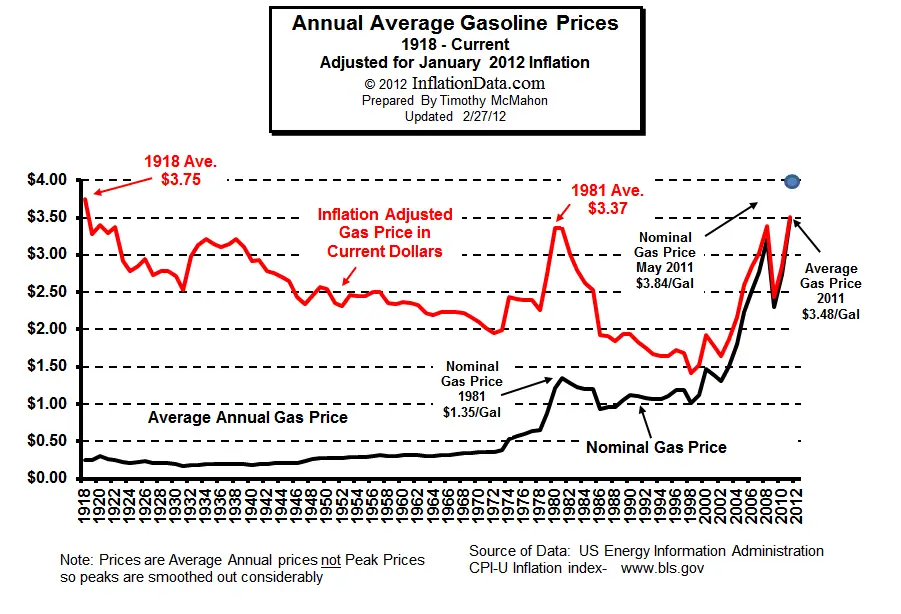
Across the country, Americans spend about 4% of their income on gasoline. The recent peak was 4.5% in 1981 -- meaning that gas prices are still NOT at all-time highs in relative terms.

Eyeballing the gas price map, I was struck by how much it resembled the electoral maps we've all come to know in the past decade.

As a percent of income, Red America pays more for gasoline.

Perhaps that helps explain why Republicans are the party of oil interests.


Visit this blog's homepage.

Saturday, June 07, 2008

Stereotypes in 2008

Today, Hillary Clinton delivered a speech in Washington suspending her campaign and throwing her support to Barack Obama. Unsurprisingly, journalists, bloggers and political analysts have spent much of this past week analyzing why Clinton's campaign failed. After all, she started out as the big favorite with significant advantages.

Many of her most fervent supporters believe that Clinton was a victim of overt media bias and sexism. For example, a number of bloggers have been linking to this video highlighting the disturbing sexism and misogyny in the media. In linking to this video, Judith Warner wrote on June 5:
... if similarly hateful racial remarks had been made about Obama, our nation would have turned itself inside out in a paroxysm of soul-searching and shame.
Is this basic analysis correct?

Was Hillary Clinton victimized in a way that Barack Obama was not?

Allow me to review some of the lowlights of this past campaign. I'll ignore informal reports of racism on the campaign trail. Let's pretend the voting demographics don't matter and overlook the role Obama's black church played in the campaign. Instead, I'll focus on the same kind of verbal snippets used in the video.

Joe Biden, February 2007:
"I mean, you got the first mainstream African-American who is articulate and bright and clean and a nice-looking guy,"
Biden said. "I mean, that's a storybook, man."
Billy Shaheen, December 2007:
"one of the things Republicans are certainly going to jump on is his drug use."..."It'll be, 'When was the last time? Did you ever give drugs to anyone? Did you sell them to anyone?'" Shaheen said. "There are so many openings for Republican dirty tricks. It's hard to overcome."

Bill Clinton, January 2008
:
"Jesse Jackson won South Carolina in '84 and '88," Clinton said at a rally in Columbia. "Jackson ran a good campaign. And Obama ran a good campaign here."
Hillary Clinton, January 2008:
"Dr. King’s dream began to be realized when President Johnson passed the Civil Rights Act of 1964, when he was able to get through Congress something that President Kennedy was hopeful to do, the president before had not even tried, but it took a president to get it done,” she said. “That dream became a reality, the power of that dream became real in people’s lives because we had a president who said we are going to do it and actually got it accomplished.”
Bill O'Reilly, February 2008:
"I don't want to go on a lynching party against Michelle Obama unless there's evidence, hard facts, that say this is how the woman really feels. If that's how she really feels -- that America is a bad country or a flawed nation, whatever -- then that's legit. We'll track it down."
Geraldine Ferraro, March 2008:
" "I got up and the question was asked, 'Why do you think Barack Obama is in the place he is today" as the party's delegate front-runner? "I said in large measure, because he is black....If Obama was a white man, he would not be in this position. And if he was a woman, he would not be in this position. He happens to be very lucky to be who he is. And the country is caught up in the concept."
Ron Fournier (AP), March 2008:
Arrogance is a common vice in presidential politics. A person must be more than a little self-important to wake up one day and say, "I belong in the Oval Office." But there's a line smart politicians don't cross — somewhere between "I'm qualified to be president" and "I'm born to be president." Wherever it lies, Barack Obama better watch his step. He's bordering on arrogance....both Obama and his wife, Michelle, ooze a sense of entitlement.
Hillary Clinton, April 2008:
Sen. Obama's remarks are elitist and they are out of touch. They are not reflective of the values and beliefs of Americans. Certainly not the Americans that I know - not the Americans I grew up with, not the Americans I lived with in Arkansas or represent in New York.
Rep. Geoff Davis (R-KY), April 2008:
“I’m gonna tell you something. That boy’s finger does not need to be on the button,”
Mike Huckabee, May 2008:
Appearing in front of about 6,000 gun rights activists, Huckabee's speech was interrupted by a loud noise. The former Arkansas governor said, "That was Barack Obama. He just tripped off a chair. He's getting ready to speak and somebody aimed a gun at him and he -- he dove for the floor."
Hillary Clinton, May 2008:
"I have a much broader base to build a winning coalition on," she said in an interview with USA TODAY. As evidence, Clinton cited an Associated Press article "that found how Sen. Obama's support among working, hard-working Americans, white Americans, is weakening again, and how whites in both states who had not completed college were supporting me."
HRC was correct about one thing she said in May, "There's a pattern emerging here."


Visit this blog's homepage.

Thursday, June 05, 2008

Veep update: Dems

Columnist Ruth Marcus provides the best line I've read yet explaining why Barack Obama cannot pick Hillary Clinton as his Vice Presidential candidate:
the White House is not big enough to accommodate three people who believe they should be president.
A lot of names have been floated, but none of them seem like an obvious choice.

Bill Richardson
would be a good choice so far as I'm concerned. The Latino voice is going to be important in this election and Richardson has foreign policy and much executive experience to bring to the ticket.

His presidential campaign didn't go far, but Richardson had one of the most aggressive plans to exit Iraq and he's already negotiated with rogue state leaders in North Korea, Sudan, and Cuba. Under his tenure, New Mexico has taken a lead role in addressing climate change via cooperation with other states. Plus, Richardson was Secretary of Energy and can speak credibly against the Republican oil agenda.

That's a lot of positives to bring to the ticket.


Visit this blog's homepage.

Tuesday, June 03, 2008

The smears to come

I've been on the road lately and had some conversations with various people about the likely shape of the fall campaign. Many think there's a good chance it will "feature" a litany of smears. The politics of the past continues to haunt the present.

He is a dangerous upper class elitist.

Did you know he wasn't born in the USA?

He spent all those years abroad...is he some kind of Manchurian candidate?

What makes a man of his limited background qualified to run for President? Is his success just a fairy tale?

Can American elect someone who seems so unpatriotic?

Why is he trying to hide important information about his identity?

What about those awful things he did in his past?


Visit this blog's homepage.

Saturday, May 31, 2008

Looking bad

Has the world changed much in the past half decade or so?

On Friday, 111 countries signed a treaty banning cluster bombs. According to the AP story in the LA Times, the new treaty
outlaws all current designs of cluster munitions and requires destruction of stockpiles within eight years. It also opens the possibility that European allies could order the U.S. to remove cluster bombs from bases on their territory."
The signatory states think this means something:
"The country that thinks of using cluster munitions next week should think twice, because it would look very bad," said Espen Barth Eide, deputy defense minister of Norway, which will host a treaty-signing ceremony Dec. 3.
Hmmm.

Few western Europeans have declared that the US was "looooking gooood" in the past decade or so.

Didn't it look bad when the US continued to use anti-personnel landmines?

Didn't it look bad when the US attacked Iraq without UN authorization?

Didn't it look bad when the US refused to join virtually every other democracy and join the CEDAW?

Didn't it look bad when the US effectively forced friendly states to grant it an exemption from the ICC?

It's a long list, actually.


Visit this blog's homepage.

Monday, May 26, 2008

Grave

I received a forwarded email today that included these two quotes, back-to-back. Their intent is fairly obvious, since "grave" and "serious" are synonyms:
"They don't pose a serious threat to us."
-- Barack Obama on Iran, speaking in Portland, Oregon on May 18

"I've made it clear for years that the threat from Iran is grave."
-- Barack Obama speaking in Billings, Montana on May 19
After a quick search, I discovered that these are already widely circulated on right-leaning blogs.In context, it is easy to see that both quotes are taken from part of the same argument about Iran. Obama said -- as he has often on the campaign trail -- that Iran is not a serious threat in the same way that the Soviet Union was.

Does anyone deny that?

Here's the first quote, as reported in the IHT on May 20, with surrounding phrases:
Obama said in a speech Sunday that "strong countries and strong presidents talk to their adversaries."

"That's what Reagan did with Gorbachev," he said, adding, "I mean, think about it: Iran, Cuba, Venezuela - these countries are tiny compared to the Soviet Union. They don't pose a serious threat to us the way the Soviet Union posed a threat to us. And yet we were willing to talk to the Soviet Union at the time when they were saying, 'We're going to wipe you off the planet."'

Obama said Iran was a threat partly because it had been emboldened by a war in Iraq backed by Bush and McCain. "Iran is the biggest single beneficiary of the war in Iraq," he said.
And here's the second one, as reported on a Chicago Tribune blog on May 19:
"Anything but their failed cowboy diplomacy that has produced no results is called appeasement," Obama countered. "Here's the truth: the Soviet Union had thousands of nuclear weapons and Iran doesn't have a single one. But when the world was on the brink of nuclear Holocaust, Kennedy talked to Khrushchev and he got those missiles out of Cuba. Why shouldn't we have the same courage and confidence to talk to our enemies? That's what strong countries do. That's what strong presidents do."

Obama said he fully realizes the danger posed by Iran, but that it is nothing compared to those presented by the former Soviet Union.

"The Soviet Union had the ability to destroy the world several times over, had satellites spanning the globe, had huge masses of conventional military power, all directed at destroying us," he said. "So, I've made it clear for years that the threat from Iran is grave. But what I've said is that we should not just talk to our friends. We should be willing to engage our enemies as well. That's what diplomacy is all about."

Obama repeatedly stressed the risk posed by Iran, as he suggested that danger has grown because of policies supported by McCain.

"Iran is a grave threat. It has an illicit nuclear program. It supports terrorism across the region and militias in Iraq. It threatens Israel's existence. It denies the Holocaust," he said. "The reason Iran is so much more powerful than it was a few years ago is because of the Bush-McCain policy of fighting in Iraq and refusing to pursue direct diplomacy with Iran. They're the ones who have not dealt with Iran wisely."

Obama also called Iran the "single biggest beneficiary" of Iraq war and pledged to secure all lose nuclear materials during first term, if he is elected president.
More here.


Visit this blog's homepage.

Friday, May 23, 2008

Clinton's raison d'être?

This is not good:
ABC News' Kate Snow Reports: In an interview with the Argus Leader, Sen. Hillary Clinton, D-N.Y., took the unusual step of invoking the assassination of Sen. Robert Kennedy, D-N.Y., when discussing reasons why she was staying in the presidential race.

"My husband did not wrap up the nomination in 1992 until he won the California primary somewhere in the middle of June, right? We all remember Bobby Kennedy was assassinated in June in California. I don't understand it," Clinton said.
Did you see "The Daily Show" on May 14? They had some West Virginia voters commenting about candidate Obama here (the worst starts at about 1:45, though the entire piece is good).

None of them made death threats, but others have. Still, this seems to be in bad taste -- Did she jump the shark?

Just yesterday, I know some Democrats who think this was pretty bad news. Now, that seems mild.


Visit this blog's homepage.

Thursday, May 22, 2008

Hillary's Hypocrisy

These days, Hillary Clinton has only one or two thin straws left to grasp in her efforts to win the Democratic nomination for the presidency. Voting is about to end -- Barack Obama has secured a majority of elected delegates even though Montana, South Dakota and Puerto Rico will still select 86 delegates.

Likewise, the Superdelegate "primary" -- which she was once winning by a sizable margin -- has turned away from Clinton. Obama has seized the lead among those convention participants and seems to add several more delegates each day. He currently leads the superdelegate race by 25 to 30 delegates. Just over 200 are yet to declare their allegiance.

By the math long accepted in this race -- Clinton too once agreed that the number for victory was 2025 -- Obama needs only about 60 more delegates to secure the nomination. Given proportional representation, he's going to get at least half of those from the remaining three electoral contests even if Clinton wins Puerto Rico by a 3-to-1 margin.

To get to the magic number assuring victory, Obama will likely need the support of fewer than 30 of the remaining 210 unpledged superdelegates.

So, where is Clinton making her last stand?

The answer is in Michigan and Florida, states where Clinton won both primaries.

However, Democrats agreed in 2007 not to campaign -- and not to count the delegates from those states. The states are being penalized harshly by the Democratic National Committee for moving their primaries to early dates, which competed for attention with traditional opening contests in Iowa and New Hampshire. Back in 2007, none of the candidates wanted to offend early voters in Iowa and New Hampshire.

Here's the Clinton press release from September 2007:
"We believe Iowa, New Hampshire, Nevada and South Carolina play a unique and special role in the nominating process," Clinton's campaign said in a statement. "And we believe the DNC's rules and its calendar provide the necessary structure to respect and honor that role."
The Clinton campaign, like the campaigns of Obama, John Edwards, Joe Biden, Bill Richardson, Dennis Kucinich and Chris Dodd, signed a pledge not to "campaign or participate in any state which schedules a presidential election primary or caucus before Feb. 5, 2008, except for the states of Iowa, Nevada, New Hampshire and South Carolina," as drafted by the DNC.

Note that this was not merely a pledge not to campaign. This was a promise not to participate in an election. Can one claim victory if such an election occurs? All the candidates save for Clinton and Dodd withdrew their names from the Michigan ballot. The DNC had already invoked the penalty. Clinton certainly agreed when she was campaigning in New Hampshire:
...she told a New Hampshire public-radio audience, "It's clear, this election [Michigan is] having is not going to count for anything."
Moreover, the DNC is not some disinterested third party. Hillary Clinton supporters were the mainstream of the Democratic party when these penalties were imposed. Some of her highest profile supporters helped make the DNC decision:
On Aug. 25, when the DNC's rules panel declared Florida's primary date out of order, it agreed by a near-unanimous majority to exceed the 50 percent penalty called for under party rules. Instead, the group stripped Florida of all 210 delegates to underscore its displeasure with Florida's defiance and to discourage other states from following suit. In doing so, the DNC essentially committed itself, for fairness' sake, to strip the similarly defiant Michigan of all 156 of its delegates three months later. Clinton held tremendous potential leverage over this decision, and not only because she was then widely judged the likely nominee. Of the committee's 30 members, a near-majority of 12 were Clinton supporters. All of them—most notably strategist Harold Ickes—voted for Florida's full disenfranchisement. (The only dissenting vote was cast by a Tallahassee, Fla., city commissioner who supported Obama.)
By the way, Clinton now has the support of 13 members of the DNC, to 8 for Obama, with 9 unaligned.

To hear Clinton talk now, however, voters from Florida and Michigan are comparable to the voters in authoritarian states, who are ruled by thugs who do not care about their concerns:
Speaking in Sunrise, Fla., Clinton said: "You heard Diana talk about coming from a country where votes don't count. People go through the motions of an election only to have it discarded and disregarded. We're seeing that right now in Zimbabwe -- tragically an election was held, the president lost, they refused to abide by the will of the people. So we can never take for granted our precious right to vote."
I wonder what Clinton thinks of elections in single-party states, where voters are given ballots that do not reflect electoral choice?

In the former Soviet Union, the state's sanctioned candidate used to get over 90% of the vote; Clinton managed only 55% in Michigan. Uncommitted ran a strong second -- with 40%.

Clinton has also been making the argument that she should be the nominee because she leads the popular vote:
We believe the popular vote is the truest expression of your will. We believe it today, just as we believed it back in 2000 when right here in Florida, you learned the hard way what happens when your votes aren’t counted and the candidate with fewer votes is declared the winner. The lesson of 2000 here in Florida is crystal clear. If any votes aren’t counted, the will of the people is not realized and our democracy is diminished. That is what I have always believed.
Independent sources that track the vote count reveal Clinton's hypocrisy on this issue.

Obama won a number of caucuses that do not report traditional vote counts. Would Clinton not want to count those votes? She won Michigan where Obama was not on the ballot. Indeed, the only calculations that give Clinton a popular vote lead are those that fail to count every vote -- by ignoring caucus results or by counting votes in states where voters had no chance to register their support for Senator Obama.

Make a reasonable estimate of the caucus results and exclude Michigan where Obama was not on the ballot, and the popular vote results do not favor Clinton. Barack Obama has not only secured more delegates than Hillary Clinton, he's ahead in the popular vote as well.

This would be a nice opportunity for Al Gore, who was genuinely wronged in 2000, to step forward and silence Clinton's latest argument. Failing that, this is likely to be resolved on May 31. It now appears that Obama's delegate lead is insurmountable, meaning that he's going to win the nomination even if Michigan and Florida delegates are seated. Democrats from those states have presented plans to the DNC that would not hand Hillary Clinton a last minute victory.


Visit this blog's homepage.

Tuesday, May 20, 2008

Election day in Kentucky

Some anecdotes as we wait for results from Kentucky (and Oregon):

1. Today, as I voted in Louisville, a well-dressed 50-something women turned around in the voting booth next to mine and cried out, "Hey, Barack Obama is not listed on my ballot."

The poll workers reminded her that she had requested a Republican primary ballot and told her that she could not vote for a Democrat until the November general election.

The woman turned back around and muttered under her breath, "But I don't want any of these guys." She may have said "losers" instead of "guys." Her voice was trailing off.

2. In the past five days, I've received 2 phone calls from the Obama campaign asking me if I planned to vote for him and reminding me where to vote. Sunday, my spouse received one of those calls too. Yesterday, we also received 2 tape-recorded calls from his campaign that reminded us to vote. Today, a kid from my daughter's high school knocked on our door to remind us to vote for Obama. We were also apparently canvassed by an Obama worker last week when I was not home.

We received no calls from Hillary Clinton's campaign, though some months ago we did receive mailed requests for donations to her campaign.

Moreover, as of last Friday, our local Obama office was completely out of yard signs. I've also seen a number of Obama TV commercials, but none that I recall for Hillary Clinton. Our neighbor has a Hillary sign, as do a few other people on the street. Nonetheless, I think Obama is winning my block and neighborhood.

That said, Hillary or Bill Clinton have been on the front page of the local newspaper almost every day for the past week because of community or state appearances. Obama was in town once and his spouse came through as well. She did not make the front page. The paper had a long piece about Chelsea Clinton, but it was in the opinion section.


Visit this blog's homepage.

Bad News Alert: Brazil's Amazon

Within Brazil, who will speak out to defend the Amazon? The leading voice for preservation has resigned. BBC, May 12:
Brazil's Environment Minister, Marina Silva, a staunch defender of the Amazon rainforest, has resigned from her post...

"Brazil is losing the only voice in the government that spoke out for the environment," said Sergio Leitao, director of public policy for Greenpeace in Brazil.

"The minister is leaving because the pressure on her for taking the measures she took against deforestation has become unbearable," he added...

"The environmental area was relegated to no priority," said Denise Hamu, secretary general of WWF in Brazil. "She got tired of the thankless struggle."
Silva had unsuccessfully tried to block some major development projects -- two hydroelectric projects and a major road.

Silva's replacement is Carlos Minc, former Rio de Janeiro Environment Secretary. He is ready to securitize the Amazon. The AP has this story today in the IHT:
Minc on Monday insisted that anti-logging measures "will be maintained and reinforced." He announced plans to use soldiers to protect the environment and vowed to implement a "zero deforestation" program. He gave no further details.
I'd like to hear those details.


Visit this blog's homepage.