Search This Blog

Thursday, July 10, 2008

Can we go home now?

Iraqi Prime Minister Nouri al-Maliki, July 5 in the AP:
Iraq's prime minister said Saturday that the government has defeated terrorism in the country, a sign of growing confidence after recent crackdowns against Sunni extremists and Shiite militias.

Prime Minister Nouri al-Maliki launched the crackdowns to extend the authority of the government over areas in Baghdad and elsewhere that have largely been under the control of armed groups since the U.S.-led invasion in 2003.

"They were intending to besiege Baghdad and control it," al-Maliki said. "But thanks to the will of the tribes, security forces, army and all Iraqis, we defeated them."
Sudarsan Raghavan and Karen DeYoung reported on the front page of The Washington Post, July 8:
"The current trend is to reach an agreement on a memorandum of understanding either for the departure of the [US] forces or a memorandum of understanding to put a timetable on their withdrawal," Maliki said, according to a statement released by his office. "In all cases, the basis for any agreement will be respect for the full sovereignty of Iraq."
Also on the 8th, MSNBC reported this quote from Iraqi National Security advisor Mowaffaq al-Rubaie:
"We can't have a memorandum of understanding with foreign forces unless it has dates and clear horizons determining the departure of foreign forces. We're unambiguously talking about their departure," Rubaie said
Today's Post went even further:
Iraqi spokesman Ali al-Dabbagh said in Baghdad on Wednesday that a U.S. pullout could be completed in several years. "It can be 2011 or 2012," he said. "We don't have a specific date in mind, but we need to agree on the principle of setting a deadline."
One final point -- Democracy Arsenal reminds everyone that Senator McCain said 4 years ago that the US should leave Iraq if its government favors withdrawal.


Visit this blog's homepage.

Tuesday, July 08, 2008

CDI Namedropping

Spencer Ackerman has an article today at The Washington Independent called "Women Prominent in Defense Movement." Pictured up top are Sarah Sewall of Harvard's Carr Center for Human Rights and Michèle Flournoy of the Center for a New American Security. Ackerman describes Sewall, Flournoy, and several other women as
key figures in a loose but expanding circle of defense theorist-practitioners who study, advocate and implement counterinsurgency -- a method of warfare that emphasizes economy of force, intimate knowledge of host populations and politico-economic incentives to win that population's allegiance. At the risk of stating the obvious, they, and many of their colleagues, are women. While women are still underrepresented in the national-security apparatus -- and at the Pentagon specifically -- counterinsurgency, more than any other previous movement in defense circles, features women not just as equal partners, but leaders.

There's no one answer for why that is. In a series of interviews, leading woman counterinsurgents, and some of their male colleagues, discussed how the unconventional approach to military operations calls for skills in academic and military fields that have become open to women in recent decades. Others contend that counterinsurgency's impulse for collaborative leadership speaks to women's "emotional IQ," in the words of one prominent woman counterinsurgent. Another explanation has to do with coincidence: the military's post-Vietnam outreach to women has matured at the same time as counterinsurgency became an unexpected national imperative.
Sarah Sewall was an intern at the Center for Defense Information in 1983 -- something I know because she worked with a good friend of mine who was in the same position at the same time. My own internship at CDI occurred in summer 1985 -- just in time for CDI and likeminded groups to call for banning all nuclear explosions on the 40th anniversary of Hiroshima.

I mention my internship because it put me in the position to receive CDI's The Defense Monitor for many years. As a pack rat, I still have a stack of them. And on the back of each issue, CDI conveniently listed the names of interns.

Thus, I learned that Flournoy was an intern at CDI in fall 1985, just weeks after my work there ended.

Moreover, Flournoy interned that fall with Lee Feinstein -- who most recently served as Hillary Clinton's National Security Director.

I'm dropping all these names because they are clearly in line for important defense and/or foreign policy jobs in an Obama administration. Conceivably, the first female Secretary of Defense could be one of the women profiled in Ackerman's piece.

And yet, in the mid-1980s, virtually no one in Washington thought anyone at CDI would ever be in line for top government jobs.

Consider this take on CDI from the right-wing Heritage Foundation in 1979.

Given the turnaround, maybe there's hope for U.S. defense policy after all.


Visit this blog's homepage.

Sunday, July 06, 2008

Reviewing the Dem primaries

Remember the hullabaloo about which Democratic candidate was "ready on day one"?

In the June Atlantic Monthly, Joshua Green quoted John Roos, a corporate attorney who has been an Obama fundraiser in Silicon Valley:
“No one in Silicon Valley sits here and thinks, ‘You need massive inside-the-Beltway experience,’” he explained, after a diplomatic pause. “Sergey and Larry were in their early 20s when they started Google. The YouTube guys were also in their 20s. So were the guys who started Facebook. And I’ll tell you, we recognize what great companies have been built on, and that’s ideas, talent, and inspirational leadership.”
This makes me feel old.

Green has one other interesting nugget in the article -- "the tech community was up for grabs in 2007." Obama saw the opportunity and reached out to a lucrative donor base. Clinton did not:
In a colossal error of judgment, the Clinton campaign never made a serious approach, assuming that Obama would fade and that lack of money and cutting-edge technology couldn’t possibly factor into what was expected to be an easy race. Some of her staff tried to arrange “prospect meetings” in Silicon Valley, but they were overruled. “There was massive frustration about not being able to go out there and recruit people,” a Clinton consultant told me last year. As a result, the wealthiest region of the wealthiest state in the nation was left to Barack Obama.
I don't really want to rehash the 2008 primary campaign in any depth, but Vanity Fair does. Go there if you want a fix of "Hillaryland at War." Author Gail Sheehy's examination of the top staff is illuminating:
It was impossible to find anyone who could lay out the hierarchy of Hillary’s campaign. Almost everybody had veto power, but no one could initiate. The group was about as effective as the U.N. Security Council....They became consumed with trading personal invective, hurling expletives, and trashing one another in print.

[Mark] Penn and [Harold] Ickes especially hated each other.
The article also provides ample evidence why Hillary Clinton probably won't be the choice for Veep:
“Bill Clinton was out of control … even the night she won in New Hampshire. Even Hillary couldn’t control him,” a Clinton fund-raiser tells me. “He began calling me directly,” says one of Hillary’s Big Five, “and you don’t talk back to the president of the United States.” Not only did Bill give “advice” directly to Penn, [Howard] Wolfson, and [Patty Solis] Doyle, he wanted to set up his own shop in campaign headquarters, but the team persuaded him he was better used out on the stump.

While Bill proved to be a magnet for rural voters, he turned off some super-delegates with his imperial assumptions.
It's a lengthy read.


Visit this blog's homepage.

Saturday, July 05, 2008

Satire

Here's another nugget for the comedy project. From comedian-turned-Senate candidate Al Franken (MN), as quoted in the Washington Post, December 17, 2007:
"Let me tell you what a satirist does," he says. "A satirist looks at a situation and sees the inconsistencies and hypocrisies and absurdities, and cuts through the baloney and gets to the truth. And I think that's pretty good training for the U.S. Senate. Don't you?"
Long-time readers may recall my interest in the promotion of public dialogue at the global level. My coauthored book was inspired by the social theory of Jürgen Habermas, whose "discourse ethics" aspire to promote consensual truth-seeking and discursive democracy.

Can satire and humor promote truth-seeking in global politics?

I think political theorist Sammy Basu would agree with Franken about the importance of humor, as he has called for acceptance of an "ironic speech situation" (ISS) -- a "speech situation that grants illocutionary validity to humor."
In locating irony under the rubric of humor, I want to split the difference again between Habermas and Rorty. Rorty affirms detailed historical narratives at the expense of Habermasian philosophical meta-narratives. For Rorty, all commitments ought to come unglued privately even as we publicly affirm loyalty to the liberal status quo, whereas with Habermas our parochial private commitments must be abandoned publicly unless they are intersubjectively intelligible and agreeable. The joke, I submit, can fall somewhere in between as a kind of little, public, ironic "shock-narrative."(n73) Humor enables the withholding liberals insist upon, while enriching the public debate democrats affirm. Humorously, one can attempt the self-disclosure of intimate feelings while managing the potential for social disruption.

The ISS is a better regulative ideal inasmuch as it is more likely to result in a just outcome to which the parties involved will feel committed.
Earlier in the paper, Basu writes "Habermas is perhaps the apogee of interlocutory humorlessness."

Put simply, Habermas is skeptical about the discursive value of humor, but Basu and I think that humorists like Franken can make a valuable contribution to political discourse.

I've been thinking about comedy a great deal because satire and farce are integral parts of my film class -- and the next section begins on Monday.


Visit this blog's homepage.

Wednesday, July 02, 2008

Does Afghanistan need a surge?

US journalists frequently report that "the surge" dramatically reduced violence in Iraq. Unfortunately, even as violence has declined in Iraq, it has increased significantly in Afghanistan.

The past two months, in fact, more troops have died in Afghanistan than in Iraq. This report is from yesterday's AP story:
Militants killed more U.S. and NATO troops in Afghanistan in June than in Iraq for the second straight month, a grim milestone capping a run of headline-grabbing insurgent attacks that analysts say underscore the Taliban's growing strength.
Militant attacks are up 40% over 2007, reportedly and are apparently becoming more sophisticated in a number of ways. The US just had its deadliest month in Iraq since the war started in 2001.
"I think possibly we've reached a turning point," said Mustafa Alani, the director of security and terrorism studies at the Dubai-based Gulf Research Center. "Insurgents now are more active, more organized, and the political environment, whether in Pakistan or Afghanistan, favors insurgent activities."
Critics charge that the coalition lacks a strategy for victory in Afghanistan:
Barnett Rubin, an expert on Afghanistan at NYU, said the Paris conference shows a strong international commitment to Afghanistan, but he said there is still no strategy for longterm success.

"Let's focus on the essentials: creating a secure environment for Afghanistan and Pakistan to address their problems and for the international community to eliminate al-Qaida's safe haven," Rubin said. "We haven't been getting there, and we are not getting closer, pledges or no pledges."
Both Pakistan and Afghanistan have launched new attacks in their border area, so the violence in the region continues to escalate.


Visit this blog's homepage.

Tuesday, July 01, 2008

Film as condiment

As long-time readers know, I watch a lot of films, mostly on DVD. Summer is not a particularly good season for film, though I occasionally catch a good one that I missed in the winter. Starting next week, I'm also teaching "Global Politics Through Film" again.

Recently, I read a review that was not at all kind to summer "popcorn movies." Indeed, in the June 16 edition of The Nation, Stuart Klawans wrote disparagingly of films like "Speed Racer":
And how does it feel to be the chimp, watching this nightmare of saturated primary colors? Save your money and find out at home. Have someone squirt ketchup and mustard into your eyes for two hours.
I missed that movie, but Klawans also turns his attention to one that I did catch -- the latest Indiana Jones. In fact, Klawans asserts that director Steven Spielberg's earlier "Jaws" "first laid the hot dogs on the grill" for such "filmmaking-by-condiment."

Even more vitriol is reserved for colleague George Lucas, as Spielberg is partly redeemed by films like "Munich" and "Minority Report."

Here are two specific criticisms worth noting in Klawans's critique of the latest Indy:
1. "Crystal Skull" revives a techno-Aryan-occult fantasy of the 1970s: the notion that pointy-headed visitors from Beyond must have built the ancient civilizations of South America, since the natives there are too stupid to use toilet paper.

2. To put forth an image of flaming youth, Lucas and Spielberg have reverted to their own, making Shia LaBeouf into the leather-jacketed, motorcycle-riding rebel they admired fifty years ago when they saw "The Wild One." For the aging auteurs, he's cinematic Viagra.
I didn't like the film all that much, so I'm going to grant Klawans the last word. The latest Indy, he writes, is "new movie trash" that "comes out feeling old."

My summer pick of the week: "The Savages." The voters at IMDB give it a well-earned 7.5. The new "Indy" is rated 7.1, but I suspect that will go down in the long run. Indy enthusiasts seem the most likely to vote early (and often?).


Visit this blog's homepage.

Sunday, June 29, 2008

Can this work outside of Berkeley?

This interesting idea to promote solar energy can be found in the May/June Mother Jones
Cisco DeVries of Berkeley, California, who until recently served as the mayor's chief of staff...hit upon a brilliantly simple idea. What if, he asked, the city financed residents' solar rooftops, then levied a 20-year tax assessment on their properties to pay for it? The debt would follow the home, not the owner, and in one fell swoop, the two greatest impediments to home solar would be history.

His bosses ate it up, and Berkeley plans to roll out its new program this summer. City officials will float low-interest municipal bonds to cover the initial costs, and DeVries figures a solar setup factoring in rebates and tax deductions (which can be looked up at dsireusa.org) will cost a single-family household at least $65 a month. Once the system is paid for, the homeowner enjoys free electricity.
The 2 major impediments mentioned in the story are homeowner debt and American mobility. People tend to move every 7 years and the solar technology does not pay for itself in that time span.

Reportedly, dozens of cities are looking into this idea, including San Francisco, sunny Sante Fe and Milwaukee (!). I'm going to bring this up at my next local committee meeting.

Some experts say that photovoltaic cell modules will cost 25-50% less by 2010.


Visit this blog's homepage.

Thursday, June 26, 2008

Obama in Vegas

When Barack Obama goes to Vegas, he apparently isn't completing satisfied with the potential payoffs from safe bets. He wants to win big. Earlier this year, his campaign managed to earn more delegates from Nevada despite finishing second to Hillary Clinton in the state caucuses.

This week, Obama went to Vegas to talk about an issue that has long been near-and-dear to Republicans -- energy, and especially oil. Remember how the 2001 Bush cabinet was loaded with people with ties to the oil industry?

Indeed, Obama gave a terrific speech on energy on Tuesday, June 24. Here are two key paragraphs that speak directly to Senator John McCain's energy plans:
Senator McCain wants a gas tax holiday that will save you – at most – thirty cents a day for three months. And that's only if the oil companies don't just jack up the price and pocket the savings themselves, which is exactly what they did when we tried to do the same thing in Illinois. He's willing to spend nearly $4 billion on more tax breaks for big oil companies – including $1.2 billion for Exxon alone. He wants to open our coastlines to drilling – a proposal that his own top economic advisor admitted won't provide any short-term relief at the pump. It's a proposal that George Bush's Administration says will not provide a drop of oil – not a single drop – for at least ten years. And by the time the drilling is fully underway in twenty years, our own Department of Energy says that the effect on gas prices will be "insignificant." Insignificant.

Just yesterday, Senator McCain actually admitted this. In a town hall he said, and I quote, "I don't see an immediate relief" but "the fact that we are exploiting those reserves would have psychological impact that I think is beneficial." Psychological impact. In case you were wondering, that's Washington-speak for, "It polls well." It's an example of how Washington politicians try to convince you that they did something to make your life better when they really didn't. Well the American people don't need psychological relief or meaningless gimmicks to get politicians through the next election, they need real relief that will help them fill up their tanks and put food on their table. They need a long-term energy strategy that will reduce our dependence on foreign oil by investing in the renewable sources of energy that represent the future. That's what they need.
Much of the remainder of the speech outlines the contours of a long-term energy strategy -- strong federal government backing for renewable sources, including geothermal, solar, and wind power.

Indeed, Obama directly compares his energy initiative to JFK's commitment in May 1961 to land a man on the moon -- and return him safely to earth -- within a decade. Obama:
When John F. Kennedy decided that we were going to put a man on the moon, he didn't put a bounty out for some rocket scientist to win – he put the full resources of the United States government behind the project and called on the ingenuity and innovation of the American people. That's the kind of effort we need to achieve energy independence in this country, and nothing less will do.
Here's the meat of Obama's energy plan:
I have a plan to raise the fuel standards in our cars and trucks with technology we have on the shelf today – technology that will make sure we get more miles to the gallon. And we will provide financial help to our automakers and autoworkers to help them make this transition. I will invest $150 billion over the next ten years in alternative sources of energy like wind power, and solar power, and advanced biofuels – investments that will create up to five million new jobs that pay well and can't be outsourced; that will create billions of dollars in new business like you're already doing here in Nevada. And before we hand over more of our land and our coastline to oil companies, I will charge those companies a fee for every acre that they currently lease but don't drill on. If that compels them to drill, we'll get more oil. If it doesn't, the fees will go toward more investment in renewable sources of energy.

When all is said and done, my plan to increase our fuel standards will save American consumers from purchasing half a trillion gallons of gas over the next eighteen years.
The environmentalist in me is ready to cheer these policies.


Hat tip: David Roberts of Gristmill.


Visit this blog's homepage.

Tuesday, June 24, 2008

At the Duck

Today, I posted "Iraq update" at the Duck of Minerva. It suggests some must-reading and notes a couple of recent government reports about conditions on the ground.

That seems to be my first post at the Duck in a month.

May 22, I blogged "Who said it?" comparing realist and human rights rhetoric.


Visit this blog's homepage.

Friday, June 20, 2008

Practice makes perfect?

Today, Michael Gordon reports in the New York Times that Israel recently practiced an attack on Iran:
Israel carried out a major military exercise earlier this month that American officials say appeared to be a rehearsal for a potential bombing attack on Iran’s nuclear facilities.

Several American officials said the Israeli exercise appeared to be an effort to develop the military’s capacity to carry out long-range strikes and to demonstrate the seriousness with which Israel views Iran’s nuclear program.
Apparently, the exercise involved more than 100 F15 and F16 aircraft.

Israeli officials declined to comment. Former Israeli officials had a lot to say:
Shaul Mofaz, a former Israeli defense minister who is now a deputy prime minister, warned in a recent interview with the Israeli newspaper Yediot Aharonot that Israel might have no choice but to attack. “If Iran continues with its program for developing nuclear weapons, we will attack,” Mr. Mofaz said in the interview published on June 6, the day after the unpublicized exercise ended. “Attacking Iran, in order to stop its nuclear plans, will be unavoidable.”
Someone in the Pentagon must have watched "Dr. Strangelove" recently:
“They wanted us to know, they wanted the Europeans to know, and they wanted the Iranians to know,” the Pentagon official said. “There’s a lot of signaling going on at different levels.”
Iran apparently got the message since the Times reports that it beefed up air defense patrols recently.

About two weeks ago, Israeli Prime Minister Ehud Olmert reportedly said the following after emerging from a meeting with President Bush:
"We reached agreement on the need to take care of the Iranian threat," Olmert said after the meeting. "I left with a lot less question marks [than I had entered with] regarding the means, the timetable restrictions and America's resoluteness to deal with the problem."

"George Bush understands the severity of the Iranian threat and the need to vanquish it, and intends to act on the matter before the end of his term in the White House,"
Hmmm.

This seems like an awful lot of heat just to get the Europeans to offer new carrots and sticks to Iran.


Visit this blog's homepage.

Tuesday, June 17, 2008

Wider war: Afghan edition

For the first time since the "war on terror" began, the Karzai government in Afghanistan has threatened to attack Pakistan. The BBC reported Sunday:
Afghan President Hamid Karzai has threatened to send troops over the border into Pakistan to confront militants based there.

He said that when militants crossed over from Pakistan to kill Afghans and coalition troops, his nation had the right to retaliate in "self-defence"....

"Afghanistan has the right of self-defence. When they cross the territory from Pakistan to come and kill Afghans and to kill coalition troops it exactly gives us the right to go back and do the same."
Yusuf Raza Gilani, Pakistan's prime minister, replied:
"Neither do we interfere in anyone else's matters, nor will we allow anyone to interfere in our territorial limits and our affairs,"
If these threats aren't scary enough, just last week the U.S. launched another attack inside Pakistan. This time, however, the attack killed nearly a dozen Pakistani troops. The BBC again:
Pakistan's Prime Minister Yusuf Raza Gilani has condemned an air strike by Afghanistan-based US forces that Islamabad says killed 11 of its troops.

The incident took place inside Pakistan, near the border with Afghanistan.

The US military confirmed it had used artillery and air strikes after coming under fire from "anti-Afghan" forces.

...Pakistan's military called it a "completely unprovoked and cowardly act".
Incidentally, speaking of escalation, did you know the US currently has about 23,000 troops in Afghanistan -- part of a 53,000 troop NATO force. Apparently, we're heading to 32,000 troops in Afghanistan -- the largest deployment there since the war began.


Note: Type in first line corrected June 19.


Visit this blog's homepage.

Sunday, June 15, 2008

McMurtry and Escovedo

Last Wednesday night, my wife and I went out to see James McMurtry and Alejandro Escovedo. Though Escovedo played last, we were more interested in McMurtry's set and the crowd seemed to be mostly his as well. Lots of people were singing along to McMurtry's songs, the club was somewhat less crowded during Escovedo's set, and the biggest cheer of the night came following McMurtry's delivery of these lines from "We Can’t Make It Here":
Should I hate a people for the shade of their skin
Or the shape of their eyes or the shape I’m in
Should I hate ‘em for having our jobs today
No I hate the men sent the jobs away
According to a story I read in The Washington Post while on vacation,
Stephen King called McMurtry's first foray into political songwriting the best American protest song since Bob Dylan's epochal "Masters of War."
Escovedo's band was first-rate (including fiddle player Carrie Rodriguez) and his set was very entertaining.

More than twenty years ago, before I'd ever heard of James McMurtry, I used to listen to Escovedo's "cowpunk" band, Rank and File. Yes, I still own the vinyl records.

I'm not sure Headliners was filled to its 600-person capacity, but it was very crowded and I kept running into people I know -- a colleague from Sociology, another from my Department, a DJ friend, and a couple of former students.

It was a fun night.


Visit this blog's homepage.

Saturday, June 14, 2008

Bookmooch

Do you know about Bookmooch? If you have too many books cluttering your home or office, but also (and paradoxically) have a wishlist of books, then you might want to consider joining Bookmooch. I joined about 5 months ago and have now sent and received 17 books -- in transactions involving more than 30 people.

Two years ago, I blogged about Zunafish, which is an on-line book, CD and DVD trading site. Zunafish is OK, but members have to agree to a trade with another member, book-for-book or CD-for-CD. Frequently, one has to settle for books or CDs in trade that are not really desired by one party to the transaction. The site only allows paperback trading and all trading costs $1 per transaction.

On Bookmooch, by contrast, members list any books (including hardbacks) and send them away to anyone who makes a specific request. Bookmooch doesn't charge anything for making trades possible and apparently survives because some site visitors click through to Amazon links and buy the books they seek. The site has very good software for creating and maintaining wishlists and "save-for-later" lists. For every 10 books listed (at 0.1 points each), members can request a book from someone else (at a cost of 1.0). For each book sent, members receive a point that can be used to acquire another book. Additional points are earned or spent for mooches outside one's own country. Members also receive 0.1 points for acknowledging receipt of a book.

Points are earned and spent as currency, which means that it is much easier to acquire books on Bookmooch that are really desired. I've not had any difficulty finding books I want to read -- and others have wanted the books I list.

According to the official BookMooch Blog, membership and use is up significantly in 2008 -- 48% more unique visits in the first five months of 2008.


Visit this blog's homepage.

Wednesday, June 11, 2008

Blogroll add: FIveThirtyEight

I just started reading FiveThirtyEight.com and recommend that you read it too if you are interested in analysis of the 2008 presidential election. I'm not sure what my colleagues who study American politics would say about its methods, but Nate Silver (of Baseball Prospectus fame) is producing some interesting work.


Visit this blog's homepage.

Monday, June 09, 2008

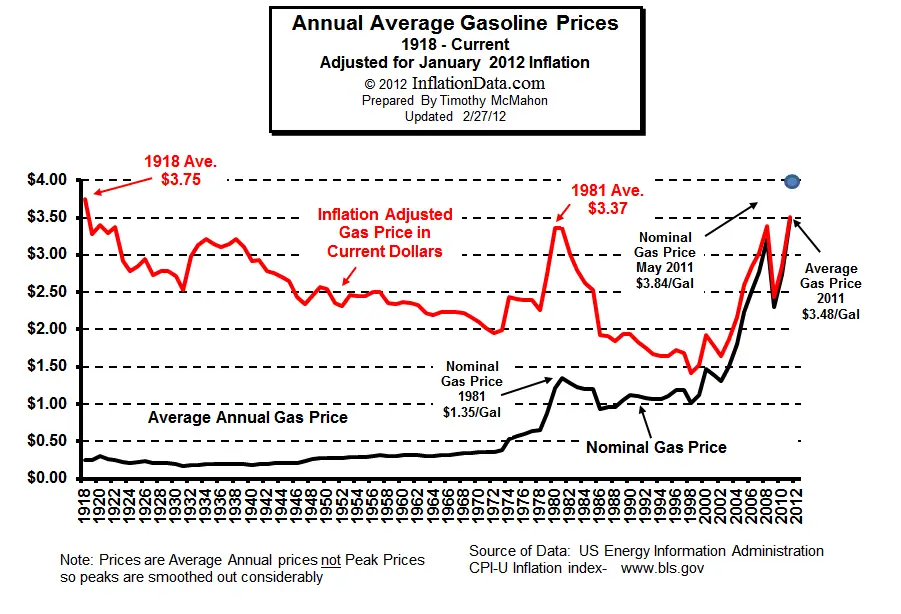
Red America's Gasoline Spending

The front page of today's New York Times had an interesting graphic, featuring a map highlighting the percent of income people spend on gasoline. Clearly, as the accompanying story makes clear, people who live in rural areas spend a much greater percent of their income on gasoline.
A survey by Mr. Rozell’s firm late last month found that the gasoline crisis is taking the highest toll, as a percentage of income, on people in rural areas of the South, New Mexico, Montana, Wyoming and North and South Dakota.
Across the country, Americans spend about 4% of their income on gasoline. The recent peak was 4.5% in 1981 -- meaning that gas prices are still NOT at all-time highs in relative terms.

Eyeballing the gas price map, I was struck by how much it resembled the electoral maps we've all come to know in the past decade.

As a percent of income, Red America pays more for gasoline.

Perhaps that helps explain why Republicans are the party of oil interests.


Visit this blog's homepage.

Saturday, June 07, 2008

Stereotypes in 2008

Today, Hillary Clinton delivered a speech in Washington suspending her campaign and throwing her support to Barack Obama. Unsurprisingly, journalists, bloggers and political analysts have spent much of this past week analyzing why Clinton's campaign failed. After all, she started out as the big favorite with significant advantages.

Many of her most fervent supporters believe that Clinton was a victim of overt media bias and sexism. For example, a number of bloggers have been linking to this video highlighting the disturbing sexism and misogyny in the media. In linking to this video, Judith Warner wrote on June 5:
... if similarly hateful racial remarks had been made about Obama, our nation would have turned itself inside out in a paroxysm of soul-searching and shame.
Is this basic analysis correct?

Was Hillary Clinton victimized in a way that Barack Obama was not?

Allow me to review some of the lowlights of this past campaign. I'll ignore informal reports of racism on the campaign trail. Let's pretend the voting demographics don't matter and overlook the role Obama's black church played in the campaign. Instead, I'll focus on the same kind of verbal snippets used in the video.

Joe Biden, February 2007:
"I mean, you got the first mainstream African-American who is articulate and bright and clean and a nice-looking guy,"
Biden said. "I mean, that's a storybook, man."
Billy Shaheen, December 2007:
"one of the things Republicans are certainly going to jump on is his drug use."..."It'll be, 'When was the last time? Did you ever give drugs to anyone? Did you sell them to anyone?'" Shaheen said. "There are so many openings for Republican dirty tricks. It's hard to overcome."

Bill Clinton, January 2008
:
"Jesse Jackson won South Carolina in '84 and '88," Clinton said at a rally in Columbia. "Jackson ran a good campaign. And Obama ran a good campaign here."
Hillary Clinton, January 2008:
"Dr. King’s dream began to be realized when President Johnson passed the Civil Rights Act of 1964, when he was able to get through Congress something that President Kennedy was hopeful to do, the president before had not even tried, but it took a president to get it done,” she said. “That dream became a reality, the power of that dream became real in people’s lives because we had a president who said we are going to do it and actually got it accomplished.”
Bill O'Reilly, February 2008:
"I don't want to go on a lynching party against Michelle Obama unless there's evidence, hard facts, that say this is how the woman really feels. If that's how she really feels -- that America is a bad country or a flawed nation, whatever -- then that's legit. We'll track it down."
Geraldine Ferraro, March 2008:
" "I got up and the question was asked, 'Why do you think Barack Obama is in the place he is today" as the party's delegate front-runner? "I said in large measure, because he is black....If Obama was a white man, he would not be in this position. And if he was a woman, he would not be in this position. He happens to be very lucky to be who he is. And the country is caught up in the concept."
Ron Fournier (AP), March 2008:
Arrogance is a common vice in presidential politics. A person must be more than a little self-important to wake up one day and say, "I belong in the Oval Office." But there's a line smart politicians don't cross — somewhere between "I'm qualified to be president" and "I'm born to be president." Wherever it lies, Barack Obama better watch his step. He's bordering on arrogance....both Obama and his wife, Michelle, ooze a sense of entitlement.
Hillary Clinton, April 2008:
Sen. Obama's remarks are elitist and they are out of touch. They are not reflective of the values and beliefs of Americans. Certainly not the Americans that I know - not the Americans I grew up with, not the Americans I lived with in Arkansas or represent in New York.
Rep. Geoff Davis (R-KY), April 2008:
“I’m gonna tell you something. That boy’s finger does not need to be on the button,”
Mike Huckabee, May 2008:
Appearing in front of about 6,000 gun rights activists, Huckabee's speech was interrupted by a loud noise. The former Arkansas governor said, "That was Barack Obama. He just tripped off a chair. He's getting ready to speak and somebody aimed a gun at him and he -- he dove for the floor."
Hillary Clinton, May 2008:
"I have a much broader base to build a winning coalition on," she said in an interview with USA TODAY. As evidence, Clinton cited an Associated Press article "that found how Sen. Obama's support among working, hard-working Americans, white Americans, is weakening again, and how whites in both states who had not completed college were supporting me."
HRC was correct about one thing she said in May, "There's a pattern emerging here."


Visit this blog's homepage.

Thursday, June 05, 2008

Veep update: Dems

Columnist Ruth Marcus provides the best line I've read yet explaining why Barack Obama cannot pick Hillary Clinton as his Vice Presidential candidate:
the White House is not big enough to accommodate three people who believe they should be president.
A lot of names have been floated, but none of them seem like an obvious choice.

Bill Richardson
would be a good choice so far as I'm concerned. The Latino voice is going to be important in this election and Richardson has foreign policy and much executive experience to bring to the ticket.

His presidential campaign didn't go far, but Richardson had one of the most aggressive plans to exit Iraq and he's already negotiated with rogue state leaders in North Korea, Sudan, and Cuba. Under his tenure, New Mexico has taken a lead role in addressing climate change via cooperation with other states. Plus, Richardson was Secretary of Energy and can speak credibly against the Republican oil agenda.

That's a lot of positives to bring to the ticket.


Visit this blog's homepage.

Tuesday, June 03, 2008

The smears to come

I've been on the road lately and had some conversations with various people about the likely shape of the fall campaign. Many think there's a good chance it will "feature" a litany of smears. The politics of the past continues to haunt the present.

He is a dangerous upper class elitist.

Did you know he wasn't born in the USA?

He spent all those years abroad...is he some kind of Manchurian candidate?

What makes a man of his limited background qualified to run for President? Is his success just a fairy tale?

Can American elect someone who seems so unpatriotic?

Why is he trying to hide important information about his identity?

What about those awful things he did in his past?


Visit this blog's homepage.